
Key Takeaways
- Three unrelated product categories share the name stem cell patches: consumer activation patches, cosmetic rejuvenation patches, and clinical cell-seeded scaffolds.
- Whole cells cannot cross intact skin. Clinical cell-based patches only work because they are applied to open tissue.
- Consumer activation patches have no independent peer-reviewed clinical evidence for stem cell activation in humans.
- Clinical skin substitutes have good evidence: 17 randomised trials, 1,655 patients, risk ratio 1.55 for complete ulcer closure when added to standard wound care.
- No stem cell patch is an FDA-approved stem cell product. Only cord blood-derived products hold that status, and only for blood disorders.
- The biggest practical risk with consumer patches is delaying assessment of a wound that needs clinical attention.
Table of Contents
Search for stem cell patches and you get two very different worlds on the same results page. One is a marketplace of adhesive patches promising pain relief, energy and younger skin. The other is a body of surgical and wound-care research on cell-seeded scaffolds that get placed onto open tissue in an operating room.
Both are called patches. They are not the same thing, and the gap between them is where most people get misled.
We treat chronic wounds, scars and hair loss in Bangkok, so patients bring us these products regularly. Someone will arrive with a diabetic foot ulcer that has been open for eight months and a box of patches they bought online, wanting to know whether to keep using them. That conversation is the reason for this article.
Here is what these products are, what the published evidence supports, and what to watch for.
What Are Stem Cell Patches?
A stem cell patch is any adhesive or dressing product marketed as delivering, releasing or activating stem cells at the site where it is applied. That definition covers three product categories that have almost nothing in common beyond the label.
1. Stem Cell Activation Patches
The stem cell activation patch is the most widely sold type. These are non-transdermal patches, meaning nothing is designed to enter the body. The manufacturer’s stated mechanism is usually phototherapy: the patch reflects your own body heat back into the skin at particular wavelengths, and this reflected light is claimed to raise levels of signalling peptides such as GHK-Cu, which in turn is said to switch on your own stem cells.
Read the product literature closely and you will notice it says the patch contains no drug, no chemical and no stem cells. That is the manufacturer’s own position, not a criticism.
2. Stem Cell Rejuvenation Patches
Stem cell rejuvenation patches sit in the cosmetic category. Eye patches, face patches and hydrogel masks that list plant stem cell extract, apple stem cell extract or conditioned media in the ingredients.
The word “stem cell” here refers to the source of an ingredient, not to a living cell in the product. Plant stem cell extract is a plant extract. It has no biological relationship to human stem cells and cannot behave like one in human tissue.
3. Clinical Stem Cell Therapy Patches
This is the category with the serious science behind it, and it is the one almost nobody is buying online.
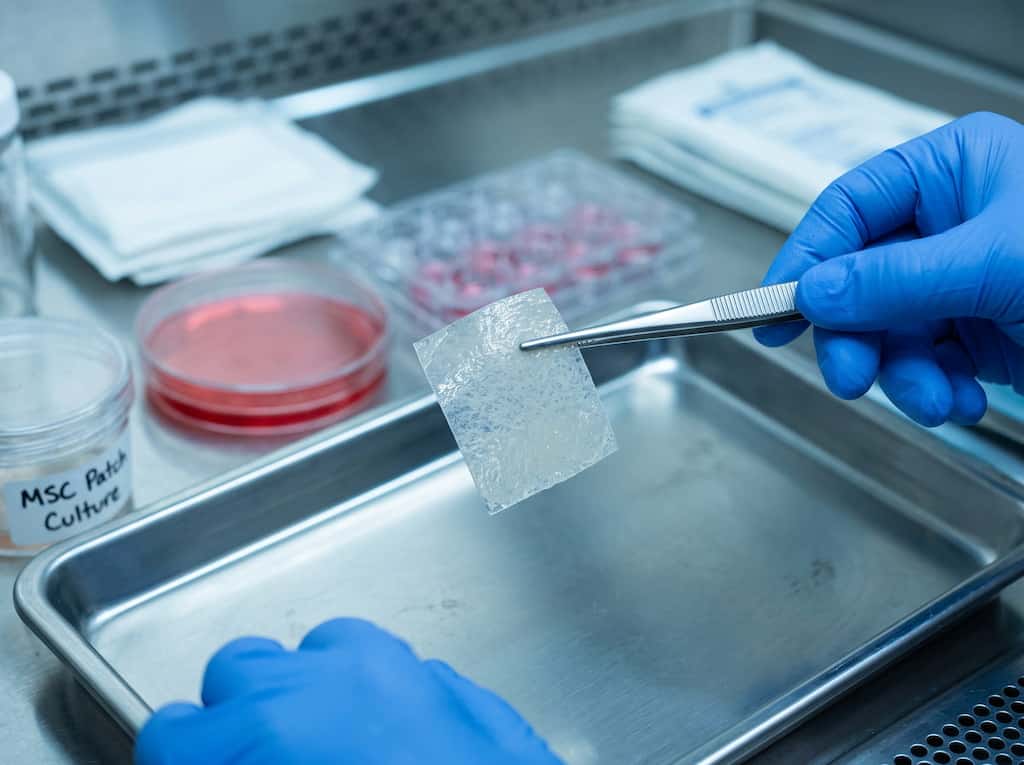
Clinical stem cell therapy patches are cell-seeded scaffolds and bioengineered tissue constructs. Living human cells are grown onto a matrix, kept alive under cold chain and laboratory conditions, and applied by a clinician directly onto exposed tissue. An open ulcer. A surgical bed. Heart muscle during cardiac surgery.
They are regulated as biological products or medical devices, they require prescription and clinical placement, and they are expensive. A patch for stem cell therapy in this sense is a piece of clinical equipment, not a consumer purchase.
The Barrier Problem Nobody Wants to Discuss
Before looking at outcome studies, it helps to understand the physical constraint that shapes all of this.
Intact skin is a barrier built to keep things out. The stratum corneum, the outermost layer, blocks nearly everything. Dermatology has worked with a rough guideline for this since Bos and Meinardi published it in 2000: a compound generally needs a molecular weight under 500 daltons to pass through intact skin. That is why nicotine, hormone and fentanyl patches work, and why most large molecules cannot be delivered this way.
A mesenchymal stem cell measures roughly 15 to 30 micrometres across. It is a complete living cell with a nucleus and a membrane, not a small molecule. It cannot cross intact skin, and no adhesive patch changes that.
This is why the clinical products in category three are only ever applied to open wounds or exposed tissue. The barrier has already been breached. That is the whole point.
So when a patch is marketed for application to unbroken skin, the honest question is not “how well do the stem cells absorb.” It is “what exactly is supposed to be crossing, and is there evidence it does.”
Do Stem Cell Patches Work?
The answer splits cleanly along those three categories.
Activation Patches: The Evidence Is Thin
There is genuine peer-reviewed science on photobiomodulation, sometimes called low-level light therapy. Controlled studies have shown that specific wavelengths at measured energy doses can influence cell behaviour, including proliferation in cultured mesenchymal stem cells and angiogenesis in wound models.
That research is real. The problem is the leap from it to a passive adhesive patch.
Photobiomodulation studies use an active light source with a stated wavelength, power output and energy dose in joules per square centimetre. A patch that reflects body heat delivers no measurable dose of anything. There is currently no independent, peer-reviewed clinical evidence that a passive reflective patch raises circulating GHK-Cu or activates stem cells in humans.
People do report feeling better on these patches. That is worth taking seriously as an experience, but self-reported wellbeing over weeks is exactly the outcome most vulnerable to placebo effect and natural fluctuation, and it is not evidence of stem cell activation.
Rejuvenation Patches: Cosmetic Effects Only
Hydrogel patches hydrate the skin. Hydrated skin looks smoother and fine lines are less visible for a few hours. That effect is real and it is why people like them.
It comes from the hydrogel, humectants and occlusion. It does not come from plant stem cell extract, and there is no published evidence that these patches regenerate tissue or affect human stem cell populations.
Clinical Cell-Based Patches: Genuine, Measurable Results
Here the evidence changes character completely.
A Cochrane systematic review by Santema and colleagues, summarised in Wound Repair and Regeneration in 2016, pooled 17 randomised controlled trials covering 1,655 participants with diabetic foot ulcers. Skin substitutes added to standard wound care increased the likelihood of complete ulcer closure compared with standard care alone, with a risk ratio of 1.55 and a 95% confidence interval of 1.30 to 1.85, measured over 6 to 16 weeks.
That is a meaningful result and it is worth being precise about what it says. It says these products improve the odds of closure when they are added on top of proper wound care. It does not say they replace it. Every trial in that analysis still did debridement, offloading, infection control and dressing management. The patch was the addition, never the treatment.
Bioengineered products such as Apligraf and Dermagraft, which contain living human cells on a scaffold, went through FDA premarket approval on the strength of this kind of trial data for diabetic foot ulcers and venous leg ulcers.
Beyond wound care, cell-laden patches for heart muscle repair after myocardial infarction are an active research area, with work on mesenchymal stem cell-loaded collagen patches and 3D-printed cardiac constructs showing improved cell retention in animal models. That research is promising and it is still preclinical or early clinical. It is not treatment you can access, and nothing sold to consumers relates to it.
What Are Stem Cell Patches Used For?
What each type is genuinely used for, separated from what it is marketed for:
Consumer activation patches are marketed for energy, sleep, joint pain, athletic recovery and general anti-ageing. They are used by people managing everyday discomfort and looking for a drug-free option.
Cosmetic rejuvenation patches are used for temporary hydration and short-term smoothing, mostly under the eyes and on the face before an event.
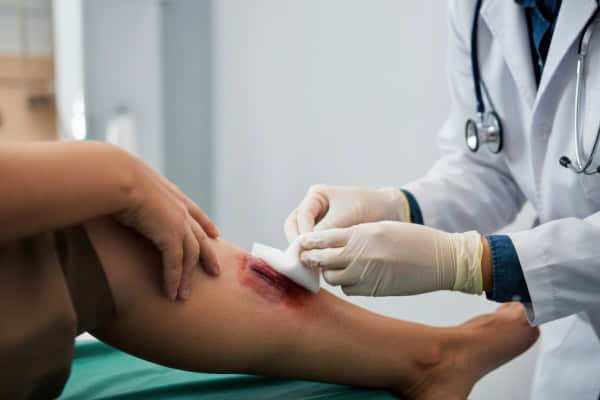
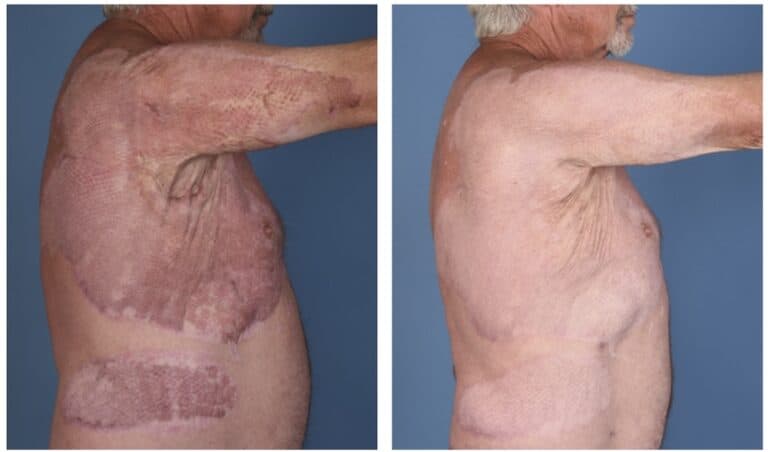
Clinical cell-based patches are used in hospital and specialist clinic settings for chronic wounds that have stalled, particularly diabetic foot ulcers and venous leg ulcers, for surgical wound beds, for burn coverage, and in research settings for cardiac tissue repair.
Note what is missing from the third list. No clinical cell-based patch is approved anywhere for energy, sleep, general anti-ageing or systemic wellness. If a patch is being sold for those things, it is not the product the wound-care research is about.
Stem Cell Patches Side Effects
Side effects follow the same three-way split, and they scale with how much the product actually does.
Consumer Patches
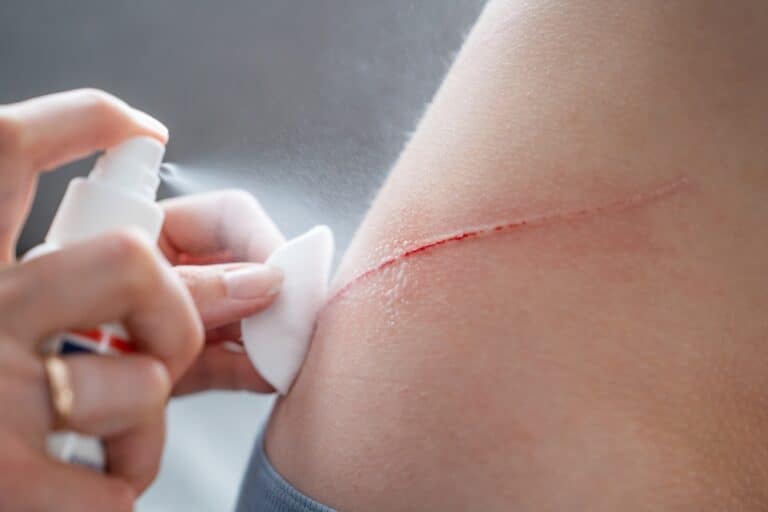
Reported problems are mostly local and mild. Contact dermatitis and adhesive reactions are the most common, usually redness, itching or a rash outlined in the shape of the patch. Some people react to the acrylic adhesive rather than anything else in the product. Skin can also macerate if a patch stays on too long, particularly in Bangkok humidity, and occluded skin is more prone to folliculitis.
There is a less obvious risk that concerns us more than any rash. We have seen patients delay proper assessment of a wound, a mole or a scalp problem for months while trying patches first. In diabetic foot care that delay is genuinely dangerous, because an ulcer that stays open longer carries higher infection and amputation risk. The patch did not cause harm. The waiting did.
Clinical Cell-Based Products
Real biological products carry real biological risk, which is exactly why they are prescription-only and clinician-applied. Documented risks include local infection at the application site, immune or inflammatory reaction to allogeneic material, wound edge irritation, and failure of the graft to take.
The FDA has also reported serious adverse events linked to unapproved regenerative medicine products more broadly, including infections, tumour formation and cases of blindness. Those cases involved injections rather than patches, but they explain why regulators treat this category cautiously.
Are Stem Cell Patches Safe?
Safe compared to what, and safe for whom.
Consumer patches are low-risk as objects. Most people who wear one will get nothing worse than mild skin irritation. The risk sits in what they replace rather than what they contain.
Clinical cell-based patches are safe in the sense that any prescription biological is safe: within their approved indication, applied by a trained clinician, to an appropriately selected patient, with monitoring. Outside those conditions the safety data does not transfer.
The Regulatory Position
The FDA’s stance is unambiguous and worth quoting in substance. The only stem cell products approved for use in the United States are blood-forming stem cells derived from umbilical cord blood, approved for disorders affecting the production of blood. They are not approved for any other use. There are also no FDA-approved exosome products.
That means no stem cell patch, of any type, is an FDA-approved stem cell product. Bioengineered skin substitutes like Apligraf and Dermagraft are approved as products for wound healing, which is a different and narrower claim than “approved stem cell therapy.”
In Thailand, cell-based treatments fall under medical and regulatory oversight, and legitimate clinics work within frameworks set by local authorities and ethics committees. We are direct with patients about which parts of their plan are established standard of care and which are emerging regenerative options. Anyone who will not draw that line for you is worth being careful with.
Questions Worth Asking Before You Buy or Book
These five questions sort most of the confusion quickly:
- Does this product contain living cells, cell-derived material, or neither? If the answer is “neither,” it is not a stem cell product regardless of the name.
- Is it applied to intact skin or to open tissue? Intact skin means nothing cellular is crossing.
- What specifically is claimed to reach the target, and what is the published evidence that it does?
- Is there peer-reviewed human clinical data on this product, or only laboratory research on the underlying concept? These get conflated constantly.
- What is the regulatory status of this exact product, for this exact use?
How We Approach This at Vegaderma
Our regenerative work is concentrated in three areas where the evidence is strongest and the tissue is accessible: chronic wounds and skin repair, scar and tissue remodelling, and hair and scalp regeneration.
For chronic and diabetic wounds, regenerative support is added onto a full wound-care pathway, never instead of one. Assessment, debridement, offloading, infection control and circulation come first. Growth-factor media and cell-based approaches are layered on when a wound has stalled despite that groundwork being done properly. This is the same logic the Cochrane data supports.
For hair and scalp, our Follicular Signaling Enhancement protocol works on the follicular environment, and it starts with trichoscopy rather than a treatment menu, because whether follicles are still structurally present changes everything about what is realistic.
We photograph and measure at every stage, and our case studies show what that progression actually looks like over time rather than a single dramatic before-and-after.
If you want more on how outcome claims in this field should be read, our article on what stem cell therapy success rates actually mean covers the same ground for percentages.
Book a consultation with our clinical team
References
- US Food and Drug Administration. Consumer Alert on Regenerative Medicine Products Including Stem Cells and Exosomes.
- Santema TB, Poyck PPC, Ubbink DT. Systematic review and meta-analysis of skin substitutes in the treatment of diabetic foot ulcers: Highlights of a Cochrane systematic review. Wound Repair and Regeneration, 2016.
- Bos JD, Meinardi MMHM. The 500 Dalton rule for the skin penetration of chemical compounds and drugs. Experimental Dermatology, 2000.
- Bioengineered Skin for Diabetic Foot Ulcers: A Scoping Review.
- Transplantation of Stem Cell Spheroid-Laden 3-Dimensional Patches with Bioadhesives for the Treatment of Myocardial Infarction.
- Mesenchymal stem cell-loaded cardiac patch promotes epicardial activation and repair of the infarcted myocardium.
- Development of a stem cell spheroid-laden patch with high retention at skin wound site.
- In Vitro Wound Healing Potential of Photobiomodulation Is Possibly Mediated by Its Stimulatory Effect on AKT Expression in Adipose-Derived Stem Cells.
Medical Disclaimer: Treatment outcomes vary between individuals. The information on this page is for educational purposes only and should not be interpreted as medical advice or a guarantee of results. A physician consultation is required to determine suitability for any treatment.
Frequently Asked Questions about Stem Cell Patchees
-
Do stem cell patches actually contain stem cells?
Almost all consumer patches do not, and most manufacturers state this openly. Activation patches contain no cells by design. Cosmetic patches typically contain plant extracts. Only clinical cell-seeded scaffolds used in wound care and surgery contain living human cells, and those require cold-chain handling and clinical application.
-
What is a stem cell activation patch supposed to do?
The stated mechanism is that the patch reflects body heat at specific wavelengths to raise levels of signalling peptides such as GHK-Cu, which is claimed to increase stem cell activity. Nothing is designed to enter the body. There is currently no independent peer-reviewed clinical evidence supporting that mechanism in humans.
-
Are stem cell patches safe to use?
Consumer patches are low-risk. Skin irritation, adhesive reactions and maceration are the usual complaints. The greater risk is delaying medical assessment of a wound or scalp condition that needs it. Clinical cell-based patches carry infection and immune-reaction risks and are only used under medical supervision.
-
What are the side effects of stem cell patches?
For consumer patches: redness, itching, contact dermatitis, and macerated or occluded skin from prolonged wear. For clinical cell-based products: local infection, inflammatory response to donor material, wound edge irritation, and graft failure.
-
Can a patch replace stem cell injections?
No. Injections place cells or cell products directly into tissue at a controlled dose. A patch applied to intact skin cannot deliver cells at all. Even clinical patches applied to open wounds work locally on that wound and are not equivalent to systemic or intra-articular treatment.
-
Question
Answer
-
Do stem cell rejuvenation patches work for wrinkles?
They hydrate and temporarily plump the skin, which softens the look of fine lines for a few hours. That comes from the hydrogel and occlusion. There is no evidence that plant stem cell extract regenerates skin or affects human stem cells.
-
Are stem cell patches FDA approved?
No stem cell patch is an FDA-approved stem cell product. The only approved stem cell products in the US are cord blood-derived blood-forming stem cells for blood disorders. Some bioengineered skin substitutes containing living cells are FDA-approved as wound-healing products, which is a narrower and different claim.
-
What conditions are clinical stem cell therapy patches used for?
Chronic non-healing wounds, particularly diabetic foot ulcers and venous leg ulcers, surgical wound beds, and burn coverage. Cardiac repair patches remain in research. None are approved for energy, sleep, general anti-ageing or systemic wellness.
-
Can stem cell patches help hair regrowth?
No patch has been shown to regrow hair through stem cell activity. The scalp is intact skin, so nothing cellular crosses it. Regenerative approaches for hair work by injecting or applying signalling material into the scalp after a proper trichoscopic assessment of whether follicles remain viable.
-
My wound is not healing. Should I try a patch first?
No. A wound open longer than four to six weeks should be assessed clinically, especially with diabetes. Delay raises infection and amputation risk. The cell-based products with real evidence are the ones a clinician applies to a prepared wound bed, and they only perform when the underlying wound care is being done properly.
References:
- US Food and Drug Administration. Consumer Alert on Regenerative Medicine Products Including Stem Cells and Exosomes.
- Santema TB, Poyck PPC, Ubbink DT. Systematic review and meta-analysis of skin substitutes in the treatment of diabetic foot ulcers: Highlights of a Cochrane systematic review. Wound Repair and Regeneration, 2016.
- Bos JD, Meinardi MMHM. The 500 Dalton rule for the skin penetration of chemical compounds and drugs. Experimental Dermatology, 2000.
- Bioengineered Skin for Diabetic Foot Ulcers: A Scoping Review.
- Transplantation of Stem Cell Spheroid-Laden 3-Dimensional Patches with Bioadhesives for the Treatment of Myocardial Infarction.
- Mesenchymal stem cell-loaded cardiac patch promotes epicardial activation and repair of the infarcted myocardium.
- Development of a stem cell spheroid-laden patch with high retention at skin wound site.
- In Vitro Wound Healing Potential of Photobiomodulation Is Possibly Mediated by Its Stimulatory Effect on AKT Expression in Adipose-Derived Stem Cells.
Medical Disclaimer: Treatment outcomes vary between individuals. The information on this page is for educational purposes only and should not be interpreted as medical advice or a guarantee of results. A physician consultation is required to determine suitability for any treatment.

The Vega Derma Medical Team consists of board-certified dermatologists, specialized trichologists, and clinical researchers based in Bangkok, Thailand. Our team specializes in evidence-based regenerative dermatology, complex tissue repair, and advanced hair restoration (including precision FUE and FSE). Every protocol and article we publish is medically reviewed to ensure it meets international clinical standards, providing safe, science-backed guidance for our local and international patients.