
Introduction
If you search for “stem cell therapy success rate,” you’ll see headlines like “85% success,” “90% improvement,” or “clinically proven results.” But what do these numbers really mean? If you’re looking into stem cell therapy providers in Bangkok, knowing how success is defined is the most important step to set realistic expectations.

This article explains success rates for different conditions, shows what researchers counted as “success” in each case, and points out something most marketing pages ignore: published rates are based on controlled trials with carefully chosen patients, not on everyone who visits a clinic.
Why a Single Headline Success Rate Is Misleading
A single percentage figure “90% success rate” sounds reassuring, but it hides three critical questions:
- Success rate for what condition, specifically?
- Success measured how full recovery, partial improvement, or something else?
- Success in whom a broad patient population, or a narrow trial group?
Any reputable stem cell therapy Bangkok provider should be willing to answer all three. If a number is quoted without this context, treat it as marketing, not evidence.
Breaking Down Success Rates by Condition
Success rates vary enormously depending on what’s being treated. Lumping them into one number is where most of the confusion starts.
Orthopedic and Joint Conditions
Studies on knee osteoarthritis and joint degeneration typically measure success as:
- Reduction in pain scores (e.g., a defined percentage drop on a pain scale)
- Improvement in joint function or range of motion
- Delay in need for joint replacement surgery
Controlled studies often show moderate to good improvements in pain and function. However, in these cases, “success” usually does not mean full regrowth of cartilage. Instead, it means there is a clear and meaningful improvement in symptoms.
Hair Restoration
For hair-related regenerative treatments, “success” is commonly defined by:
- Increase in hair density (follicles per square centimeter)
- Improved hair shaft thickness
- Patient- and physician-rated visual improvement
This is a density-increase measure, not a claim of full regrowth to original density an important distinction anyone researching stem cell therapy Bangkok for hair loss should understand before starting treatment.
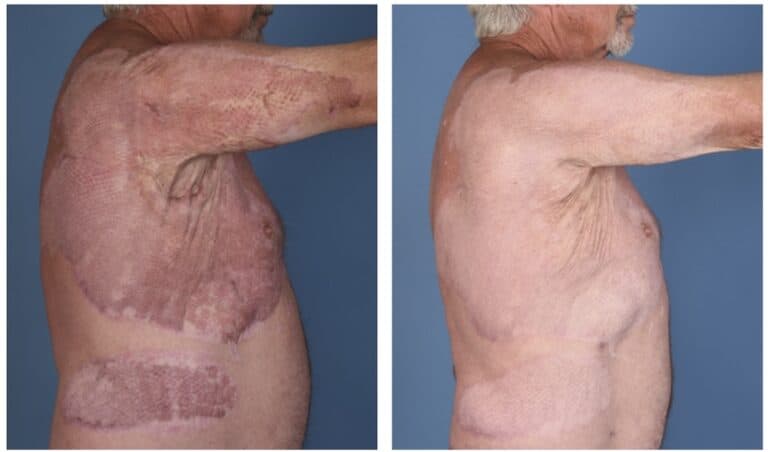
Wound and Tissue Healing
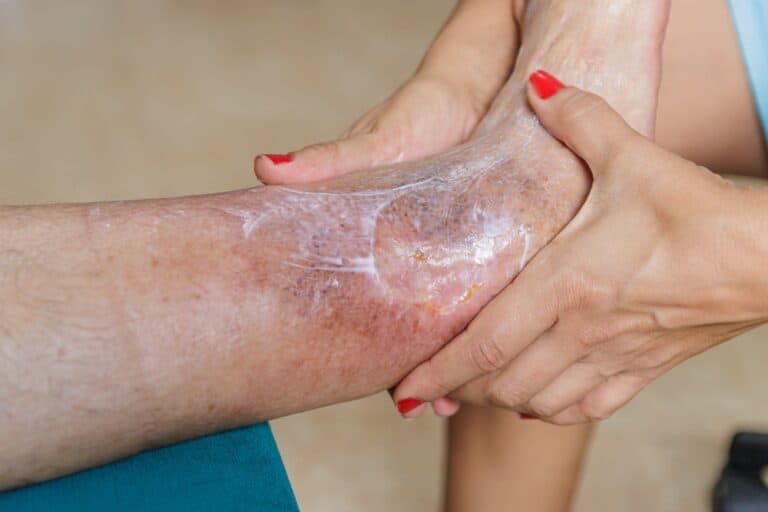
In wound-healing studies, success is often defined very specifically as:
- Full wound closure by a set timepoint, or
- Percentage reduction in wound area over a defined period
These are two very different outcomes. A study reporting “80% success” in wound closure is not the same as an 80% reduction in wound size yet both get compressed into vague marketing language.
Autoimmune and Degenerative Conditions
For more complex conditions, success is usually measured by changes in biomarkers, fewer flare-ups, or slower disease progression. A complete “cure” is rare. These are considered the most cautious and gradual ways to track progress in the field.
What “Success” Actually Means in the Published Data
This is the part most clinic websites skip entirely.
Full Closure vs. Partial Improvement
Many studies report success in simple terms, such as closed vs. open, healed vs. not healed. Others use a sliding scale, like at 30%, 50%, or 70% improvement. Researchers choose these thresholds, which can significantly affect what a “success rate” actually means.
Percentage Area or Volume Reduction
In tissue and wound studies, success often means a measurable reduction in the affected area rather than complete healing. For example, a 60% reduction might be called a “success,” which is not always what patients expect the word to mean.
Density or Functional Increase
In areas like hair restoration or certain orthopedic applications, success is measured as an increase in density or function relative to a baseline again, not full restoration to a pre-condition state.
The Trial Population Problem: Why Real-World Results Differ
This is the most important and most often omitted point in any honest discussion of stem cell therapy Bangkok outcomes.
Controlled Trials Use Selected Patients
Published success rates come from clinical trials with strict inclusion and exclusion criteria. Trial participants are typically:
- Screened for specific disease severity ranges (not too mild, not too advanced)
- Free of major comorbidities that could confound results
- Monitored under controlled, standardized treatment protocols
Why This Matters for You
A general clinic population is far more varied different ages, severities, health backgrounds, and lifestyle factors. This means:
- Trial success rates represent a best-case, controlled scenario, not a guarantee
- Real-world outcomes at any stem cell therapy Bangkok clinic will vary by individual case
- A provider quoting a trial statistic should clarify it’s a reference point, not a personal prediction
How to Evaluate a Stem Cell Therapy Success Rate Claim
Before trusting any published number, ask:
- What condition was studied, specifically?
- What was the defined measure of “success” closure, reduction, density, or symptom score?
- Was this a controlled trial, and if so, how selective was the patient criteria?
- Does the clinic’s patient population resemble the trial population?
A transparent stem cell therapy Bangkok provider will walk you through these questions rather than leading with a single impressive-sounding percentage.
Key Takeaways
- There is no single universal “stem cell therapy success rate” it varies by condition and outcome measure.
- “Success” can mean full closure, partial area reduction, density increase, or symptom improvement these are not interchangeable.
- Published rates come from controlled trials with selected patients, not the general public.
- Real-world results depend heavily on individual case severity, condition type, and provider expertise.
Frequently Asked Questions
Is a 90% success rate realistic to expect for my case?
Not necessarily. That figure likely reflects a specific trial population and outcome definition your individual case may differ significantly from trial conditions.
Why do different clinics quote different success rates for the same condition?
Because they may be citing different studies with different outcome definitions, patient populations, or follow-up periods.
What questions should I ask before starting treatment?
Ask what specific outcome measure was used in any quoted statistic, and whether it reflects a trial population or general clinical practice.
Choosing a Clinic for Stem Cell Therapy for Hair Loss
Clinics offering stem cell therapy Bangkok Thailand patients travel for should be running and showing trichoscopic assessment as a standard part of consultation, not an optional add-on. If a provider is willing to quote a protocol for stem cell therapy for hair loss before examining the scalp under magnification, that’s worth noticing. The honest answer to “will this work at my stage” starts with a dermatoscope, not a treatment menu.
The Bottom Line
The honest version of this conversation isn’t a sales narrative. A patient with genuinely active, structurally intact miniaturization is a fundamentally different candidate for stem cell therapy for hair loss than a patient with years of established, empty follicular units and offering the same regenerative protocol to both, without distinguishing between them first, sets up the second patient to be disappointed by a treatment that was never going to work on tissue that wasn’t there anymore.

The Vega Derma Medical Team consists of board-certified dermatologists, specialized trichologists, and clinical researchers based in Bangkok, Thailand. Our team specializes in evidence-based regenerative dermatology, complex tissue repair, and advanced hair restoration (including precision FUE and FSE). Every protocol and article we publish is medically reviewed to ensure it meets international clinical standards, providing safe, science-backed guidance for our local and international patients.