

What Are Keloids? Causes and Treatment Options Explained
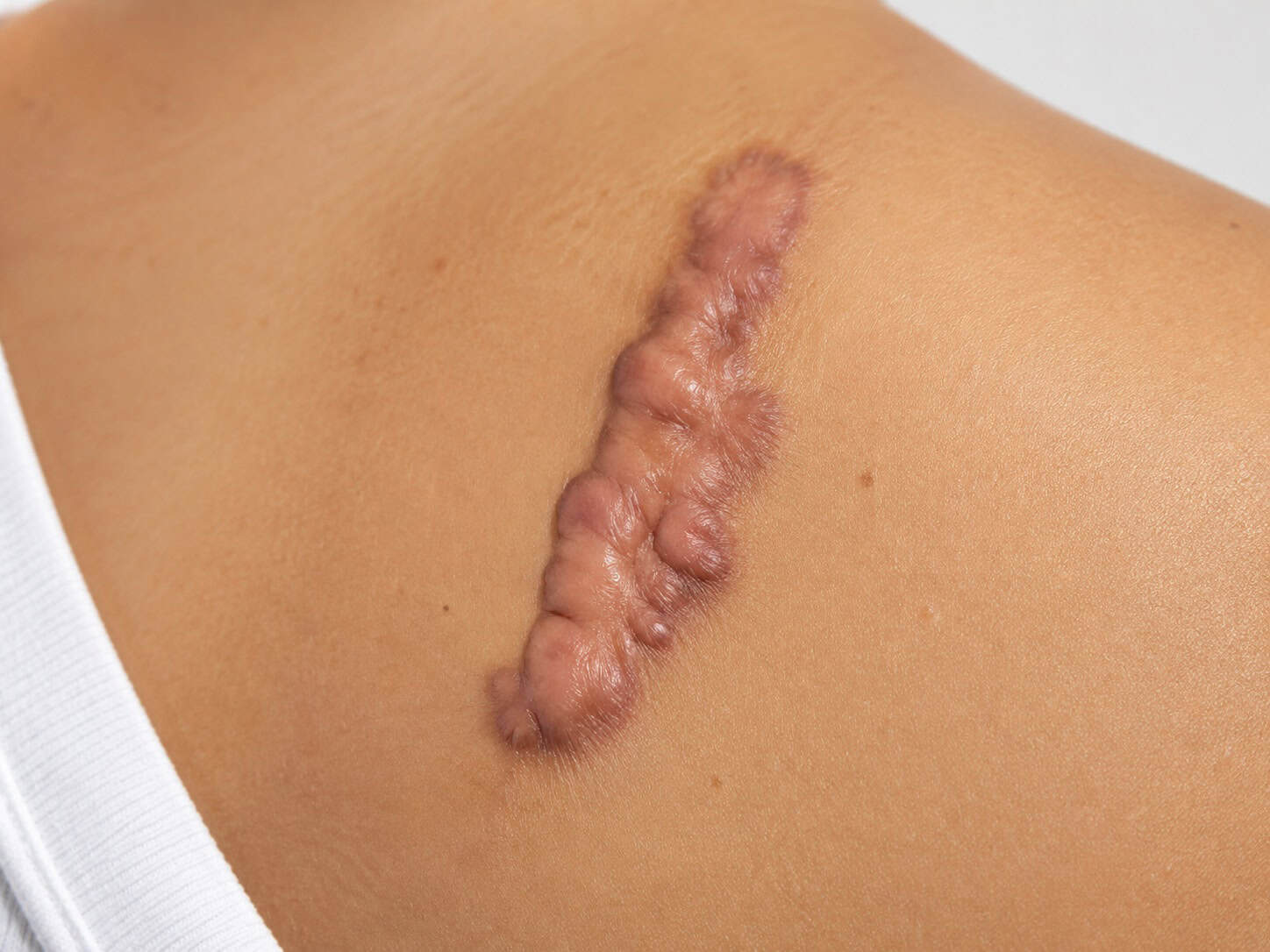
A keloid is a firm, raised scar that extends past the original injury and can continue to thicken over time. Keloids may feel itchy, tender, or tight, and many patients find them cosmetically distressing. They are benign tissue, not skin cancer, though they can persist and grow without intervention.
Unlike hypertrophic scars, which may soften and flatten with time, keloids tend to remain active. They can continue producing excess collagen months or even years after the wound has closed. This is why early assessment and structured medical treatment for keloids gives you the strongest chance of long-term control. The longer a keloid grows unchecked, the more complex treatment becomes.
Signs Your Scar May Be a Keloid
- The scar continues to grow months after the wound has closed
- The raised tissue extends past the original wound edges
- The surface feels firm, rubbery, or shiny
- You notice itching, tenderness, or a pulling sensation
- The color appears pink, red, purple, or darker than surrounding skin
If any of these apply, an early consultation can help. Smaller, newer keloids generally respond better to medical treatment for keloids than older, larger ones. Contact Vegaderma to schedule an assessment before the keloid grows further.
Keloid vs Hypertrophic Scar
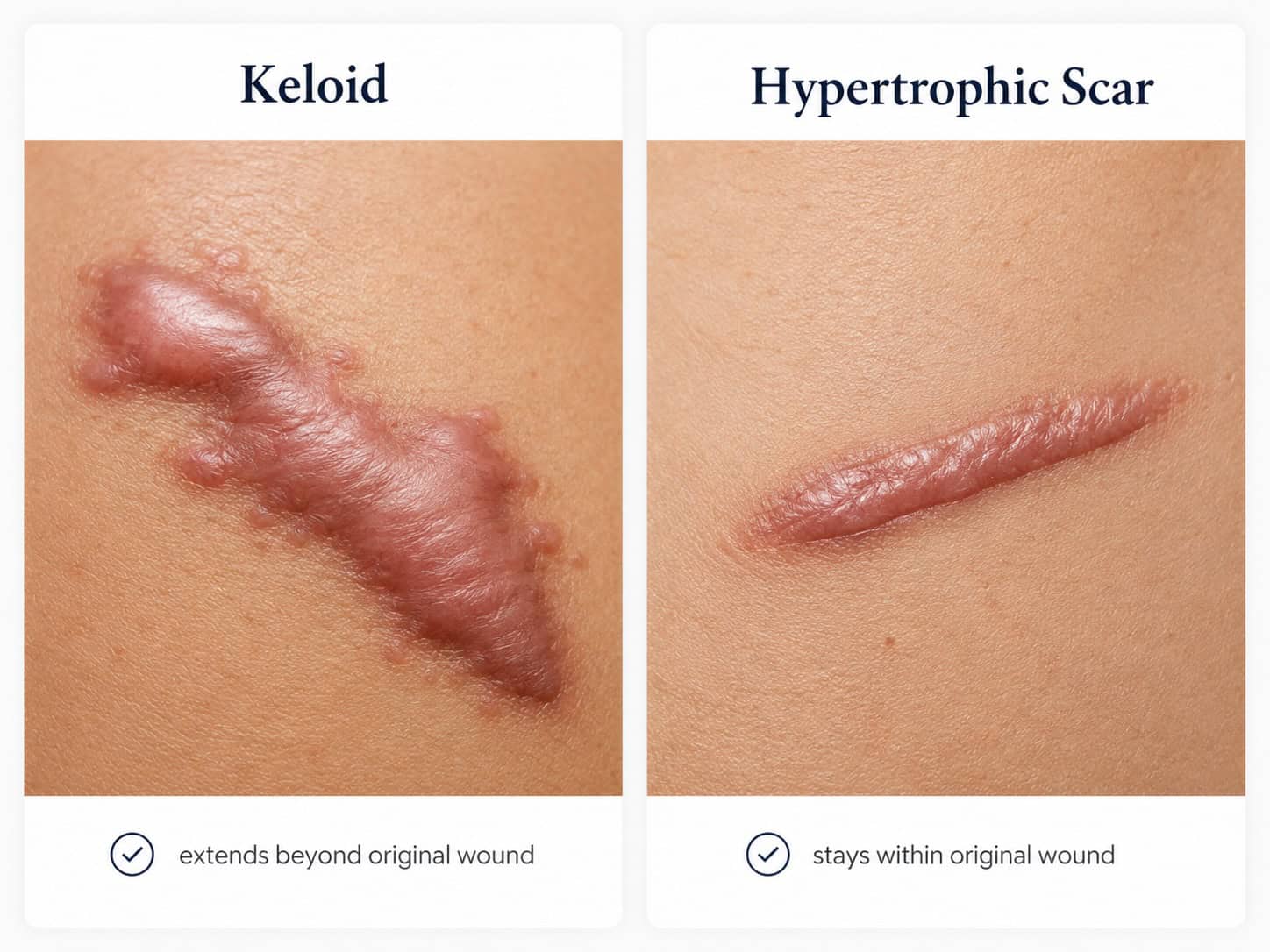
Both are raised scars caused by excess collagen during healing, but they behave differently.
Feature | Keloid | Hypertrophic Scar |
Borders | Grows past the wound edges | Stays within the wound edges |
Onset | May appear months after injury | Usually appears within weeks |
Progression | Can keep growing over time | Often softens and flattens |
Common sites | Earlobes, chest, shoulders, jawline | Joints, areas of high tension |
Recurrence after treatment | High without combination care | Lower |
For deeper scar-type education, see our scar and tissue remodeling page. Understanding if your scar is a keloid or hypertrophic is one of the first things our team determines during your consultation, since it directly shapes the treatment plan.
What Causes Keloid Scars?
Keloids form when the wound-healing response produces too much collagen. Genetics, local skin tension, prolonged inflammation, and skin type all influence the outcome. The result is fibrous tissue that keeps building long after a normal scar would have settled.
Common Triggers
- Ear piercings: a frequent cause of earlobe keloids, especially in younger patients.
- Surgery and trauma: any incision can heal as a keloid in predisposed individuals.
- C-section scars: abdominal tension and longer healing times encourage keloid growth in some patients.
- Acne: cystic acne on the chest, shoulders, and back can leave keloid scars.
- Burns and lacerations: deeper injuries carry a higher risk.
- Vaccinations and insect bites: smaller skin breaks can also trigger keloids in prone patients.
If you have a history of keloid formation, it is important to discuss prevention strategies with your doctor before any planned surgery, piercing, or skin procedure. Vegaderma’s team can advise on recurrence risk and preventive measures as part of your consultation.
Who Is More Prone to Keloids?
Patients with Fitzpatrick skin types III through VI, a family history of keloids, or those between their teens and thirties tend to have a higher likelihood of forming them. None of this means treatment is out of reach. It simply helps your doctor plan a more careful approach and counsel you on prevention before any future skin procedures.
At Vegaderma, we see patients across all skin types and age groups. Your predisposition factors are assessed at your first visit and incorporated into both your treatment plan and your long-term aftercare strategy.
Where Keloids Form Most Often
Keloids most commonly appear on the earlobes, jawline, shoulders, upper chest and sternum, upper back, and C-section sites. Some patients also develop them along the beard line or neck. Keloid scar removal is approached differently depending on the site, since tension, skin thickness, sebaceous activity, and visibility all factor into the treatment plan.
Vegaderma’s team has clinical experience treating keloids across all of these sites. Location-specific considerations, such as the high recurrence risk on the chest versus the more favorable response on earlobes, are built into your protocol from the start.
Treatment Options for Keloids at Vegaderma
Most keloids respond best to combination care. The table below summarizes the main options your doctor may discuss.
Treatment | How It Works | Best For | Typical Sessions | Notes on Recurrence |
Steroid injections | Reduces collagen and inflammation | Small to medium keloids | Monthly series | Lower when fully completed |
Laser therapy | Improves redness, thickness, and texture | Color and surface concerns | Multiple sessions | Often paired with injections |
Surgical excision | Removes scar bulk | Larger or pedunculated keloids | Single procedure plus adjuncts | High without adjunct therapy |
Silicone and pressure therapy | Hydrates and applies steady pressure | Post-procedure support | Daily home use | Supports long-term control |
Cell-based regenerative support | Encourages organized collagen and tissue quality | Select post-treatment cases | Per protocol | Designed to support lower recurrence |
Your treatment plan at Vegaderma will typically combine two or more of these options, sequenced according to your keloid’s characteristics and your treatment goals.
Steroid Injections
Intralesional corticosteroid injections soften and flatten keloids by reducing collagen production and inflammation. They are typically given monthly until the scar improves. Possible side effects include skin thinning, pigment changes at the injection site, and short-term discomfort. Steroid injections are one of the most widely used and well-studied treatments for keloids, and they form the backbone of many Vegaderma keloid protocols. Your doctor will monitor tissue response at each session and adjust dosing accordingly.
Laser Therapy
Laser treatment can improve redness, thickness, and surface texture. Results are generally stronger when laser is paired with steroid injections or other therapies as part of a broader plan. At Vegaderma, laser sessions are scheduled at intervals that allow the tissue to respond and remodel between treatments, with progress photographed and measured at each visit.
Surgical Excision
Surgery removes the bulk of the keloid but carries a high chance of recurrence if used on its own. Vegaderma plans adjunct therapy alongside excision, which may include injections, silicone, pressure dressings, or supportive regenerative strategies. The combination approach is critical: excision without adjunct care has recurrence rates reported as high as 50 to 80 percent, while combination protocols can significantly reduce that risk.
Cell-Based Regenerative Support
As part of select treatment plans, Vegaderma offers cell-based regenerative support designed to encourage more organized collagen and healthier tissue quality after primary treatment. The goal is to reduce the likelihood of recurrence, though no approach can eliminate it entirely. Regenerative support is considered after your primary therapy has been completed and the tissue has had time to stabilize. It is never used as a first-line standalone treatment.
Learn more on our scar and tissue remodeling page.
Aftercare and Preventing Recurrence
Keloid care continues long after the in-clinic session. Your doctor may recommend:
- Daily silicone gel or sheets for several months
- Sun protection on the treated area to limit pigment changes
- New piercings, tattoos, or elective skin procedures should be avoided in keloid-prone zones.
- Early review of any new raised tissue at the treatment site
- Follow-up injections or maintenance laser sessions as planned
Consistent aftercare is one of the strongest factors in long-term results. At Vegaderma, aftercare is included in a structured phase of your treatment protocol. You will receive a written aftercare plan with specific timelines for silicone use, sun protection, and follow-up visits. Patients who follow through with the full aftercare plan consistently achieve better long-term outcomes.
Cost of Keloid Treatment in Bangkok
The cost of keloid treatment at Vegaderma depends on the size and number of keloids, their location, and the combination of therapies used — such as steroid injections, laser therapy, surgical excision, or cell-based regenerative support. Because keloids carry a genuine risk of recurrence, plans often involve a staged course with aftercare, and pricing reflects this rather than a single procedure fee. After your first consultation and scar assessment, our team provides a clear, itemised quotation and explains the full plan, including recurrence-prevention steps.
Your First Keloid Consultation at Vegaderma
Your first visit at Vegaderma includes a full assessment of the scar, your medical and family history, and your treatment goals. Your doctor will explain the recommended combination, expected timeline, possible side effects, and a personalized cost estimate before any procedure begins.
For international patients, Vegaderma’s team communicates in English and can review photos or medical records in advance so your first in-person visit is as efficient as possible. Thailand’s medical costs for keloid treatment, including combination protocols with injections, laser, and regenerative options, are typically a fraction of what comparable care costs in the US, UK, or Australia.
Start Your Keloid Treatment in Bangkok
Early assessment gives the best chance of long-term control. Book a consultation at Vegaderma to discuss your scar, review the right combination of therapies, and receive a personalized treatment for keloids plan. Schedule your consultation today.
Medical Disclaimer: Treatment outcomes vary between individuals. The information on this page is for educational purposes only and should not be interpreted as medical advice or a guarantee of results. A physician consultation is required to determine suitability for any treatment.