

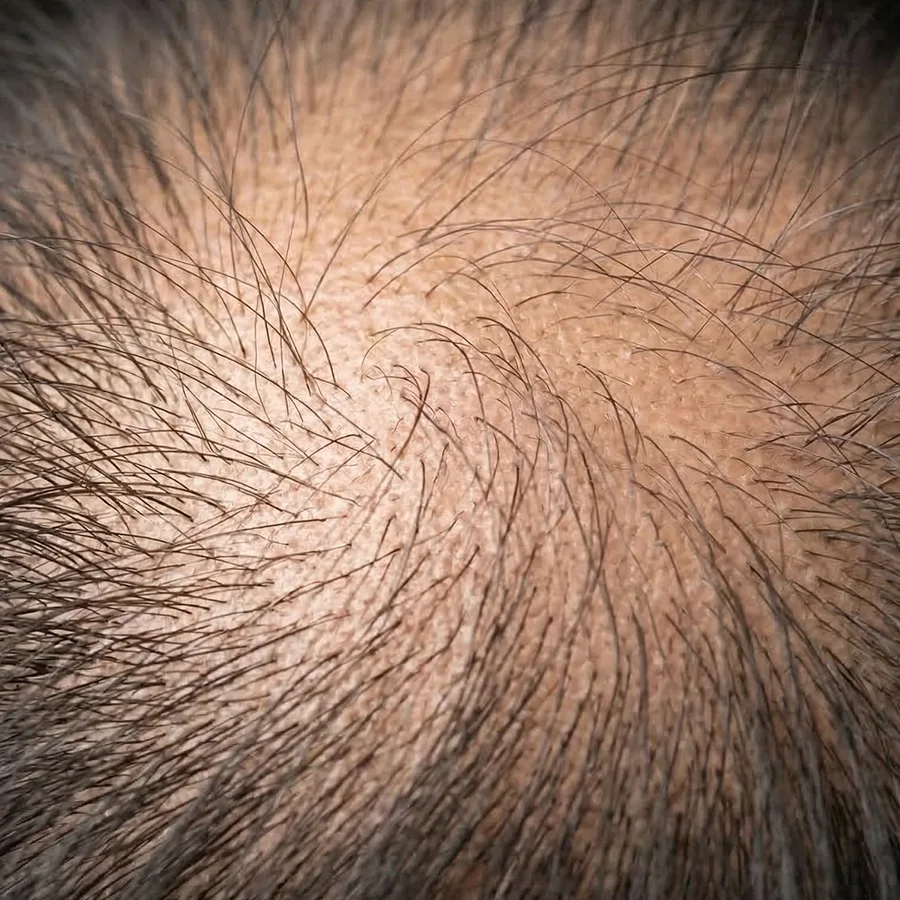
What Is Stem Cell Therapy for Hair Loss?
Stem cell therapy for hair loss is a term many patients search for when researching regenerative options, and it refers broadly to treatments that draw on the body’s own repair signaling to support weakened follicles. At Vega, this scientific foundation is applied through cell therapy for hair loss, a regenerative scalp treatment for hair loss specialized service that uses the secretome, a concentrated collection of signaling molecules derived from the body’s regenerative units, to support the scalp microenvironment and follicle health.
Rather than relying on harsh chemicals to irritate the scalp into temporary growth, this scalp treatment for hair loss uses Active Biological Signaling to:
- Support healthier microcirculation in the scalp
- Help restore inflammatory balance around the follicle
- Reintroduce the cellular messengers needed to support the regenerative cycle
This makes hair loss therapy a considered option for suitable candidates who want a medical, non-cosmetic approach to scalp and follicle regeneration. Because every scalp presents differently, our physicians assess your specific pattern of thinning during consultation and explain how this approach can be discussed alongside hair transplantation during your consultation.
The Biology of Hair Loss: Why Conventional Treatments Fall Short
Hair loss is rarely caused by a single factor. It is the result of a biological “stall” in the hair growth cycle. Our team identifies three major biological disruptions that most conventional treatments only partially address.
Impaired Scalp Microcirculation
The hair follicle is one of the most metabolically active structures in the body and requires a constant supply of oxygen and nutrients to sustain the growth phase. When microcirculation is compromised by age, stress, hormonal factors, or prolonged tension on the scalp, the follicle can effectively “starve.” Over time, this shows up as progressively thinner hair shafts, a process known as miniaturization, and eventually follicles that stop producing visible hair altogether.
Topical products marketed for hair loss often address only the surface of this problem. Without restoring the underlying blood supply to the follicle, any improvement tends to be partial or short-lived, which is why patients who have tried over-the-counter treatments without lasting results often ask us about a more targeted scalp treatment for hair loss. At Vega, addressing microcirculation is one of the first biological targets in every personalized treatment plan, not an afterthought.
Chronic Micro-Inflammation
Conditions such as androgenetic alopecia and various scalp disorders are frequently accompanied by low-grade, “silent” inflammation around the follicular bulb, meaning many patients experience this process without any visible redness or irritation on the surface. Left unaddressed, this chronic inflammatory state can disrupt the active growth phase (Anagen) and prematurely push hair into the shedding phase (Telogen), which is one reason hair loss can feel like it accelerates even when nothing else in a patient’s routine has changed.
Because this inflammation is largely invisible without clinical evaluation, it is often missed by generic hair loss products that focus only on stimulating growth rather than calming the underlying scalp environment. Vega’s assessment specifically screens for this pattern, so that any hair loss therapy we recommend addresses the inflammatory driver directly rather than working against it.
Follicular Dormancy and Cellular Stagnation
A dormant hair follicle can enter a prolonged state of metabolic stasis, pausing its production rather than permanently losing the ability to grow hair. Each follicle contains specialized repair units responsible for generating new hair shafts, and under normal conditions these units cycle between active growth and rest. When aging, environmental stress, or hormonal shifts push too many follicles into an extended resting state at once, the result is the diffuse thinning or widening part line that brings many patients to seek a scalp treatment for hair loss in the first place.
This is precisely where a generic topical routine tends to fall short, because dormancy is a signaling problem, not simply a nutrient deficiency. Vega’s regenerative approach is designed to reintroduce the key cellular messengers needed to support this cycle, giving dormant follicles a biological reason to re-enter active growth rather than waiting indefinitely.
Learn more about our cellular signaling approach.
How Our Hair Loss Treatment Works: Bio-Active Cellular Signaling
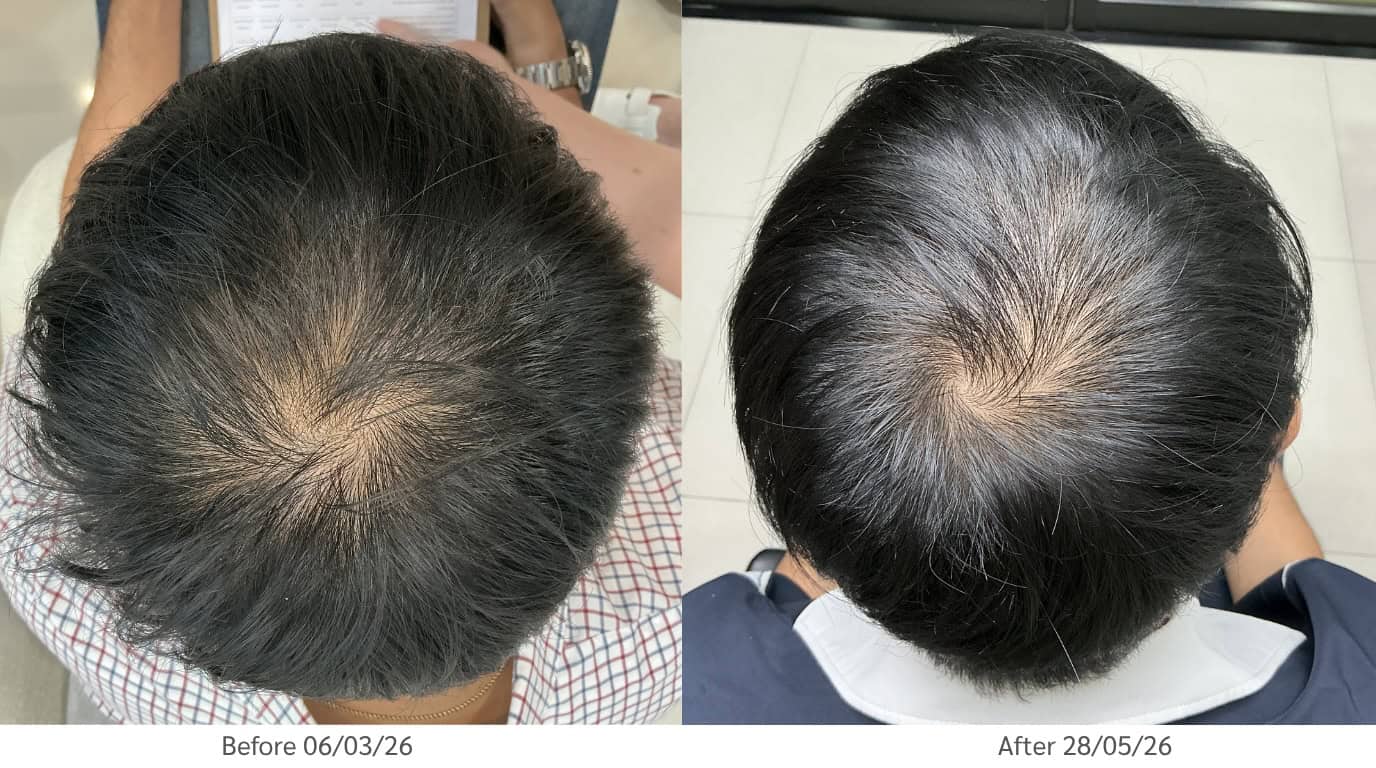
While many cosmetic hair therapies rely on harsh chemicals to irritate the scalp, our protocol uses Active Biological Signaling to deliver concentrated, naturally occurring signals to the follicle.
Activating the Master Repair Units
The hair follicle has progenitor zones that serve as the master control for growth, and these zones are precisely what most over-the-counter treatments fail to reach. Vega uses a proprietary, high-quality media enriched with the secretome, which acts as a biological “software update” for your scalp rather than a surface-level stimulant. These messengers send direct signals to the dormant units within the follicle, with the aim of supporting the transition from a resting phase back into an active growth phase.
Because this signaling is delivered directly to the follicular environment under physician supervision, our team can adjust the protocol session to session based on how your scalp is responding, something a self-administered product cannot offer. This closer level of clinical oversight is part of why patients choose a structured hair therapy for hair loss program over a trial-and-error approach with retail products.
Synergistic Scalp and Tissue Restoration
By providing these bio-active signals, our team contributes to the rebuilding of the dermal papilla, the hair’s command center responsible for coordinating shaft growth and thickness. This is designed to reverse the process of miniaturization and support thicker, stronger hair shafts over successive growth cycles, rather than a single temporary boost.
The same biological catalysts also enhance the quality of skin tissue surrounding the follicle, since a resilient scalp surface is just as important to long-term results as the follicle itself. In selected cases, particularly where scarring, prior trauma, or previous procedures have affected the scalp’s texture, addressing tissue quality through scar and tissue remodeling may further improve scalp readiness for regenerative therapy. Our physicians will identify during consultation whether this additional step would benefit your specific case.
Managing Inflammatory Balance for Long-Term Retention
A regenerative approach must also be a protective one, since newly reactivated follicles are especially vulnerable in the weeks immediately following treatment. Our hair loss therapy integrates anti-inflammatory strategies to shield these follicles from oxidative stress and hormonal damage during this sensitive window, rather than leaving them exposed once the initial signaling session is complete.
By modulating the inflammatory environment of the scalp on an ongoing basis, we aim to create a sustainable habitat for long-term hair retention, not just a short-term burst of growth that fades within a few months. This distinction, protecting results rather than only producing them, is a core part of why patients select Vega for a full course of care rather than a single isolated session.
Cell Hair Therapy vs. Other Hair Loss Treatments
Different hair loss treatments work through different mechanisms, and no single option is right for every patient. The table below outlines how cell therapy for hair loss at Vega compares with other commonly considered approaches, so you can discuss the right combination with our medical team.
Treatment | Type | Downtime | Best Suited For | Longevity |
Cell / Secretome Therapy (Vega) | Regenerative, non-surgical hair loss treatment in Thailand | None to minimal redness | Early to moderate thinning, scalp dysfunction, patients wanting non-surgical options | Long-term benefits with maintenance over 1 to 2 years or more |
PRP | Autologous blood-derived injections | None | Mild thinning and early hair loss | Typically 6 to 12 months per course |
Surgical (FUE / DHI) | 1 to 2 weeks | Advanced hair loss or scarring alopecia with depleted density | Permanent in transplanted zones | |
Finasteride / Minoxidil | Pharmacologic / topical | None | Maintenance or medical adjunct | Effect often diminishes when discontinued |
Many patients benefit from a combined plan. Follicular Signaling Enhancement (FSE) often complements hair therapy, while hair transplantation may be considered for later-stage cases following a physician assessment. Because each option carries different long-term costs in time, maintenance, and repeat visits, discussing your priorities directly with our clinical team during consultation is the most reliable way to build a plan that fits both your goals and your budget.
The Vega Clinical Pathway: A Structured Regenerative Protocol
At Vega, we do not believe in “one-size-fits-all” hair tonics. Our hair therapy for hair loss follows a staged medical protocol designed to support clinical accountability and realistic, long-term outcomes, rather than a one-time treatment with no follow-through.
Step 1: Medical Assessment and Trichoscopy
Before proposing any treatment, we perform a detailed medical assessment that goes well beyond a visual check of your hairline. Using high-magnification trichoscopy, our team analyzes scalp health, follicular density, and the degree of miniaturization at a level of detail that is not possible to self-diagnose at home. This allows us to categorize your condition accurately and set realistic, science-based goals for regeneration from the outset, rather than adjusting expectations after treatment has already begun.
This first consultation is also where we discuss which combination of services, whether cell therapy specialized service alone, FSE, hair transplantation, or a staged treatment program across more than one, is likely to serve your goals best, along with a clear outline of what that plan involves.
Learn more about the patient journey.
Step 2: Scalp Environment Preparation
A healthy follicle cannot survive in a diseased scalp, no matter how advanced the regenerative signaling that follows. Our team addresses underlying issues such as seborrheic dermatitis, hyperkeratosis (scaling), or excessive sebum production before any active treatment begins, since these conditions can physically block signaling molecules from reaching the follicular bulb.
By clearing the ground first, we ensure that the advanced regenerative messengers used in later stages can penetrate effectively rather than being wasted on a scalp surface that is not yet ready to receive them. This preparatory step is frequently skipped by less structured hair loss programs, which is one reason results from those approaches can be inconsistent.
Step 3: Follicle Regeneration with Bio-Active Signaling
Once the scalp is optimized, we deliver the regenerative therapy using bio-active signaling under direct physician supervision. This is the cornerstone of our medical approach to the treatment of hair loss, designed to re-activate dormant follicular units and support the dermal papilla, rather than simply applying a product to the scalp and hoping for a response.
Session length, technique, and delivery are adjusted to your specific pattern of thinning and the findings from your initial trichoscopy, which is why this step is never delivered as a fixed, one-size-fits-all package. Patients are guided through exactly what to expect before, during, and after their session as part of consultation.
Step 4: Monitoring and Transparency
Guessing whether a treatment is effective is not part of our model. To monitor your progress objectively, our team uses:
- Macro-photography: High-resolution serial photographs to track overall coverage
- Trichoscopic tracking: Measured changes in hair shaft diameter and active follicles per square centimeter
- Scalp health grading: Documented changes in inflammation, hydration, and oil balance
Treatment plans may be combined with FSE orhair transplantation where appropriate, following physician assessment.
Expected Benefits of Hair & Scalp Regeneration
A medically led Hair & Scalp Regeneration plan at Vega aims to support:
- Increased hair density by re-awakening dormant follicular units, in suitable candidates
- Thicker hair shafts by providing the biological messengers needed for robust protein production
- Improved scalp health by addressing the underlying conditions that cause itching, flaking, or redness
- Sustainable outcomes built on the biological health of the follicle, rather than a temporary chemical fix
For examples of patient outcomes, please explore our case studies.
Cost of Hair & Scalp Regeneration in Thailand
The cost of a scalp treatment for hair loss at Vega depends on your individual case rather than a fixed package price. The main factors are the degree of thinning identified during trichoscopy, the number of sessions your plan requires, and whether hair loss therapy is delivered alone or combined with FSE or hair transplantation. Following your medical assessment, our team provides a clear, itemised quotation so you understand exactly what is included before you proceed. We do not use hidden fees or pressure-based pricing — you receive a transparent plan and can decide in your own time.
Why Choose Vega for Hair Loss Treatment in Thailand
- Regenerative medicine expertise: Vega specializes in therapies across hair, skin, and wound care
- Bangkok clinic serving international patients: Care for patients from across Thailand and overseas
- Integrated hair restoration approach: hair cell therapy, Follicular Signaling Enhancement (FSE), and hair transplantation under one medical team
- Medically led, evidence-aware approach: Treatment is planned and supervised by physicians, with objective progress tracking
- Private, personalized care: Each plan is tailored to the individual, with discretion at every stage
From assessment to follow-up, every step is led by physicians who specialize in regenerative dermatology, so your treatment of hair loss is grounded in evidence and tailored to you.
Ready to find a real, lasting solution for your hair? Click here to book your visit and let our specialists design a plan just for you.