

Key takeaways
- Stem cell therapy is not one treatment. It covers procedures with fifty years of evidence and procedures still in first-in-human safety studies.
- The largest proven category by far is blood stem cell transplantation, used for more than 75 blood, immune, and metabolic diseases.
- A small number of specific licensed products treat specific conditions: gene therapies built on blood stem cells, one mesenchymal cell therapy, one eye therapy, and a few engineered skin products.
- Everything else is investigational. Some of it is genuinely promising and in late-stage trials. Some has already failed its best tests.
- Regulatory approval is not permanent. One approved cell therapy had its European authorisation withdrawn in 2024 after a large confirmatory trial found no benefit.
- Cells taken from your own body are not automatically safe or effective. Risk depends on how cells are processed and where they are placed, not on whose body they came from.
Search for a list of diseases treated by stem cells and you will find pages naming fifty conditions, and pages naming three. Both are describing the same field. The difference is what they count as “treated.”
This article uses one consistent standard: what a medicine regulator has actually approved, what is being tested in trials right now, and what is not currently supported by evidence. Every condition below is placed in one of those three tiers, with the regulator, the year, and the study behind it.
That produces a shorter proven list than most pages will show you. It is also the list you can rely on.
Why this article is organised into three tiers
“Can stem cells treat this condition?” has three possible honest answers, and collapsing them into one list is what makes so much of this topic confusing.
Tier 1, Established. A regulator such as the FDA or EMA has reviewed the evidence and approved a specific product or procedure for a specific condition. Doctors use it as standard care.
Tier 2, Under investigation. Real science is underway. There may be encouraging early results. But the treatment has not completed the studies needed to show it works, and it is available through clinical trials rather than as a purchasable treatment.
Tier 3, Not currently supported. The condition is marketed by some providers, but no regulator has approved a stem cell product for it, and the evidence does not currently support routine use.
A treatment in Tier 2 is not fake. It is unfinished. That distinction matters more than any other in this field.
A brief note on cell types
Four terms appear throughout this article.
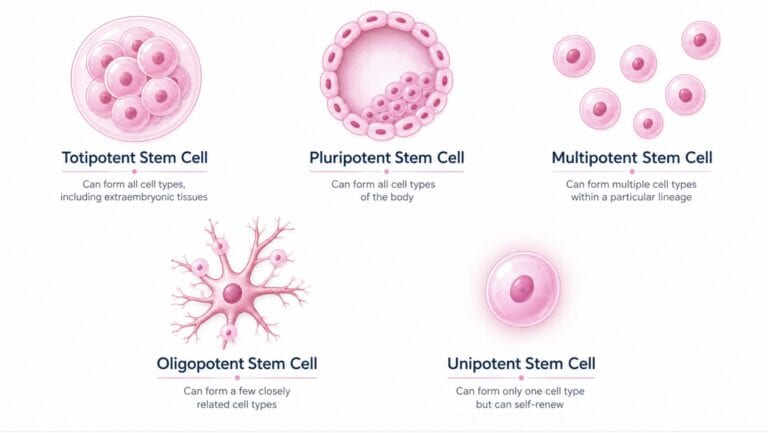
Haematopoietic stem cells (HSCs) are blood-forming stem cells, found in bone marrow, circulating blood, and umbilical cord blood. They rebuild the entire blood and immune system. Almost all proven stem cell medicine involves these.
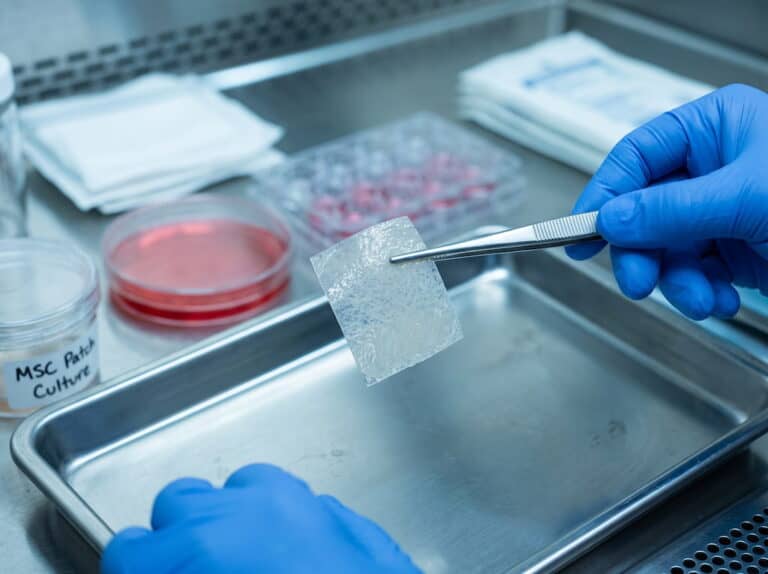
Mesenchymal stromal cells (MSCs) come from bone marrow, fat, umbilical cord tissue, and placenta. They do not usually become new tissue in the body. Their studied effects are mostly signalling: releasing growth factors, influencing inflammation, and modulating immune responses. This is the cell type most commonly offered commercially, and the one with the widest gap between marketing and approval.
Embryonic stem cells (ESCs) are derived from early-stage embryos and can become any cell type. They are used in a small number of clinical trials.
Induced pluripotent stem cells (iPSCs) are ordinary adult cells reprogrammed to behave like embryonic cells. They avoid the ethical questions of ESCs and are the basis of several trials, plus one conditional approval in Japan.
Tier 1: Conditions with established, approved stem cell treatment
Blood, immune, and metabolic diseases, the proven core
Haematopoietic stem cell transplantation, commonly called a bone marrow or blood stem cell transplant, has been in clinical use for more than fifty years. It remains the only stem cell therapy with a broad evidence base across many diseases.
The US National Marrow Donor Program lists more than 75 diseases that can be treated or cured with a blood stem cell transplant.
| Category | Examples |
|---|---|
| Blood cancers | Acute lymphoblastic leukaemia (ALL), acute myeloid leukaemia (AML), chronic lymphocytic leukaemia (CLL), chronic myeloid leukaemia (CML), Hodgkin lymphoma, non-Hodgkin lymphoma, multiple myeloma, myelodysplastic syndromes |
| Bone marrow failure | Severe aplastic anaemia |
| Inherited red cell disorders | Sickle cell disease, thalassaemia |
| Inherited immune deficiencies | Severe combined immunodeficiency (SCID), Wiskott-Aldrich syndrome |
| Inherited metabolic disorders | Adrenoleukodystrophy, Hurler syndrome, Krabbe disease, metachromatic leukodystrophy |
Transplantation is a major, high-risk procedure involving chemotherapy conditioning, and it is used when the disease justifies that risk. It is not comparable in intensity or in evidence to an outpatient cell injection.
Nine umbilical cord blood products are licensed by the FDA for use in these transplants. Their approved indication describes exactly this use: rebuilding the blood and immune system in patients with disorders affecting the blood-forming system.
Genetic diseases treated with modified blood stem cells
A newer group of approved therapies takes a patient’s own blood stem cells, corrects a genetic fault in the laboratory, and returns them. These are gene therapies delivered through stem cells.
| Product | Condition | Regulator, year |
|---|---|---|
| Zynteglo | Beta-thalassaemia requiring regular transfusions | FDA, 2022 |
| Skysona | Early, active cerebral adrenoleukodystrophy in boys aged 4 to 17 | FDA, 2022 (indication narrowed 2025) |
| Lyfgenia | Sickle cell disease with a history of vaso-occlusive events, age 12 and older | FDA, 2023 |
| Casgevy | Sickle cell disease and transfusion-dependent beta-thalassaemia | FDA, 2023 to 2024 |
| Lenmeldy | Metachromatic leukodystrophy in children | FDA, 2024 |
| Waskyra | Wiskott-Aldrich syndrome | FDA, 2025 |
| Kresladi | Severe leukocyte adhesion deficiency-I in children | FDA, 2026 (accelerated approval) |
| Strimvelis | ADA-SCID, where no matched donor is available | EMA, 2016 |
| Libmeldy | Metachromatic leukodystrophy (EU equivalent of Lenmeldy) | EMA, 2020 |
Casgevy is the first approved therapy anywhere to use CRISPR gene editing.
These are genuine cures or near-cures for conditions that previously had none. They are also intensive treatments with serious risks. Skysona and Lyfgenia both carry boxed warnings for blood cancers occurring after treatment. By July 2025, blood cancers had been diagnosed in 10 of 67 clinical trial participants who received Skysona, which led the FDA to require updated warnings and a narrower indication.
Graft-versus-host disease
Ryoncil (remestemcel-L) was approved by the FDA in December 2024 for steroid-refractory acute graft-versus-host disease in children aged two months and older. It is the first mesenchymal stromal cell therapy approved in the United States.
This is worth pausing on. MSCs are the cell type most widely marketed for dozens of conditions. After decades of research, they have one approved indication in the US, in a narrow paediatric population, for a complication of transplantation.
Eye surface damage from burns
Holoclar uses a patient’s own limbal stem cells, grown from a small biopsy, to restore the corneal surface after chemical or physical eye burns. The EMA granted conditional approval in 2015 and converted it to a standard marketing authorisation in 2024 after further data. It treats moderate to severe limbal stem cell deficiency, and requires a small area of undamaged limbus to take the biopsy from.
Severe burns and skin loss
Several engineered skin products are approved, though their regulatory basis varies.
- StrataGraft was approved by the FDA in 2021 to promote wound closure in adults with deep thermal burns requiring surgery.
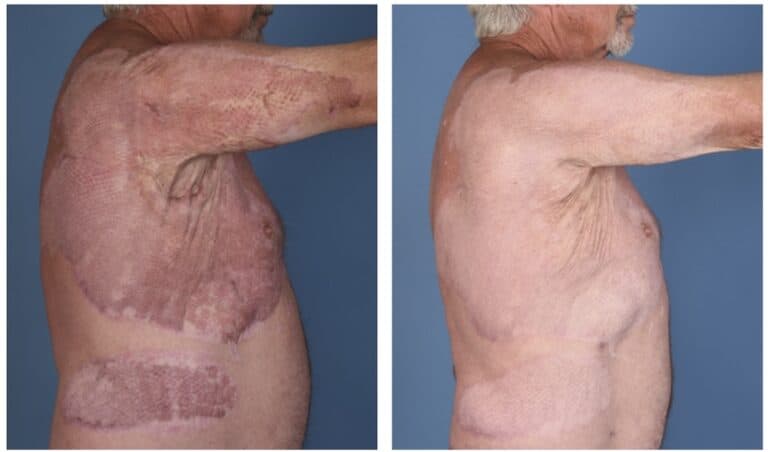
- Epicel grows a patient’s own skin cells into grafts for burns covering 30% or more of the body. It is approved under a Humanitarian Device Exemption, a pathway requiring evidence of probable benefit rather than proven effectiveness, which is a lower bar than a standard approval.
- Zevaskyn was approved by the FDA in 2025 for wounds in recessive dystrophic epidermolysis bullosa, using gene-modified skin cell sheets.
One case worth understanding: Alofisel
In 2018 the EMA approved Alofisel, an allogeneic fat-derived MSC product, for complex perianal fistulas in Crohn’s disease. It was widely reported as a breakthrough for MSC therapy.
The confirmatory trial required after approval enrolled 568 patients. It did not meet its primary endpoint, and showed no statistical difference on any secondary endpoint. In December 2024 the European Commission withdrew the marketing authorisation, on the basis that its clinical benefit was no longer demonstrated.
Alofisel is the clearest illustration of why early approval is not the same as proof. A therapy approved on promising data was tested properly, did not work, and was withdrawn.
Tier 2: Conditions under serious clinical investigation
The treatments below are being studied in real trials by credible institutions. None is approved for general use, and most are years from an answer.
Type 1 diabetes
Zimislecel (VX-880) uses stem cell-derived islet cells infused into the liver. In a phase 1/2 study published in the New England Journal of Medicine in 2025, 10 of 12 full-dose participants were insulin-independent at one year, all had HbA1c below 7%, and none had severe hypoglycaemia.
Two important qualifications. All participants require lifelong immunosuppression, which trades one chronic condition for another set of risks, and there were two deaths in the study. Phase 3 is ongoing, with no efficacy results reported and no current regulatory submission timeline.
Parkinson’s disease
Two lines of work are worth knowing about.
Bemdaneprocel uses embryonic stem cell-derived dopamine neuron progenitors. A phase 1 study of 12 patients published in Nature in 2025 met its safety endpoints, with no graft-induced dyskinesias, which was the failure mode that ended earlier fetal tissue grafting. Motor scores improved substantially in the high-dose group, but this was an uncontrolled study of seven people, and Parkinson’s surgical trials are known for large placebo responses. A randomised, sham-controlled phase 3 trial began in September 2025, with results expected in 2027.
Amchepry (raguneprocel) received conditional, time-limited approval in Japan in March 2026, the world’s first approved iPSC-derived therapy. The evidence base was a seven-patient, open-label, uncontrolled study. Japan’s regenerative pathway is explicitly designed to allow this, with post-marketing studies required for full approval. Two products previously approved under the same pathway were later denied full approval and withdrawn. This is a real scientific milestone assessed against a much lower evidentiary standard than FDA or EMA approval.
Multiple sclerosis, two very different things
Autologous haematopoietic stem cell transplantation (aHSCT) for MS is an immune reset. Chemotherapy ablates the misfiring immune system and the patient’s own blood stem cells rebuild it. The stem cells are the rescue, not the therapy.
The randomised MIST trial (110 patients, published in JAMA in 2019) found disease progression in 3 aHSCT patients versus 34 on standard drug therapy, and disability scores that improved rather than worsened. A 20-year UK registry reports progression-free survival of 83.5% at two years and 62.4% at five, with transplant-related mortality of 1.4%.
A 2025 ECTRIMS and EBMT consensus recommends considering it as escalation therapy in highly active MS where at least one high-efficacy drug has failed, ideally in patients under 45 with disease duration under 10 years. It is not recommended in late-stage progressive MS.
MSC infusions for MS are a different intervention with a different result. MESEMS, the largest randomised double-blind placebo-controlled trial of MSCs in MS at 144 patients, failed its primary efficacy endpoint.
Both are described as “stem cells for MS.” One has randomised evidence of large benefit in a narrowly defined group. The other did not work in its best test.
Heart failure
DREAM-HF randomised 565 patients to allogeneic mesenchymal precursor cells or a sham procedure. The primary endpoint was not met, with results numerically favouring the control group. The authors stated plainly that the primary and secondary endpoints were negative.
An earlier Cochrane review found a mortality benefit but rated its own evidence as low quality, and it has not been updated since 2016, before the two largest and most rigorous trials, both of which were negative. After two decades of intensive investigation, cell therapy has not produced a treatment that works for heart failure.
Knee osteoarthritis
A 2025 Cochrane review of 25 randomised trials found MSC injections improved pain by about 1.2 points on a 10-point scale compared with placebo injection, rated low certainty, and downgraded partly because up to three larger trials were conducted but withdrawn before reporting results. No included study assessed whether cartilage actually changed on imaging.
A separate 2024 meta-analysis found the improvement smaller than the threshold patients can perceive as meaningful, and concluded that MSC injection probably provides little to no improvement in pain or function. Adverse events were more common than with control. The American College of Rheumatology strongly recommends against stem cell injections for knee and hip osteoarthritis.
Retinal disease and spinal cord injury
Both remain at early trial stage. In retinal disease, the most advanced programme is a phase 2a study of embryonic stem cell-derived retinal pigment epithelium cells for geographic atrophy. In spinal cord injury, a Japanese iPSC-derived neural progenitor study in four patients reported no tumour formation and functional improvement in two, compared against a historical rather than a concurrent control group. These are safety studies, not evidence of effectiveness.
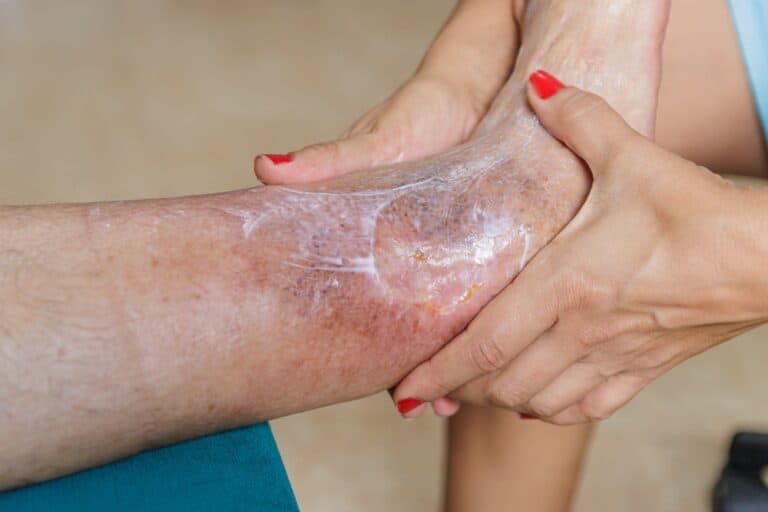
Chronic wounds and diabetic foot ulcers
This is the area closest to Vegaderma’s clinical work, so it deserves a precise answer.
Multiple meta-analyses of randomised trials report improved healing rates and reduced amputation rates when MSCs are added to standard care for diabetic foot ulcers. A 2025 network meta-analysis comparing platelet-rich plasma, epidermal growth factor, and stem cell therapy across 23 trials found stem cells ranked first for complete healing, though differences between the three were not statistically significant.
The honest reading: the direction of evidence is more favourable here than in most Tier 2 indications, the individual trials are small and heterogeneous, and no cell therapy is approved anywhere for diabetic foot ulcers. It remains adjunctive and investigational. Nothing in this evidence replaces the established foundations of wound care, meaning debridement, offloading, infection control, revascularisation where needed, and compression for venous ulcers.
Tier 3: Conditions where stem cell treatment is not currently supported
The FDA states directly that the only stem cell products approved in the United States are blood-forming stem cells derived from umbilical cord blood, and that no approved stem cell product exists for:
- Neurological conditions including multiple sclerosis, ALS, Alzheimer’s disease, Parkinson’s disease, epilepsy, or stroke
- Orthopaedic conditions including osteoarthritis, tendonitis, disc disease, tennis elbow, back pain, hip pain, knee pain, neck pain, or shoulder pain
- Cardiovascular and lung conditions including heart disease, emphysema, and COPD
- Autism, macular degeneration, blindness, chronic pain, or fatigue
There are also no FDA-approved exosome products.
Some conditions in that list appear in Tier 2 above, because trials are underway. Both statements are true at once: research is active, and no approved treatment exists yet. What the list rules out is treatment available for purchase today, not future possibility.
Autism deserves specific mention because it is heavily marketed. There is no approved stem cell treatment for autism, and the evidence consists of small early studies. Families researching this are often under considerable pressure, and it is worth knowing that the regulatory position is unambiguous.
Two things patients are commonly told that are not accurate
“It’s your own cells, so it’s completely safe.” Safety depends on how cells are processed, what they are combined with, and where they are injected, not on whose body they came from. Documented harms from cell injections include severe bilateral vision loss after intravitreal injection of a patient’s own fat-derived cells, and a multi-state outbreak of bacterial infections traced to contaminated umbilical cord products, in which nearly all affected patients required hospital admission.
“Stem cells can cure this.” For blood and immune diseases treated by transplantation, and for the approved gene therapies, cure is a reasonable word. Outside those categories, no stem cell therapy has been shown to cure a disease. Research into whether cell therapies can slow, stabilise, or improve other conditions is genuine and ongoing, but the current evidence does not support cure claims.
How to check the status of a specific condition
If you want to establish where a particular condition sits, three checks settle it:
- Is there an approved product for this specific condition? Approval is always for a named product and a named indication, never for “stem cell therapy” in general. The FDA and EMA both publish searchable lists of approved cellular therapies.
- Is there an active clinical trial? ClinicalTrials.gov lists registered trials worldwide. Note that being listed on a trial registry is not the same as being an approved treatment, and patients are not normally charged to participate in a trial.
- What does the evidence look like? Ask whether results come from randomised controlled trials with a comparison group, or from case series and patient reports. Both appear in publications, but only the first can show that a treatment works.
Where regenerative medicine fits at Vegaderma
Vegaderma applies growth-factor and cell-based protocols selectively, within three areas: chronic wounds and diabetic ulcers, scars, and hair and scalp conditions. These are used alongside standard care rather than in place of it, and only after assessment establishes that a patient is a suitable candidate.
As this article sets out, cell-based approaches in these areas are adjunctive and investigational rather than approved therapies. Our position is that patients are entitled to know that distinction before starting treatment, along with realistic timelines, documented progress measurements, and a clear statement of what standard care must happen first.
Where a condition falls outside these areas, or where hospital-based or surgical care is the priority, our team refers rather than treats. You can read more about our approach on our chronic wound and skin repair and diabetic wound care pages, or in our research section.
Frequently Asked Questions
-
How many diseases can stem cells treat?
Blood stem cell transplantation is used for more than 75 blood, immune, and inherited metabolic diseases. Beyond that, approved therapies exist for a small number of specific conditions: several genetic diseases treated with gene-modified blood stem cells, steroid-refractory graft-versus-host disease in children, limbal stem cell deficiency after eye burns, and certain severe burns and skin conditions. All other applications are investigational.
-
What diseases are cured by stem cells?
Blood stem cell transplantation can cure some blood cancers, inherited immune deficiencies, and disorders such as sickle cell disease and thalassaemia. The approved gene therapies can be curative for the specific genetic conditions they target. Outside these categories, no stem cell therapy has been shown to cure a disease.
-
Is stem cell therapy FDA approved?
Specific products are approved for specific conditions. There is no blanket approval for "stem cell therapy." The FDA states that the only approved stem cell products in the US are blood-forming stem cells derived from umbilical cord blood, alongside a small number of separately licensed cell and gene therapy products.
-
Can stem cells treat arthritis?
No stem cell product is approved for osteoarthritis. A 2025 Cochrane review found a small improvement in pain compared with placebo injection, rated low certainty, and a 2024 meta-analysis found the effect smaller than patients can perceive as meaningful. The American College of Rheumatology strongly recommends against stem cell injections for knee and hip osteoarthritis.
-
Can stem cells treat autism?
No. There is no approved stem cell treatment for autism, and the FDA states explicitly that no approved stem cell product exists for this condition. Available evidence is limited to small early studies.
-
Can stem cells help chronic wounds and diabetic foot ulcers?
This is an active research area with more favourable evidence than most investigational indications. Several meta-analyses report improved healing when cell therapy is added to standard care, though trials are small and varied and no product is approved for this use. Cell-based approaches are adjunctive, and they do not replace debridement, offloading, infection control, or revascularisation.
-
What is the difference between stem cell therapy for MS and a stem cell transplant for MS?
They are different treatments. Autologous haematopoietic stem cell transplantation uses chemotherapy to reset the immune system, with the patient's own blood stem cells rebuilding it afterwards, and randomised evidence supports its use in carefully selected patients with highly active MS. Mesenchymal stem cell infusions are a different intervention, and the largest randomised trial of MSCs in MS failed its primary endpoint.
-
Are stem cells from my own body safer than donor cells?
Not automatically. Risk depends on how the cells are processed, what they are mixed with, and where they are administered. Serious harms including vision loss and infection have been documented following injections of patients' own cells.
-
Why do some clinics list far more conditions than this article?
Different pages use different standards for what counts as "treated." This article counts a condition as treatable when a regulator has approved a product for it. Pages listing many more conditions are generally counting treatments that are investigational, or offered outside regulatory approval.
References
- National Marrow Donor Program (NMDP). Diseases treated by transplant. https://www.nmdp.org/patients/understanding-transplant/diseases-treated-by-transplant
- US FDA. Approved Cellular and Gene Therapy Products. https://www.fda.gov/vaccines-blood-biologics/cellular-gene-therapy-products/approved-cellular-and-gene-therapy-products
- US FDA. Consumer Alert on Regenerative Medicine Products Including Stem Cells and Exosomes. https://www.fda.gov/vaccines-blood-biologics/consumers-biologics/consumer-alert-regenerative-medicine-products-including-stem-cells-and-exosomes
- US FDA. FDA Approves Required Labeling Changes, Increased Risk of Hematologic Malignancy Following Treatment with Skysona, August 2025. https://www.fda.gov/vaccines-blood-biologics/fda-approves-required-labeling-changes-increased-risk-hematologic-malignancy-following-treatment
- US FDA. Ryoncil (remestemcel-L-rknd). https://www.fda.gov/vaccines-blood-biologics/cellular-gene-therapy-products/ryoncil
- European Medicines Agency. Holoclar EPAR. https://www.ema.europa.eu/en/medicines/human/EPAR/holoclar
- European Medicines Agency. Alofisel EPAR (authorisation withdrawn 13 December 2024). https://www.ema.europa.eu/en/medicines/human/EPAR/alofisel
- Reichman TW, et al. Stem cell-derived, fully differentiated islets for type 1 diabetes. N Engl J Med. 2025;393(9):858-868. https://www.nejm.org/doi/full/10.1056/NEJMoa2506549
- Bemdaneprocel phase 1 results. Nature. 2025;641(8064):978-983. https://www.nature.com/articles/s41586-025-08845-y
- Sawamoto N, et al. Phase 1/2 trial of iPS cell-derived dopaminergic progenitors in Parkinson’s disease. Nature. 2025;641(8064):971-977. https://www.nature.com/articles/s41586-025-08700-0
Medical Disclaimer: Treatment outcomes vary between individuals. The information on this page is for educational purposes only and should not be interpreted as medical advice or a guarantee of results. A physician consultation is required to determine suitability for any treatment.

The Vega Derma Medical Team consists of board-certified dermatologists, specialized trichologists, and clinical researchers based in Bangkok, Thailand. Our team specializes in evidence-based regenerative dermatology, complex tissue repair, and advanced hair restoration (including precision FUE and FSE). Every protocol and article we publish is medically reviewed to ensure it meets international clinical standards, providing safe, science-backed guidance for our local and international patients.