
Introduction
Before considering whether stem cell therapy can help treat diabetic wounds, it is important to ask a more basic question: is your blood sugar well enough controlled for regenerative treatment to work?. Many consumer articles overlook this important clinical question. Here, we explain how high blood sugar can disrupt the biological processes that stem cell therapy relies on, what HbA1c range is usually needed before starting treatment, and why good blood sugar control should come first for anyone thinking about stem cell therapy for diabetic wounds, including those looking at providers in Bangkok, Thailand.
Why Blood Sugar Control Is the First Question, Not the Last
Regenerative therapy works by amplifying the body’s own repair mechanisms new blood vessel formation, immune cell coordination, and tissue remodeling. Chronic high blood sugar directly damages every one of these mechanisms. That means the same regenerative signal delivered to a well-controlled patient and a poorly controlled patient can produce very different outcomes, independent of the treatment itself.
This is why any responsible discussion of stem cell for diabetic wound treatment has to start with glycaemic status, not the treatment protocol.
How Hyperglycaemia Impairs Angiogenesis
Angiogenesis, which means the formation of new blood vessels, is one of the most important steps in wound healing. If there is not enough blood supply, tissue cannot get the oxygen, nutrients, or regenerative cells it needs to heal.
Damage to the Vascular Endothelium
When glucose levels stay high for a long time, it damages the endothelial cells that line blood vessels. This makes it harder for them to respond to growth factors, which typically promote the growth of new blood vessels. Regenerative therapy depends on this process.
Reduced Growth Factor Signaling
High glucose levels are associated with reduced activity of key angiogenic signaling pathways, including vascular endothelial growth factor (VEGF) signaling. Since these pathways are exactly what regenerative treatments aim to stimulate, impaired signaling blunts the therapy’s effectiveness before it can act.
Microvascular Dysfunction
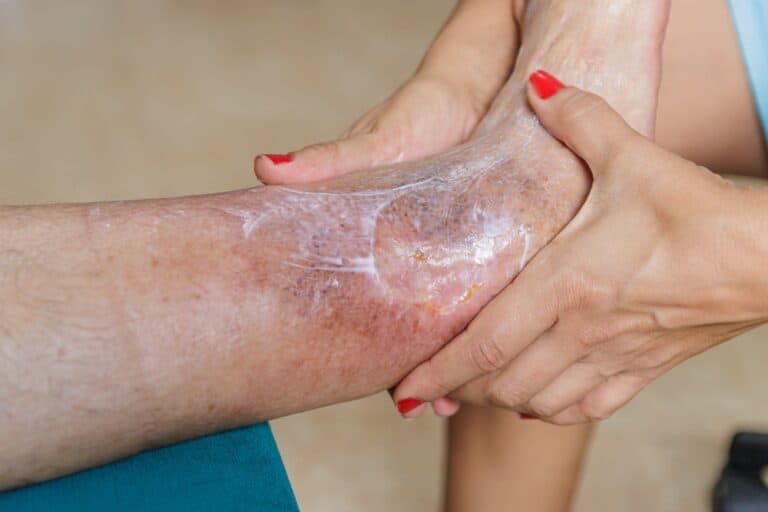
Long-term hyperglycaemia contributes to thickening of capillary basement membranes and microvascular dysfunction, particularly in the extremities which is precisely where diabetic wounds most commonly occur. This creates a local environment that is structurally resistant to new vessel growth, regardless of how effective the regenerative signal is.
How Hyperglycaemia Impairs Immune Function
Wound healing isn’t just a vascular process it’s also an immune process. Hyperglycaemia disrupts immune function in several specific ways relevant to stem cell for diabetic wound outcomes.
Impaired Neutrophil Function
Neutrophils are among the first immune cells to respond to tissue injury. Elevated glucose levels are associated with reduced neutrophil chemotaxis (their ability to migrate to the wound site) and reduced phagocytic function, delaying the early clean-up phase of healing.
Chronic Low-Grade Inflammation
Instead of a normal, time-limited inflammatory response, poorly controlled blood sugar tends to produce a prolonged, low-grade inflammatory state. This keeps the wound “stuck” in an inflammatory phase rather than progressing into proliferation and remodeling the phases where regenerative therapy has the most to offer.
Reduced Macrophage Transition
Healthy wound healing depends on macrophages transitioning from a pro-inflammatory role early on to a pro-repair role later. Hyperglycaemia is linked to delayed or incomplete transition, meaning the wound environment stays inflamed longer and repair signaling is suppressed.
What HbA1c Range Gives Regenerative Therapy a Realistic Chance
HbA1c reflects average blood sugar control over roughly the previous two to three months, making it a more meaningful marker than a single glucose reading for treatment planning.
Why a Single Blood Sugar Reading Isn’t Enough
A patient can have a normal glucose reading on the day of treatment while having poorly controlled levels over recent months. Since angiogenesis and immune function are affected by sustained glucose exposure not a single snapshot HbA1c is the more clinically relevant marker for stem cell for diabetic wound treatment planning.
General Clinical Thresholds
While exact thresholds are determined case-by-case by a treating physician, regenerative and wound-healing literature generally associates:
- Better-controlled ranges with meaningfully improved healing potential and reduced complication risk
- Poorly controlled, elevated ranges with significantly impaired angiogenesis, higher infection risk, and reduced regenerative response
This is why glycaemic status is typically assessed and optimized before a stem cell for diabetic wound protocol begins, not evaluated afterward if healing stalls.
Why Glycaemic Control Is a Prerequisite, Not an Afterthought
Treating the Environment, Not Just the Wound
Regenerative therapy introduces a strong repair signal but it cannot override a hostile local environment. If the vascular and immune systems around the wound are actively impaired by high glucose, the regenerative signal has a much smaller foundation to work with.
Sequencing Matters
For patients considering stem cell for diabetic wound treatment, the practical sequence generally looks like:
- Assess current glycaemic control (HbA1c and recent glucose trends)
- Optimize blood sugar management alongside the treating physician or endocrinologist
- Reassess wound status and vascular supply
- Proceed with regenerative treatment planning once control is stabilized
Skipping directly to treatment without addressing glycaemic control risks a therapy working against, rather than with, the body’s environment.
Why This Protects the Patient
Attempting regenerative therapy in a poorly controlled glycaemic state doesn’t just risk reduced effectiveness it can also mean therapy is used on a wound bed that isn’t equipped to translate the biological signal into visible healing, potentially delaying more effective, better-timed care.
Key Takeaways
- Hyperglycaemia directly impairs angiogenesis by damaging vascular endothelium and disrupting growth factor signaling.
- It also impairs immune function, delaying neutrophil response and prolonging inflammation.
- HbA1c, not a single glucose reading, is the more relevant marker for assessing readiness for stem cell for diabetic wound treatment.
- Glycaemic control should be optimized before regenerative therapy it’s a prerequisite for a realistic chance of success, not a side detail.
Frequently Asked Questions
Can regenerative therapy still help if blood sugar isn't perfectly controlled?
This depends heavily on individual case severity and should be assessed by a treating physician but the biological evidence consistently shows that better glycaemic control improves the environment regenerative therapy needs to work.
Why does HbA1c matter more than a single glucose test?
Because angiogenesis and immune function are affected by sustained glucose exposure over months, not a single day’s reading, HbA1c better reflects the wound-healing environment.
Should blood sugar be managed before or during stem cell treatment?
Glycaemic optimization is generally addressed before treatment begins, so the regenerative signal has a biologically receptive environment to work within.

The Vega Derma Medical Team consists of board-certified dermatologists, specialized trichologists, and clinical researchers based in Bangkok, Thailand. Our team specializes in evidence-based regenerative dermatology, complex tissue repair, and advanced hair restoration (including precision FUE and FSE). Every protocol and article we publish is medically reviewed to ensure it meets international clinical standards, providing safe, science-backed guidance for our local and international patients.