
Introduction
Among the current regenerative options in hair restoration, stem cell therapy for hair loss addresses the underlying issue most directly. Rather than merely enhancing blood flow or fortifying existing hair, this method targets the stem cells within dormant follicles and aims to reactivate them. This represents a fundamentally distinct approach compared to previous treatments.
This article focuses exclusively on the application of stem cells for the scalp, rather than for scars or joints. We will examine the underlying mechanism, outline the procedural steps, identify suitable candidates, and discuss realistic timelines. Additionally, we will address stem cell hair restoration for early-stage thinning, explain the role of adipose-derived stem cell (ADSC) therapy in hair regrowth, and describe a comprehensive protocol for scalp treatment incorporating stem cells.
How Stem Cell Therapy on the Scalp Differs From Stem Cells Used Elsewhere
The Scalp Has Its Own Biological Structure to Target
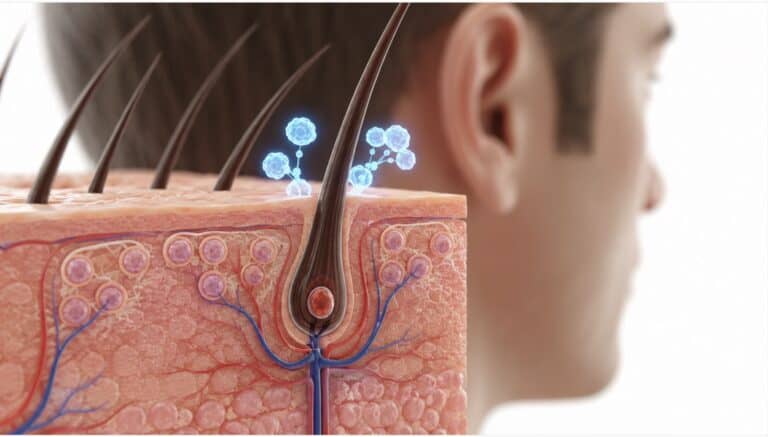
Stem cell therapy shows up in a lot of places in medicine healing surgical scars, treating joint degeneration, you name it. But the scalp is its own thing. Treatment has to specifically target a structure called the hair follicle bulge, which is where the follicle’s stem cells actually live. That means the injection technique matters a lot here too shallow and you miss the target entirely, too deep and you’re wasting material in tissue that doesn’t need it.
Actually Waking Up Dormant Stem Cells
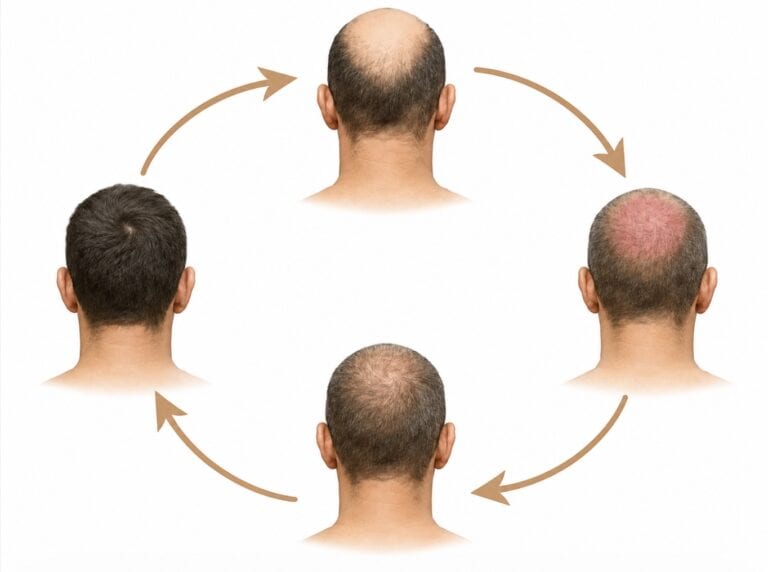
Stem cell therapy for hair loss works by delivering either stem cells themselves or the biological compounds they produce, directly to dormant stem cells inside the follicle. The goal is to get those cells dividing again, rebuild the tiny capillary network feeding the area, and recreate the microenvironment a follicle actually needs before it can restart a real growth cycle.
Where the Stem Cells Actually Come From
Adipose-Derived Stem Cells (ADSC)
Adipose-derived stem cells, or ADSC, are the most commonly used source right now. They’re harvested from a small amount of the patient’s own fat tissue through a minor liposuction procedure which means a higher concentration of stem cells than most other sources, and since it’s the patient’s own tissue, rejection risk is essentially off the table.
Secretome-Based Therapy: Skipping the Cell Harvest Entirely
For patients who’d rather not go through a harvesting step at all, secretome-based therapy uses only the biological compounds stem cells secrete while being cultured no live cells involved. Those compounds are loaded with the growth factors and cytokines needed to wake a follicle up, just without the complexity (or the extra procedure) of collecting cells directly from the patient’s body. Lower risk, shorter prep time.
What the Stem Cell Therapy for Hair Loss Procedure Actually Involves
Step 1: A Real Assessment Before Anything Starts
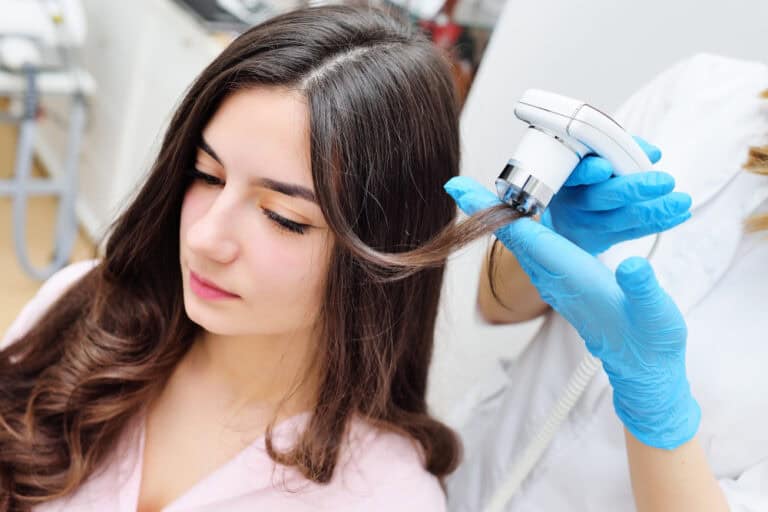
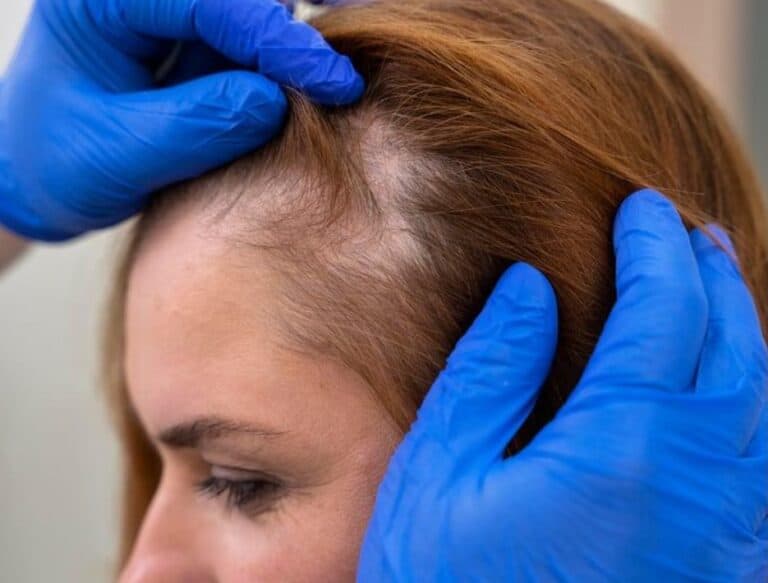
The process starts with a thorough scalp and follicle evaluation using trichoscopy, which lets the doctor check whether viable stem cells are actually still present in the affected follicles. This step genuinely determines whether someone is a good candidate at all skipping it means guessing.
Step 2: Harvesting Stem Cells (For Full Cell-Based Protocols)
If ADSC is the route chosen, the doctor performs a small liposuction usually from the abdomen or thighs under local anesthesia. That fat tissue then goes through a lab process to isolate the stem cells before anything gets injected.
Step 3: Preparing the Injection Material
Whatever’s being used, whether that’s stem cells or a secretome extract, gets adjusted to a concentration matched to that specific patient’s follicle condition before it’s ready for injection.
Step 4: Injecting Into the Scalp
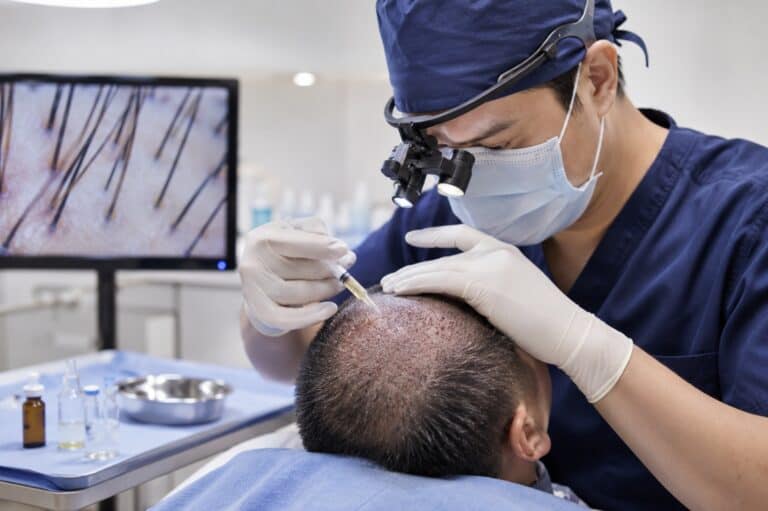
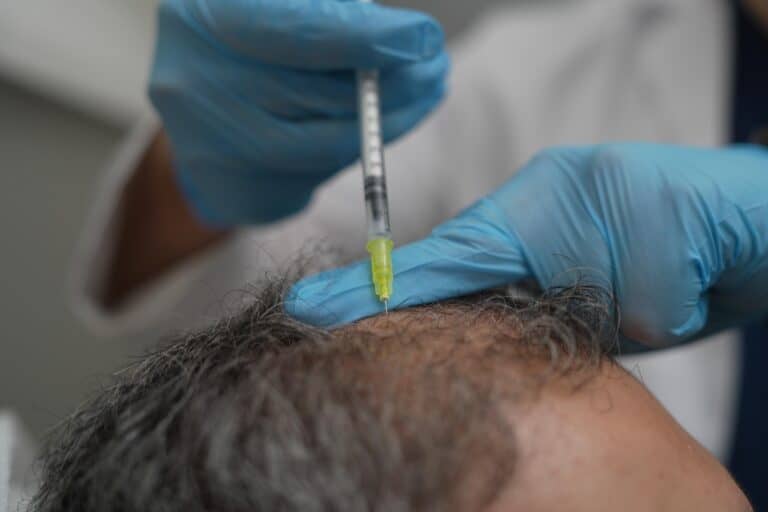
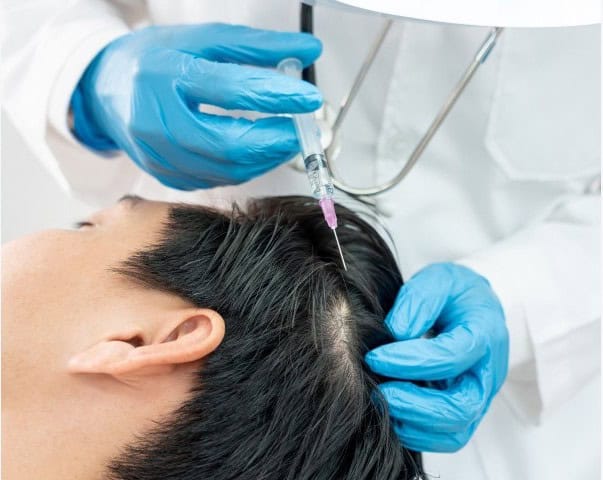
Using fine needles, the doctor injects the prepared material into the affected areas of the scalp, focusing on regions where dormant follicles are most densely packed. The session usually runs 30 to 60 minutes, and microneedling often gets added in the same visit to help everything absorb more effectively.
Step 5: Aftercare in the First 24 to 48 Hours
Patients are generally told to skip hot showers directly on the scalp and avoid vigorous scalp massage for the first day or two after treatment giving the injected material time to actually do its job before it gets disturbed.
Who’s Actually a Good Candidate for Stem Cell Therapy for Hair Loss
Ideal Candidates
- Early-to-moderate thinning, with follicles that are still present and viable
- Androgenetic alopecia that hasn’t progressed to full follicle atrophy yet
- Patients who’ve tried Minoxidil or PRP and seen results plateau
- Anyone specifically looking to avoid surgical hair transplantation
Who Might Not Be a Good Fit
- Patients with fully atrophied follicles and no remaining stem cells to reactivate
- Anyone with active infection or significant inflammation on the scalp at the time of treatment
- Patients with certain underlying conditions affecting blood clotting or immune function worth a thorough discussion with a doctor before moving forward
What Timeline to Actually Expect
Weeks 1–6: Not Much to See Yet
Most patients won’t notice visible change during this window. Follicles need time to actually respond to the signaling and re-enter a growth cycle patience matters here more than people expect going in.
Around Month 3
Shedding usually starts to slow down, and some patients notice a few fine new hairs coming in around the treated area, though they’re often still thin and small at this stage.
Around Month 6
Density starts to shift in a more noticeable way new hairs thicken up, and the change becomes visible rather than something you have to really look for. Doctors generally recommend two to three sessions total, spaced three to four months apart, to build toward a lasting result.
Past 12 Months
This is usually where results look their best. With consistent follow-up care, the improvement tends to hold for years rather than fading back.
Stem Cell Therapy vs. PRP: What’s Actually Different
Both sit under the regenerative medicine umbrella, but they’re not interchangeable. Stem cell therapy goes directly after the follicle’s own stem cells using a much higher concentration of biological material, while PRP mainly boosts circulation and delivers an initial signaling push through concentrated platelets. In practice, clinics frequently combine the two particularly for follicles that have been dormant for a long stretch, where a single approach alone often isn’t enough to fully restart things.
Finding a Clinic That Actually Assesses Candidacy Properly
Getting real, safe results from stem cell therapy depends heavily on a team that knows how to evaluate follicle condition accurately, choose the right stem cell source for that patient, and run the lab preparation process to an actual medical standard.
At Vega Derma, the hair and scalp specialist team runs a thorough candidacy assessment for each patient before building a stem cell therapy for hair loss plan matched to their specific follicle condition and goals.
To learn more about a complete stem cell therapy for hair loss approach, you can read our in-depth guide to scalp treatment for hair loss, covering everything from ADSC therapy for pattern baldness to combining PRP and stem cell treatment for hair regrowth.
Frequently Asked Questions
Does this hurt, and is there downtime?
The injection step can feel mildly uncomfortable, but local anesthetic keeps that manageable for most patients. Downtime is minimal most people are back to normal activities the same day.
How many sessions does it take to see results?
Generally two to three sessions, spaced three to four months apart, with the clearest results typically showing up somewhere between six and twelve months after starting.
Is stem cell therapy actually safe?
When it’s performed by an experienced physician under proper medical standards, the overall risk is low especially when the cells or extract come from the patient’s own body rather than a donor source.
The Bottom Line
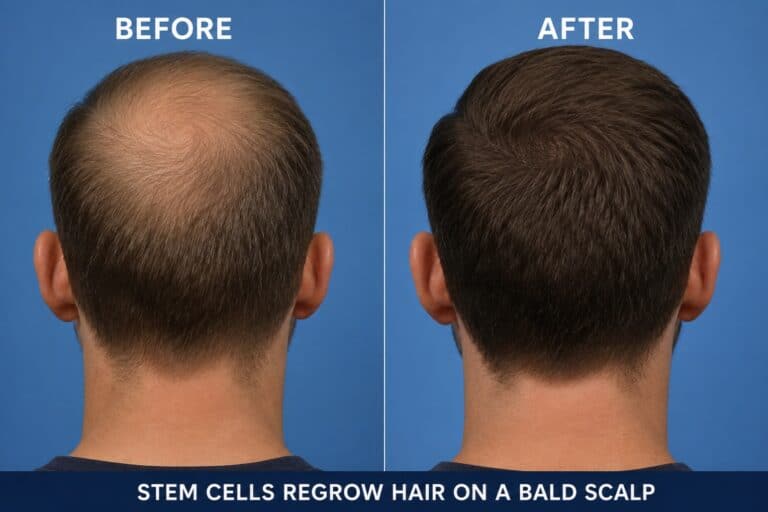
Stem cell therapy for hair loss represents a real shift in how hair restoration works, going straight after the stem cells at the root of the problem instead of just boosting blood flow or reinforcing hair that’s already growing. For patients with dormant follicles that haven’t fully atrophied, it opens up an option that genuinely wasn’t available a few years ago.
A consultation with a specialized team at a clinic like Vega Derma for a real candidacy assessment and a treatment plan built around your specific follicle condition is the right first step toward a result that’s both lasting and safe.

The Vega Derma Medical Team consists of board-certified dermatologists, specialized trichologists, and clinical researchers based in Bangkok, Thailand. Our team specializes in evidence-based regenerative dermatology, complex tissue repair, and advanced hair restoration (including precision FUE and FSE). Every protocol and article we publish is medically reviewed to ensure it meets international clinical standards, providing safe, science-backed guidance for our local and international patients.