

Separating proven hair loss solutions from unproven marketing claims comes down to understanding what is driving your thinning in the first place. There is no universal answer to what the best treatment for hair loss is, because pattern thinning, stress shedding, and hormonal shifts each require a different clinical approach. Matching the cause to the therapy is what separates real progress from disappointment.
Understanding Your Hair Loss First
Not all hair loss behaves the same way, and the type you have shapes which hair loss therapy is worth pursuing. Identifying the pattern early avoids months spent on treatments that were never going to work for that condition. The most common categories seen in clinical practice include:
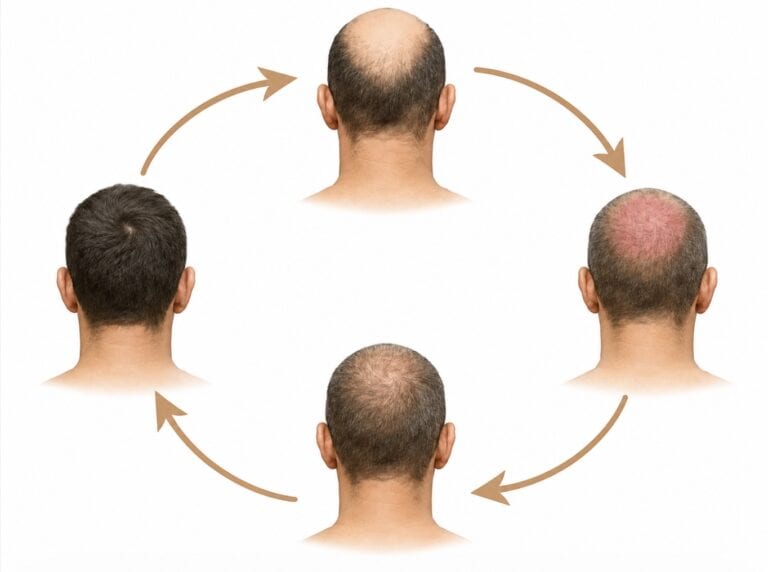
- Pattern hair loss (androgenetic alopecia): Gradual and progressive, driven by genetics and hormone sensitivity. Presents hairline recession or crown thinning in men, and diffuse thinning across the top of the scalp in women.
- Stress-related shedding (telogen effluvium): Appears a few months after a physical or emotional trigger such as illness, surgery, childbirth, or significant weight change. Usually resolves once the trigger passes.
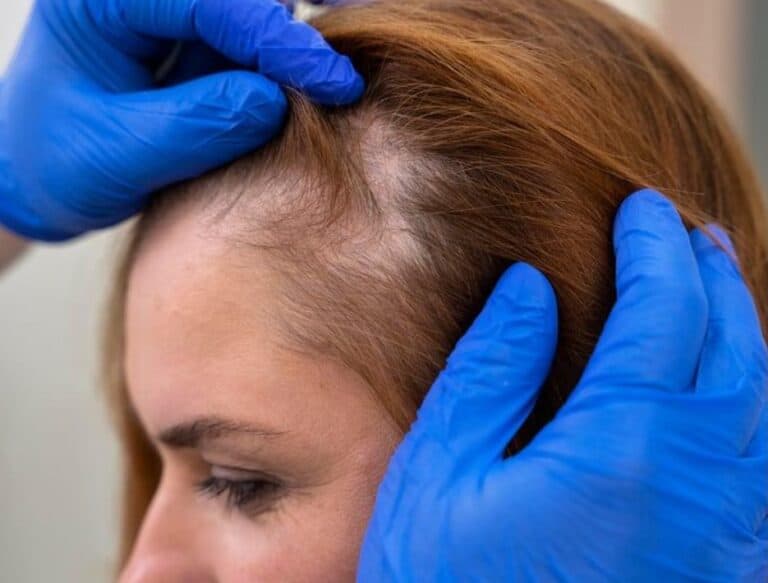
- Patchy hair loss (alopecia areata): Autoimmune in origin, with circular patches of loss. Requires a separate treatment pathway.
- Nutritional and hormonal factors: Iron deficiency, thyroid imbalance, and postpartum hormonal shifts can all contribute and may need to be addressed before topical or surgical options become worthwhile.
Getting the type identified through proper assessment is the single most useful first step any patient can take.
The Big 3 for Hair Regrowth
In hair loss circles, what are the Big 3 for hair regrowth refers to the three treatments with the most established evidence for pattern hair loss. These are typically where physicians begin when a patient is confirmed to have androgenetic alopecia:
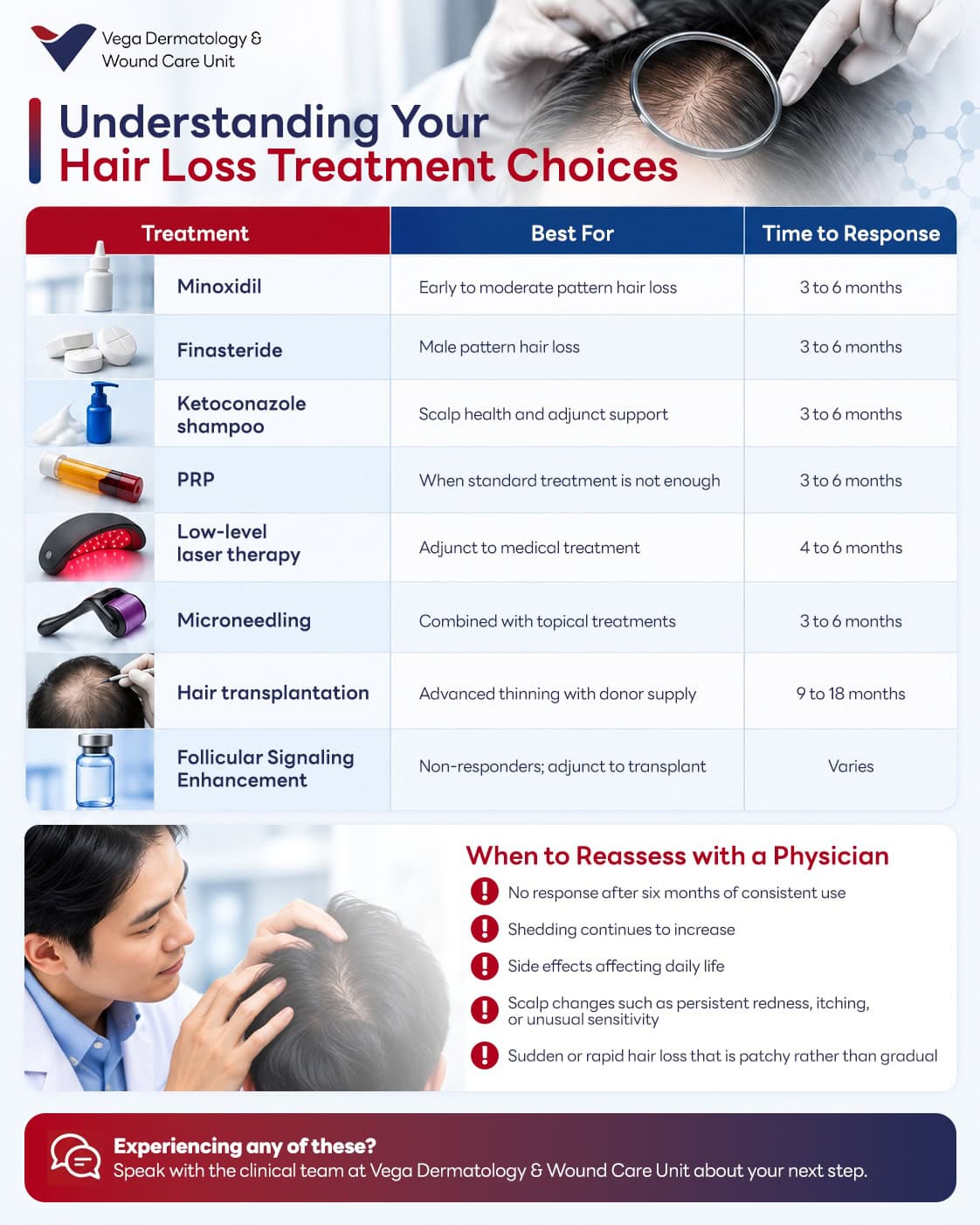
- Minoxidil: A topical solution applied to the scalp once or twice daily. May help support regrowth by improving blood flow to the follicles and prolonging the active growth phase. Visible change typically takes several months, and shedding often increases during the first weeks before improvement appears.
- Finasteride: An oral prescription medication that reduces the hormone responsible for follicle shrinkage in men. Involves ongoing use and is not suitable for everyone, particularly women of childbearing age and patients with certain medical histories.
- Ketoconazole shampoo: Used two to three times a week to reduce scalp inflammation and support a healthier follicle environment alongside the other two treatments.
These options work well for some patients, produce limited improvement for others, and are unsuitable for a small group due to side effects or medical history. Ultimately, which treatment is best for hair regrowth comes down to the diagnosis and how the individual responds to a first-line treatment. A physician’s assessment helps determine whether the Big 3 is the right starting point or whether the case calls for a different direction from the outset.
Other Hair Loss Therapy Options
When the Big 3 are not enough, other hair loss therapy options may be considered. These generally fall into two categories: procedures that support the existing follicles and surgical restoration for areas where follicles have been lost.
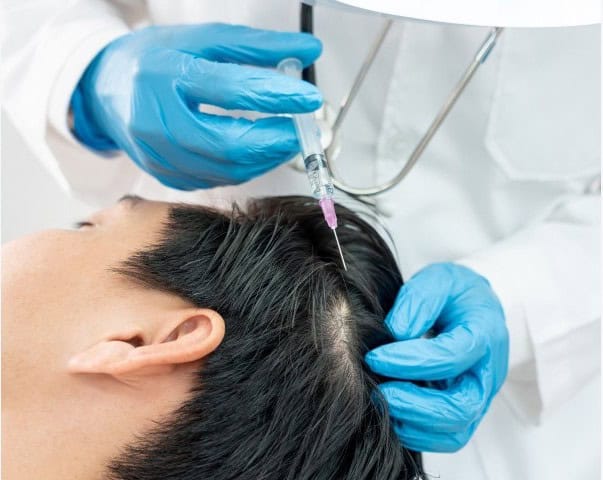
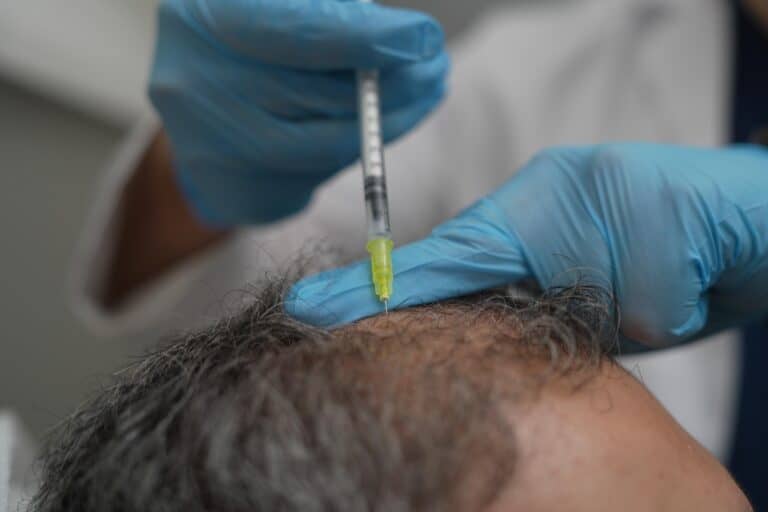
- Platelet-rich plasma (PRP): Uses the patient’s own blood to deliver concentrated growth factors to the scalp through a series of injections.
- Low-level laser therapy: Uses light energy to stimulate follicle activity. Available in both in-clinic devices and home-use caps.
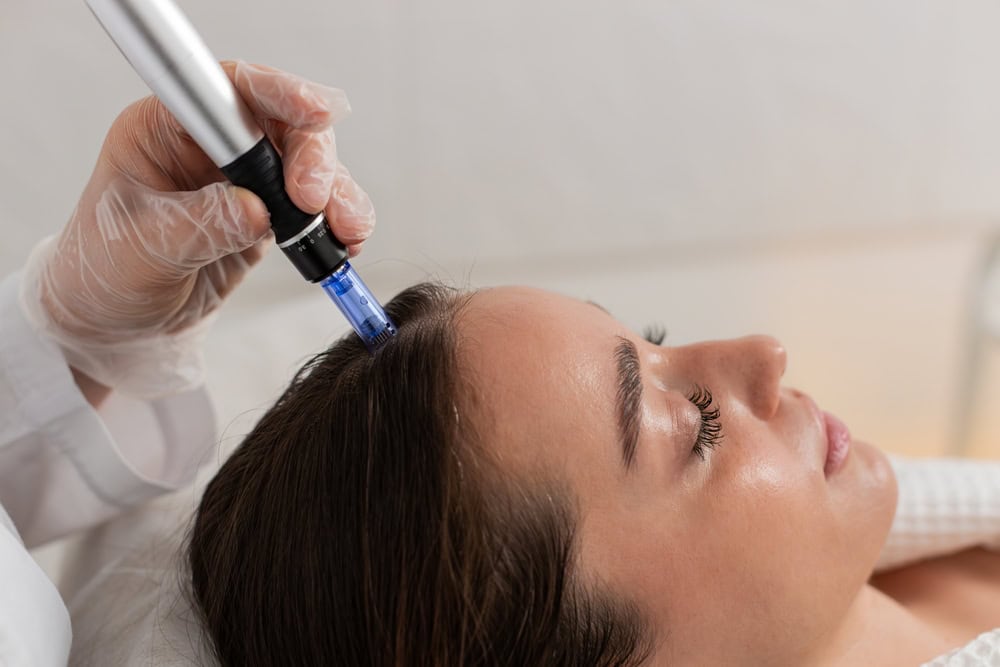
- Microneedling: Creates controlled micro-injuries in the scalp to trigger a repair response and may also enhance absorption of topical treatments applied afterward.
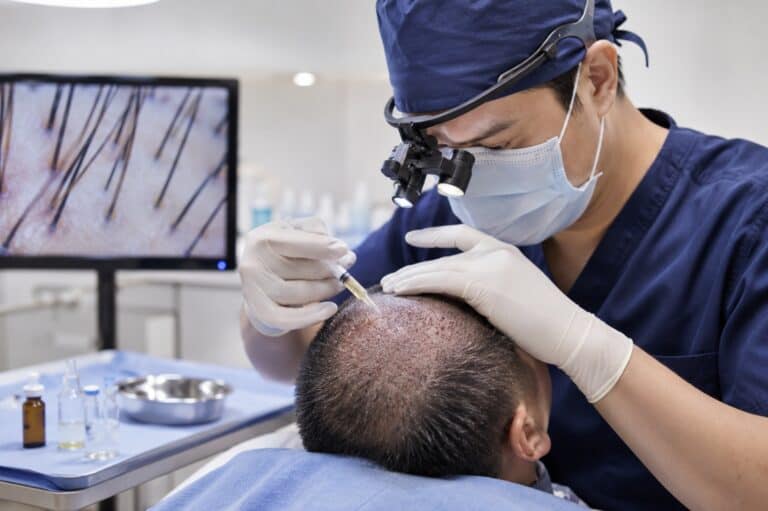
- Hair transplantation: A surgical option for areas where follicles are no longer active. Hair transplantation services relocate healthy follicles from a donor area to thinning regions.
Lifestyle adjustments such as balanced nutrition and stress management support these procedural options but do not replace them. Any plan incorporating hair therapy for hair loss works best when the medical direction is matched to the individual case.
Can Hair Grow Back After Thinning?
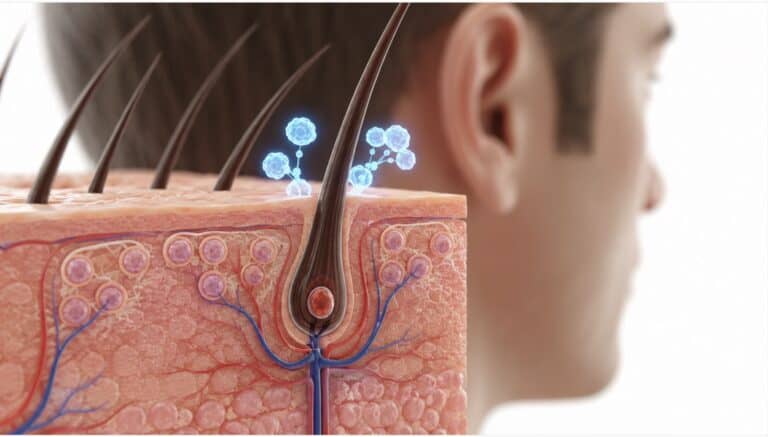
Hair can grow back after thinning in many cases, and it is possible to regrow hair back when the follicles remain viable. In pattern hair loss, follicles shrink gradually over time in a process known as miniaturization. Each cycle produces a thinner, shorter, and less pigmented hair until the follicle eventually stops producing visible hair altogether.
In the earlier stages of this process, follicles are weakened but still capable of producing hair. This is the window where topical and oral treatments have the greatest chance of supporting a response. Once follicles have been inactive for a long period and the scalp appears smooth in that area, the window for regrowth narrows significantly. This is why any hair loss therapy is generally more effective the earlier it starts.
For patients whose follicles are no longer viable in certain areas, transplantation becomes the realistic path to visible density in those regions. Timing is less critical at that stage because the follicles are no longer responsive to topical or oral treatment.
Precision Care for Hair Loss That Persists
At Vega Dermatology & Wound Care Unit in Bangkok, the treatment of hair loss starts with a structured clinical intake designed around each patient’s scalp condition, hair loss pattern, and medical history. Assessment with our qualified physicians is the point at which the right combination of therapies is matched to the individual case.
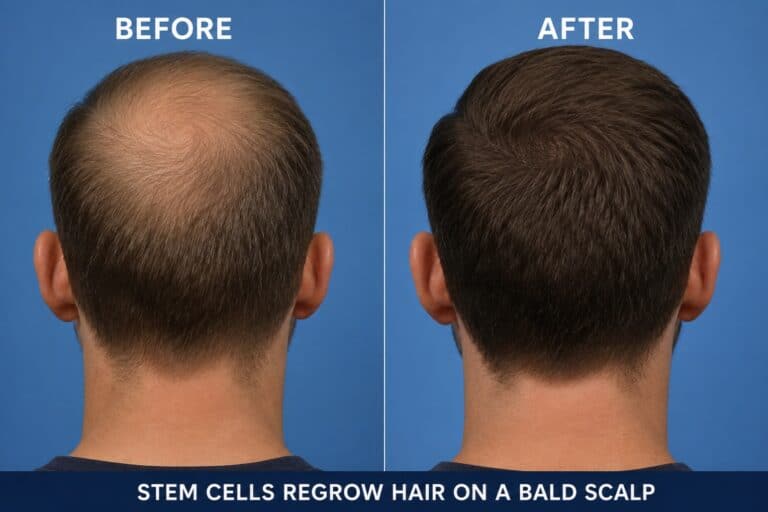
For patients whose thinning has not responded to standard options, hair follicle regeneration therapy through Follicular Signaling Enhancement (FSE) is one direction considered at Vega. It draws on research from the Vega Stem Cell clinic and uses bioactive signaling to support the follicle environment. It can be paired with hair transplantation to help support graft conditions during the recovery phase, and it also serves as a standalone option for patients with early to moderate thinning.
If you want to find out what is behind your hair loss and which combination of options fits, book a consultation at Vega Dermatology & Wound Care Unit for a clinical scalp assessment.
References:
- Androgenetic Alopecia. Retrieved 26 August 2026, from https://www.ncbi.nlm.nih.gov/books/NBK430924/
- Minoxidil and Its Use in Hair Disorders: A Review. Retrieved 26 August 2026, from https://www.ncbi.nlm.nih.gov/pmc/articles/PMC6691938/
- Finasteride. Retrieved 26 August 2026, from https://www.ncbi.nlm.nih.gov/books/NBK513329/
- Platelet-Rich Plasma and its Use for Cicatricial and Non-Cicatricial Alopecias: A Narrative Review. Retrieved 26 August 2026, from https://www.ncbi.nlm.nih.gov/pmc/articles/PMC7367994/
- Telogen Effluvium. Retrieved August 26, 2026, from https://www.ncbi.nlm.nih.gov/books/NBK430848/

The Vega Derma Medical Team consists of board-certified dermatologists, specialized trichologists, and clinical researchers based in Bangkok, Thailand. Our team specializes in evidence-based regenerative dermatology, complex tissue repair, and advanced hair restoration (including precision FUE and FSE). Every protocol and article we publish is medically reviewed to ensure it meets international clinical standards, providing safe, science-backed guidance for our local and international patients.