

Several months into Ozempic, the weight is coming off and you feel good about it. Then one morning you notice clumps of hair in your brush and heavy shedding in the shower. It is jarring, and it makes sense to blame the drug. But the cause is rarely the medication attacking your follicles directly.
However, clinical evidence suggests hair loss is not directly caused by Ozempic itself, but rather by rapid weight loss and the nutrient shifts that come with it. Here is what is actually happening to your body, and what you can do about it.
Can Ozempic Actually Cause Hair Loss?
Among the reported Ozempic side effects, hair loss has become one of the most discussed. Recent research has found that people taking semaglutide (the active ingredient in Ozempic) are diagnosed with hair loss at higher rates than people on some other weight-loss medications. Women show a notably higher diagnosed rate than men.
However, this is an observed association, not proof that Ozempic hair loss side effects come from direct follicle damage. The more likely mechanism is indirect: rapid weight loss puts the body under significant stress, and that stress reaches the hair cycle before it reaches anything else. This means that hair loss due to Ozempic is a weight-loss-driven effect instead of a direct drug effect, which needs different responses.
Why It Happens: The Telogen Effluvium Connection
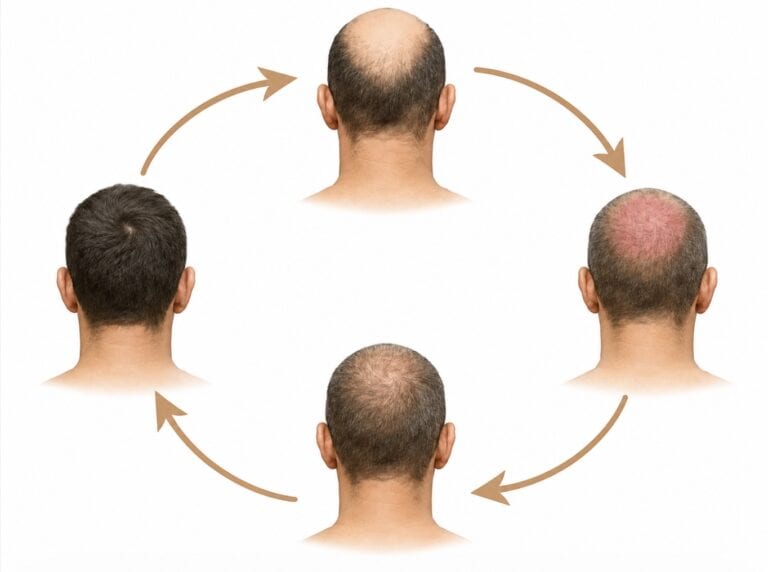
Most Ozempic-related shedding falls under a pattern called telogen effluvium. This is a stress-induced shift in the hair growth cycle, not permanent follicle loss. When the body faces a major stressor (rapid weight loss, illness, surgery, childbirth), a larger-than-usual share of hairs move from the growth phase into the resting phase and then shed a few months later.
Rapid caloric restriction is a classic trigger. When calories drop sharply, the body diverts nutrients toward essential functions and away from things it treats as non-essential, including hair growth. What’s more, protein and key micronutrients (iron, zinc, vitamin D, B12) commonly run low during aggressive weight loss, and those gaps compound the effect. The shedding usually shows up 2 to 3 months after the trigger, not immediately.
What Ozempic Hair Loss Looks Like in Women
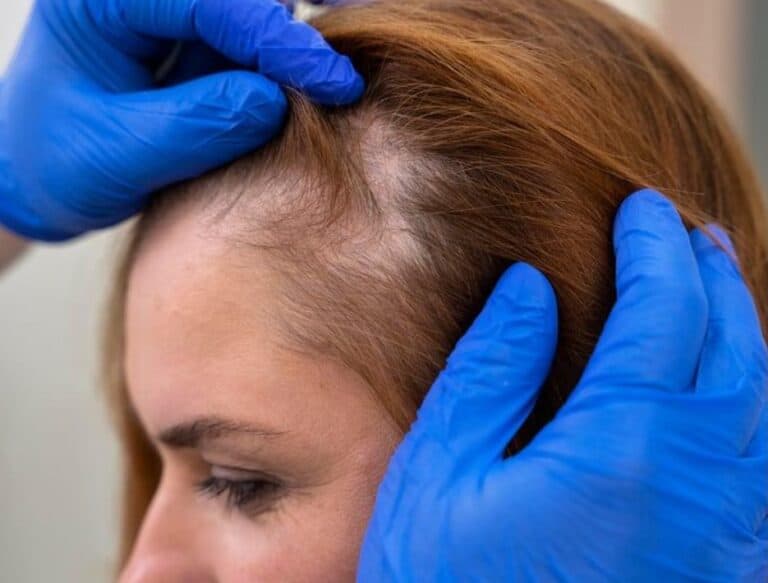
The typical presentation is diffuse thinning across the whole scalp rather than a specific bald patch. You might notice a widening part, thinner ponytail, more strands on the pillow, or clumps in the shower drain. Some women also notice texture changes, with hair feeling finer or flatter than usual.
This pattern is different from female pattern hair loss, which is more localized around the crown and part line and tends to progress gradually over years. The distinction is important, because telogen effluvium usually resolves once the trigger is addressed, whereas pattern hair loss needs a different treatment approach.
How to Stop Hair Loss From Ozempic
Talk to the doctor who prescribed the medication before making any changes. Ozempic is not a regular over-the-counter medication, so adjusting your dose or timeline is a medical decision.
From there, a few other things genuinely help:
- Slow the pace of weight loss to a more sustainable rate under medical guidance.
- Aggressive weekly losses are the biggest single risk factor for stress-related shedding.
- Prioritize protein intake and check for the common micronutrient gaps (iron, zinc, vitamin D, B12).
- Consider bloodwork if the shedding is significant.
- Maintain gentle scalp care.
- Avoid tight hairstyles, harsh chemical treatments, and heavy heat styling while your hair is actively recovering.
Why You Can’t Stop It Overnight

An important note is that the hair growth cycle runs on months, not days. Once a large batch of hairs has shifted into the resting phase, they will shed on their own schedule regardless of what you change today. Don’t buy into any product or protocol promising to reverse this within a week.
But what you can change overnight is appearance, using volumizing shampoo, gentler brushing, and having a fresh cut that hides thin spots. Actual biological recovery takes 3 to 6 months once triggers are addressed. Starting the right plan now shapes how much recovery you get, but it does not compress the timeline.
Vega’s Approach to Hair and Scalp Regeneration
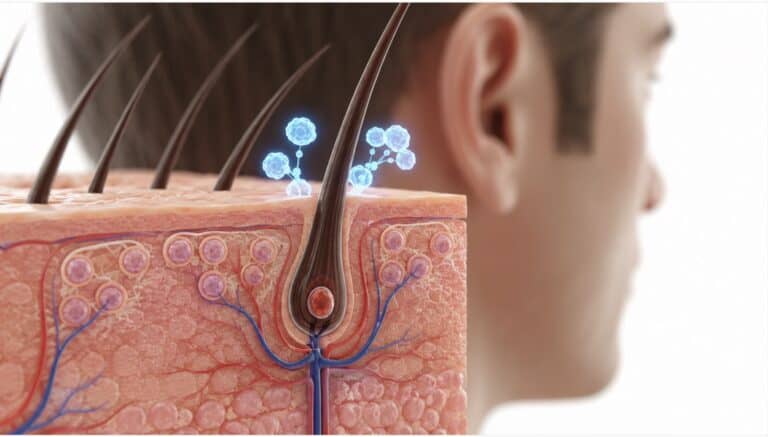
At Vega Dermatology & Wound Care Unit, we treat the hair follicle as a biological unit affected by circulation, inflammation, and cellular signaling. This matters when the underlying trigger is systemic, like rapid weight loss.
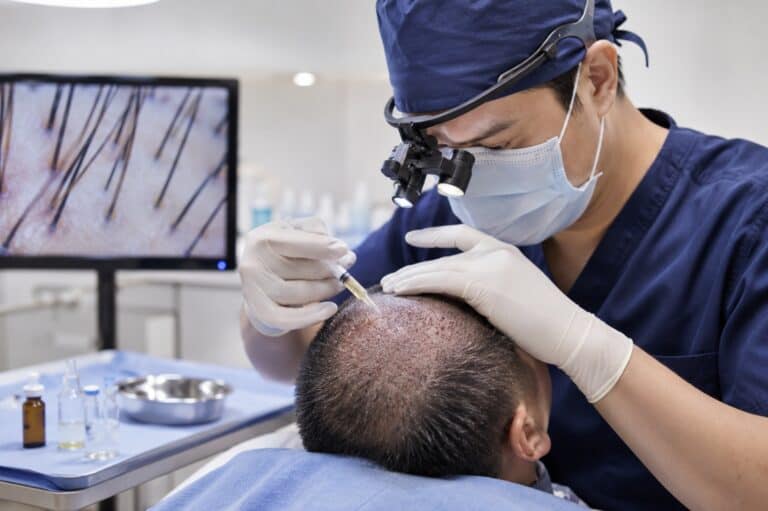
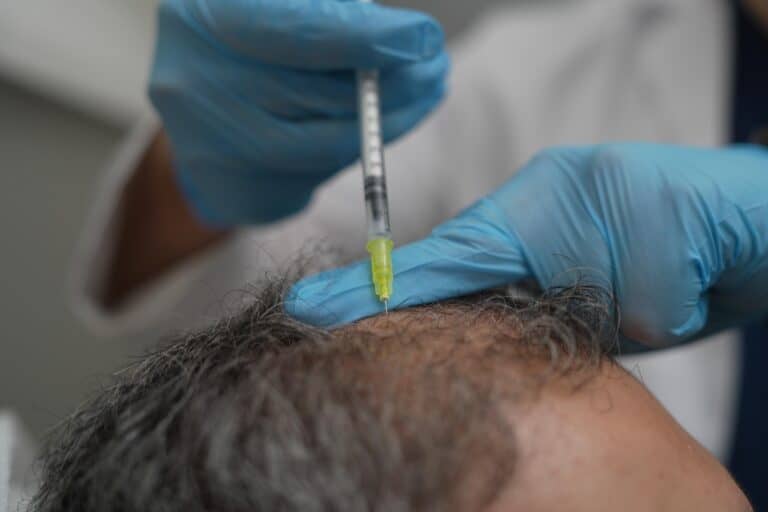
Our clinic offers Follicular Signaling Enhancement (FSE), designed to support scalp microenvironment recovery for suitable candidates dealing with stress-related shedding. We use trichoscopy and objective tracking to monitor how your follicles respond over time. This is especially relevant if your shedding persists beyond the typical recovery window despite nutrition and lifestyle changes, or if you want structured hair loss therapy alongside your Ozempic plan.
Support Long-Term Hair Recovery
Hair loss can happen indirectly due to Ozempic, but this is usually a temporary stress response, not permanent damage. Addressing the triggers (pace of weight loss, protein, key micronutrients), giving the hair cycle 3 to 6 months to reset, and staying patient with the timeline can help restore your hair’s condition. If progress stalls or other causes are suspected, a professional consultation can help uncover what’s happening.
At Vega Dermatology & Wound Care Unit, we track recovery with trichoscopy and physician-led assessment so you can see whether your follicles are actually rebounding. Our team may combine medical stabilization, physician-assessed regenerative support such as Follicular Signaling Enhancement for suitable candidates, and continued nutrition guidance, adjusting the plan as your recovery progresses.

The Vega Derma Medical Team consists of board-certified dermatologists, specialized trichologists, and clinical researchers based in Bangkok, Thailand. Our team specializes in evidence-based regenerative dermatology, complex tissue repair, and advanced hair restoration (including precision FUE and FSE). Every protocol and article we publish is medically reviewed to ensure it meets international clinical standards, providing safe, science-backed guidance for our local and international patients.