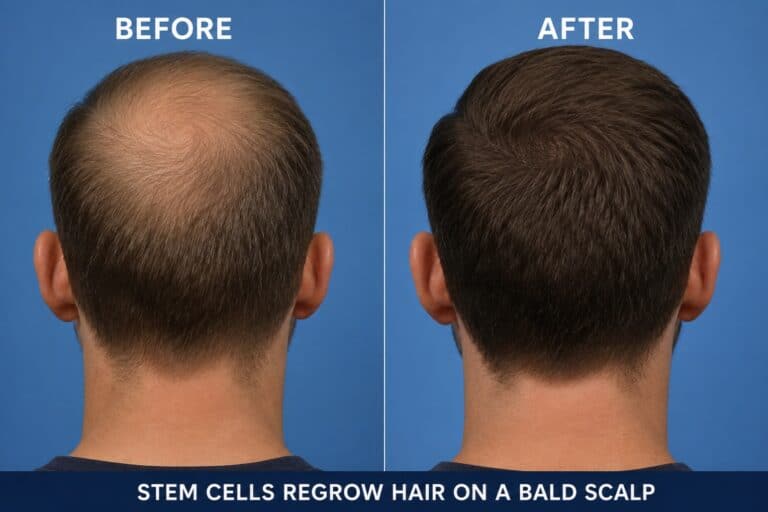

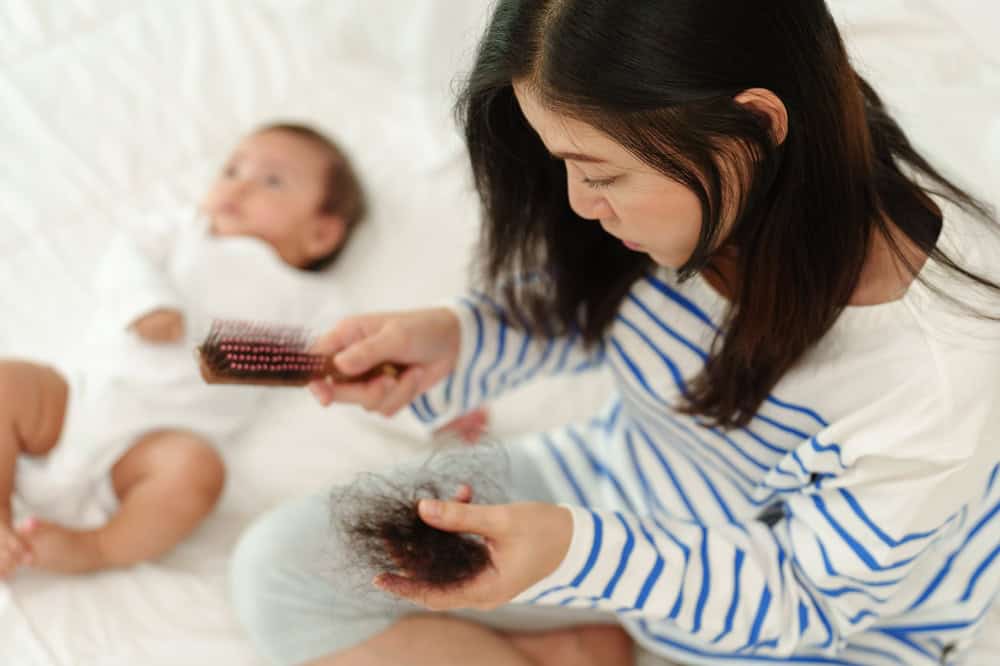
Postpartum hair loss, often appearing as clumps in the shower or on pillows, is a frequent and disturbing aspect of recovery for many new mothers. It can be a startling and concerning experience, particularly when it occurs alongside the fatigue and adaptation of new parenthood. Most women find that this hair loss is not permanent and their hair regrows. What varies is how heavy it gets, how long it lasts, and whether you can do anything to ease it along the way. The type of shedding, the underlying cause, and individual health factors all shape whether home care is enough or whether a clinical assessment makes more sense.
What Is Postpartum Hair Loss and Why Does It Happen?
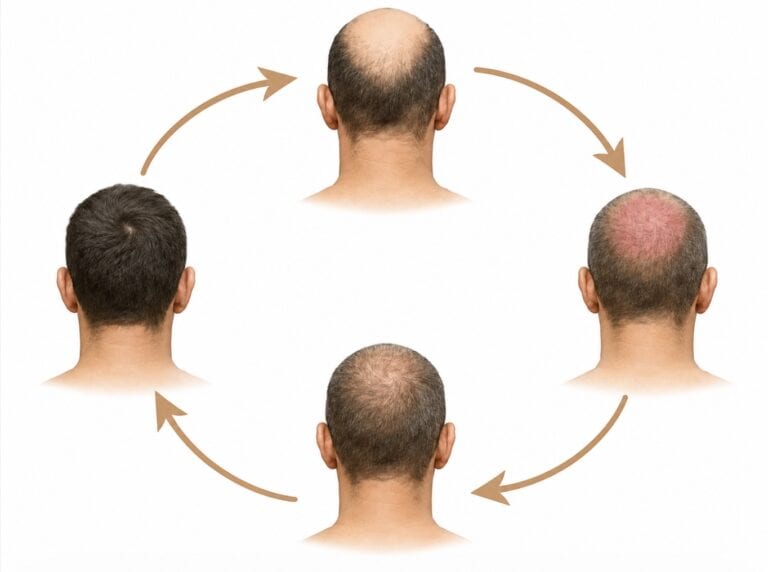
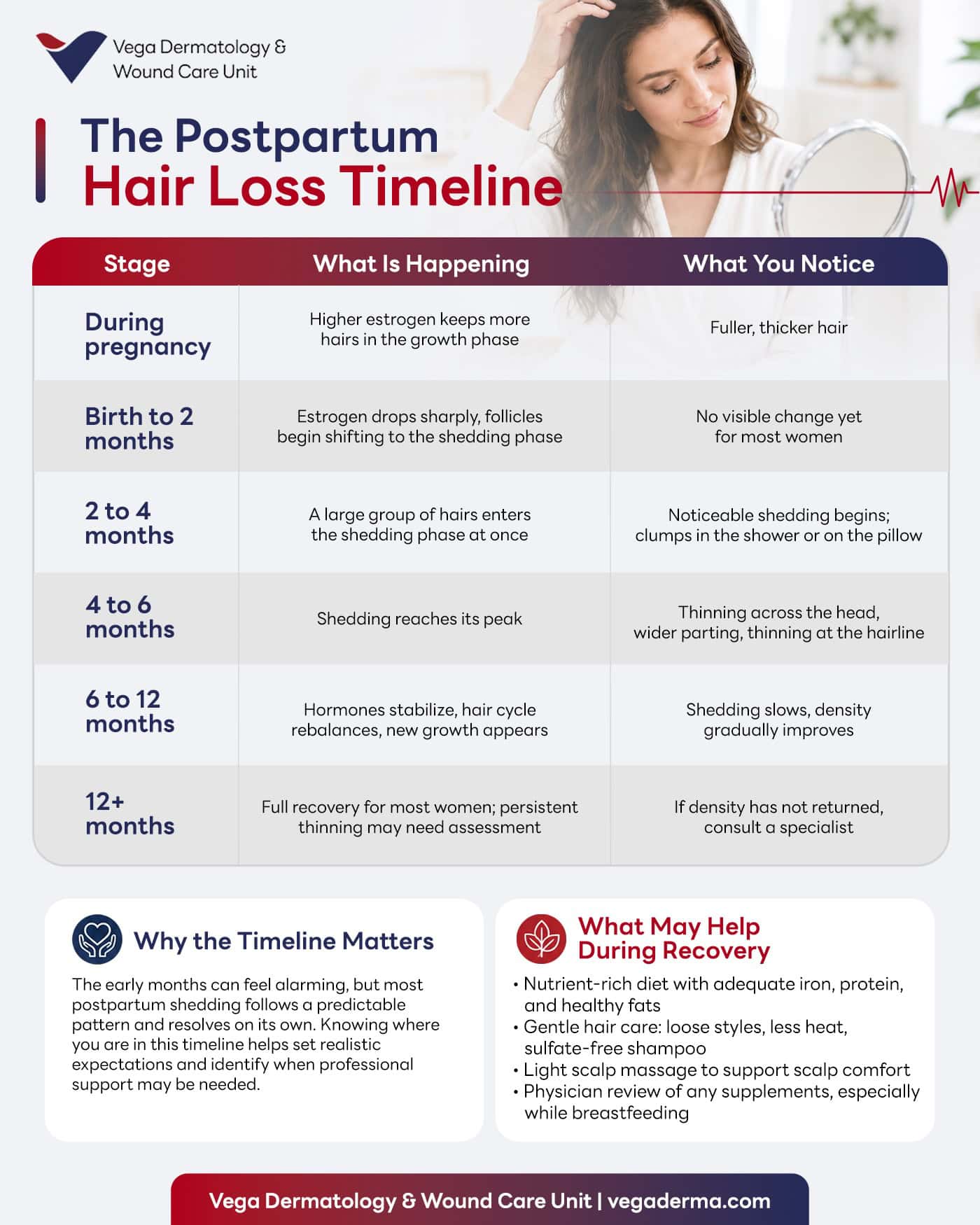
During pregnancy, higher estrogen levels keep more hairs in the growth phase than usual, which is why hair often feels thicker and fuller in the later months. After birth, those hormone levels drop and a large group of hairs shifts into the shedding phase at once. That sudden shift is what makes postpartum hair loss feel so dramatic, even though it is a normal part of the body returning to its pre-pregnancy state.
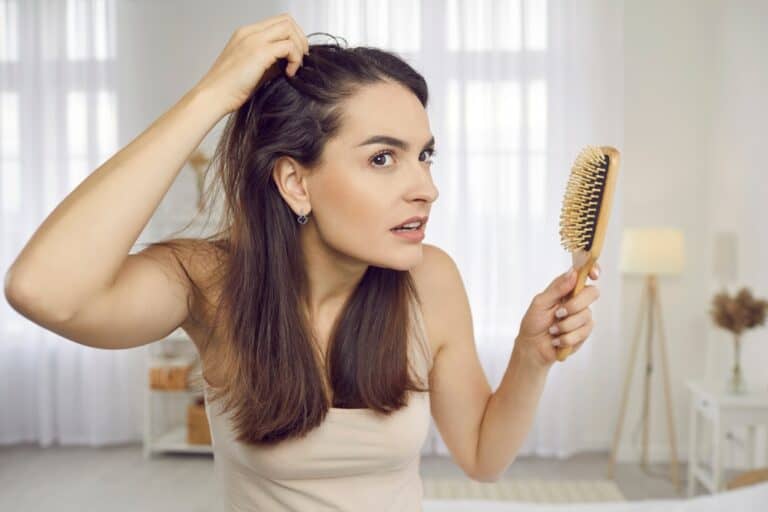
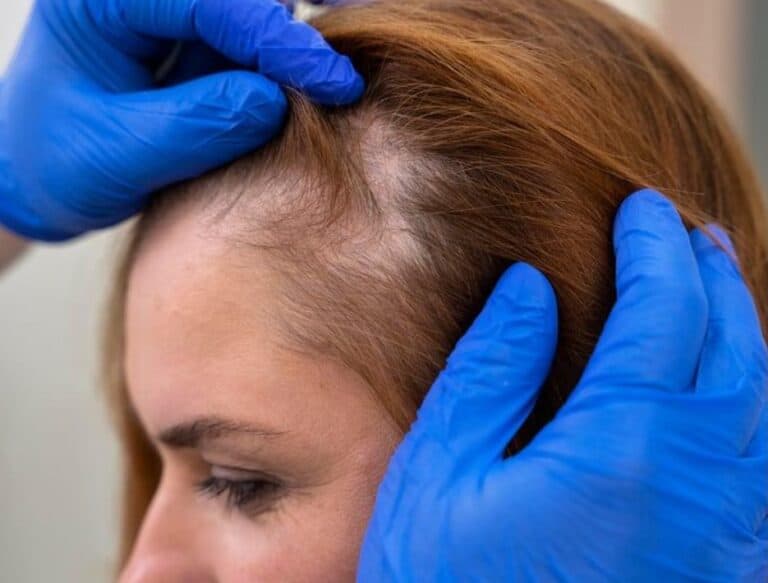
It usually shows up as overall thinning across the head rather than clear bald patches. A wider parting and thinning around the hairline are common, and many women notice more hair collecting on the brush, the pillow, or in the shower drain than at any previous point. Sleep loss, physical recovery from birth, and low nutrient levels, especially iron and protein, can make shedding worse. Breastfeeding on its own does not cause hair loss, though the continued hormonal fluctuations during this period may extend the timeline slightly for some women.
When Postpartum Hair Loss Starts and How Long It Lasts
Shedding most often begins around 2 to 4 months after birth and tends to peak between the 4 and 6 month mark. For most women, it settles by 6 to 12 months as hormones stabilize and the hair cycle rebalances. The pattern can feel uneven, with heavier weeks followed by quieter stretches, but the general direction is toward recovery.
This timeline reflects the natural length of the hair’s resting phase. Once a follicle enters that phase, it takes several weeks for the hair to actually fall out, and several more months for the replacement hair to grow in visibly. That lag is why shedding can seem to continue even after the hormonal trigger has already passed.
Everyday Ways to Reduce Postpartum Hair Loss
Postpartum hair loss is primarily hormonal, which means it cannot be fully prevented. The impact, however, can be softened with a few consistent habits. Eating regularly and focusing on iron, protein, and healthy fats (eggs, leafy greens, lentils, fish) gives the body what it needs to support recovery. Anyone considering a new supplement should speak to a doctor first, especially while breastfeeding.
How you handle the hair day to day matters just as much as what you eat. Small changes in routine can reduce breakage, which is often what makes thinning look worse than it actually is:
- Loose ponytails or clips instead of tight styles that pull on fragile hair
- Less heat styling, or air-drying when possible
- Sulfate-free shampoo and a wide-tooth comb on wet hair
- A satin or silk pillowcase to reduce friction overnight
- A few minutes of light scalp massage a day to support scalp comfort
Any at-home oil or mask should be patch-tested first and discussed with a doctor if breastfeeding, since not all ingredients are suitable during this period. For most women, learning how to deal with postpartum hair loss is less about finding the right product and more about staying consistent with these small daily adjustments.
When to See a Specialist for Postpartum Hair Loss
Certain signs suggest something beyond typical postpartum shedding and warrant a specialist assessment:
- Shedding that is still heavy after 12 months
- Bald patches or visible scarring on the scalp
- Persistent itching, redness, or flaking
- Emotional impact that is affecting daily life
These can point to conditions such as thyroid dysfunction, iron-deficiency anemia, or an autoimmune condition that may require its own postpartum hair loss treatment pathway. In some cases, what started as standard postpartum shedding may overlap with a separate condition that was not present before pregnancy.
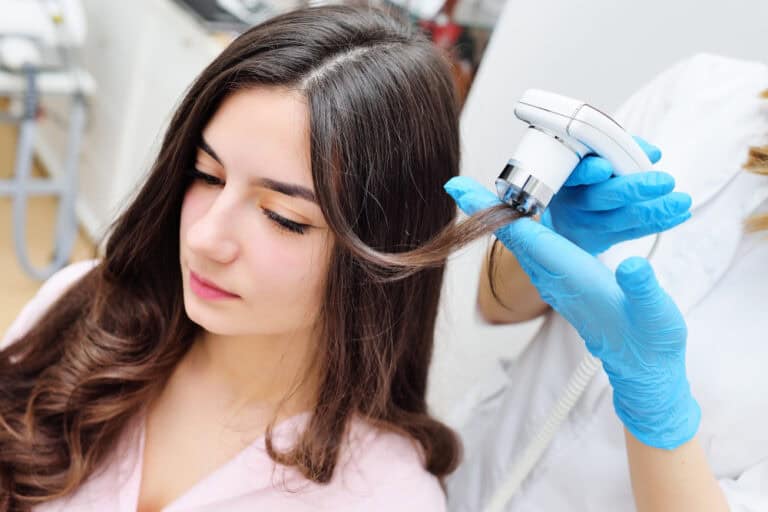
A dermatologist can investigate these underlying causes and discuss options that are appropriate for the patient’s situation. Breastfeeding status matters for what is safe to use, which is why professional guidance is especially important during this period. Home care and medical care work best together rather than one in place of the other, and finding the right postpartum hair loss remedy often starts with a proper assessment that identifies the actual cause rather than guesswork at home.
Longer-Term Support: Hair and Scalp Regeneration
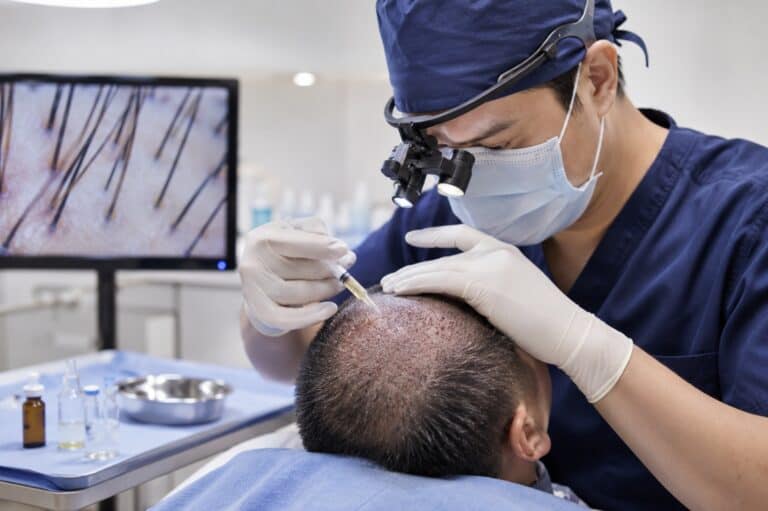
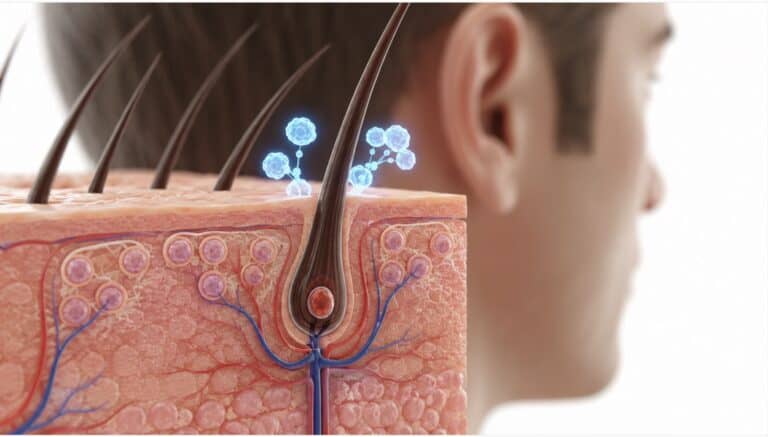
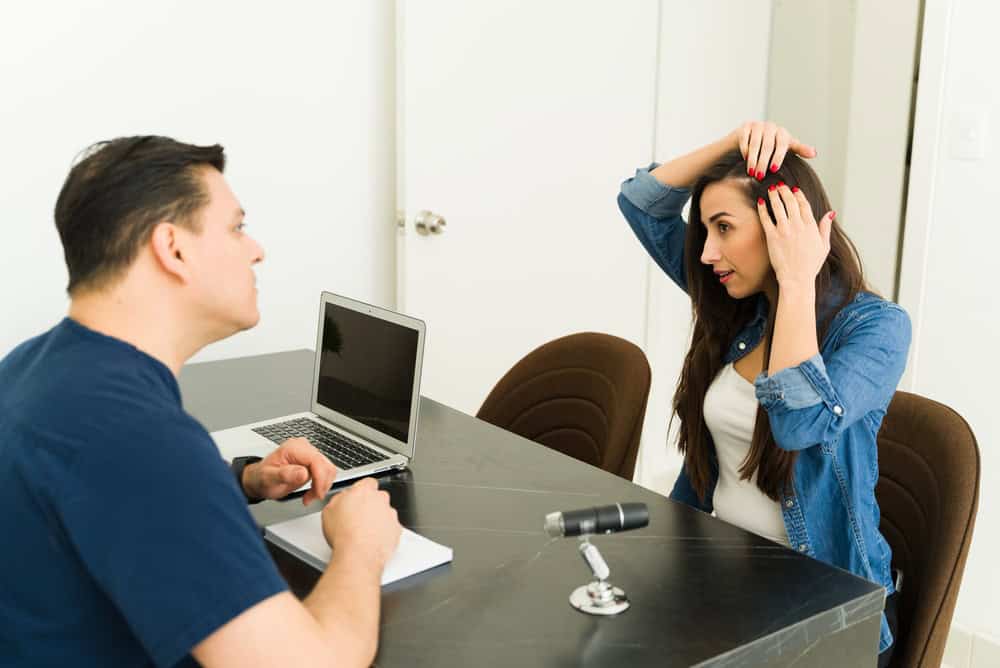
Pregnancy and birth change the body in ways that do not always reverse on the same timeline. For some women, the scalp is one of the things that takes longer to recover, with follicles that remain in a resting state well after the rest of the body has returned to normal. When months of gentle home care have not shifted the thinning, the issue may sit at a level that topical products and dietary changes cannot reach, and that is where clinical hair follicle treatment becomes relevant.
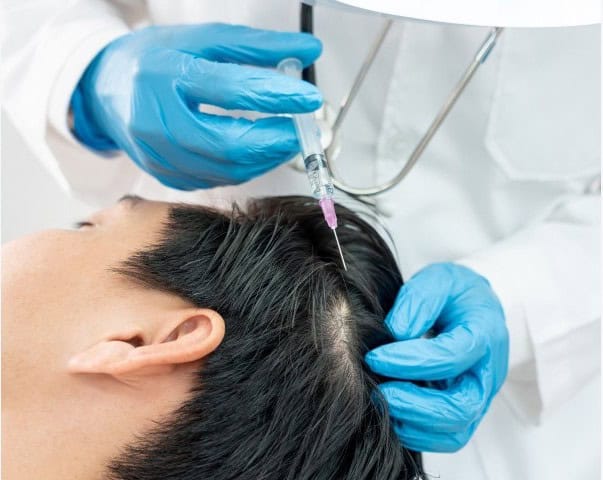
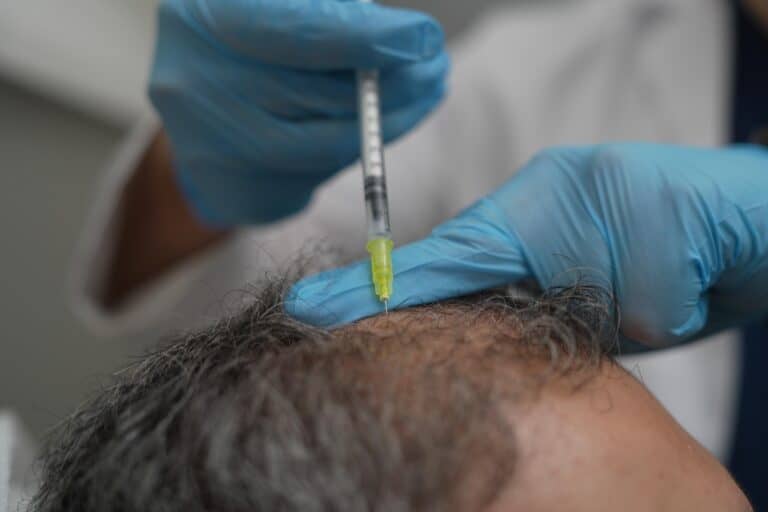
At Vega Derma clinic in Bangkok, postpartum patients receive an assessment that accounts for breastfeeding status, hormonal timeline, and scalp condition before any recommendation is made. Where appropriate, the clinical team may recommend targeted scalp care and regenerative options as part of a personalized plan. This type of physician-led hair therapy for hair loss is designed around the individual patient rather than a fixed protocol, which matters especially during postpartum recovery when not every approach is suitable.
Persistent thinning after pregnancy deserves proper attention. Book a consultation with our clinical team to have your scalp assessed and find out which approach fits where you are in your recovery.
References:
- Postpartum Hair Loss. Retrieved 8 July 2026, from https://www.hopkinsmedicine.org/health/wellness-and-prevention/postpartum-hair-loss
- Hair loss in new moms: Dermatologist tips. Retrieved 8 July 2026, from https://www.aad.org/public/diseases/hair-loss/insider/new-moms

The Vega Derma Medical Team consists of board-certified dermatologists, specialized trichologists, and clinical researchers based in Bangkok, Thailand. Our team specializes in evidence-based regenerative dermatology, complex tissue repair, and advanced hair restoration (including precision FUE and FSE). Every protocol and article we publish is medically reviewed to ensure it meets international clinical standards, providing safe, science-backed guidance for our local and international patients.