

Key Takeaways:
- “Follicle repair” is only possible where the follicle still exists. Miniaturised, dormant, and inflamed follicles can often be improved. Scarred follicles cannot, because the structure has been replaced by fibrous tissue.
- The single most useful question is not “which treatment” but “are my follicles still there”. Trichoscopy answers that in a few minutes by showing whether follicular openings and fine vellus hairs remain.
- In androgenetic alopecia the hair follicle stem cell is physically retained, but its output is restricted. Researchers describe these follicles as being in a state of reversible or semi-reversible dormancy, which is the biological basis for non-surgical repair.
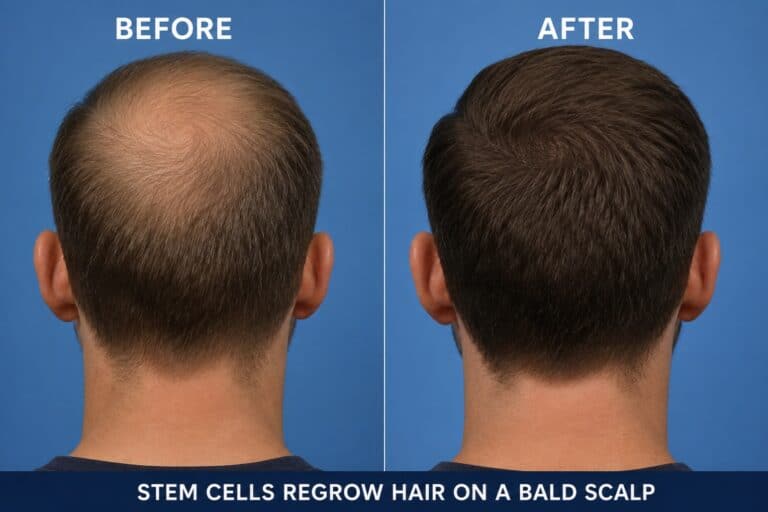
- Ninety days is roughly one hair cycle window. It is long enough to see early regrowth signals and to stop further loss. It is not long enough to complete restoration, and any page promising full restoration in 90 days is describing marketing, not biology.
- Perifollicular fibrosis, a low-grade scarring around the follicle, is now thought to be one reason some patients respond poorly to standard treatment. It is a reason to start early rather than wait.
- Scalp scarring from burns, trauma, or cicatricial alopecia is a different clinical problem entirely and needs assessment by a unit that treats wounds as well as hair.
What a hair follicle actually is
A hair follicle is not a passive tube. It is a small organ, and it is the only organ in the human body that regenerates itself in cycles for your entire life.
Each follicle moves through three phases:
- Anagen, the growth phase, which for scalp hair lasts roughly two to seven years. The length of anagen determines how long your hair can grow.
- Catagen, a short regression phase where the lower part of the follicle breaks down.
- Telogen, a resting phase, after which the old hair is released and a new cycle begins.
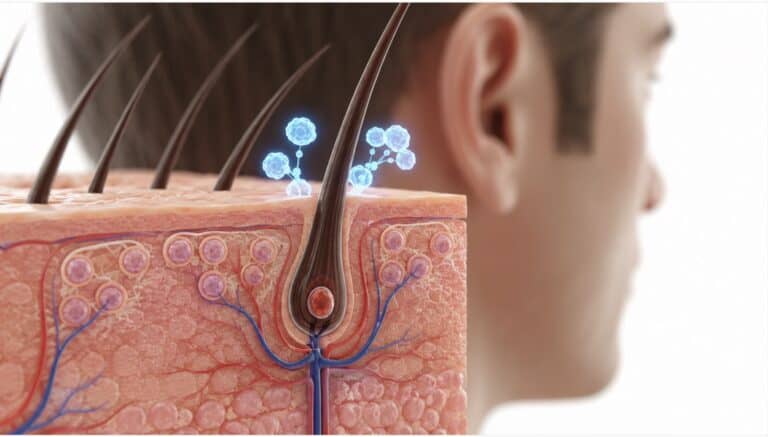
During each cycle, the upper third of the follicle stays intact while the lower two thirds is dismantled and rebuilt. That rebuilding is driven by two cell populations working together: hair follicle stem cells in the bulge, and dermal papilla cells at the base of the follicle. When those two remain healthy and in communication, the follicle can be reactivated even after a long period of suppression.
This is the entire premise of follicle repair therapy.
Miniaturisation is not the same as loss
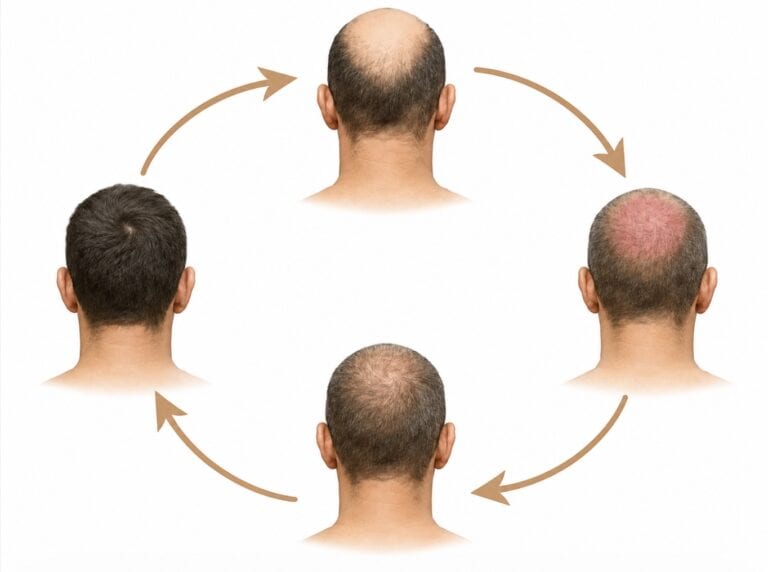
In androgenetic alopecia, follicles do not disappear overnight. They shrink.
Dihydrotestosterone (DHT) binds to androgen receptors in the dermal papilla and triggers release of inhibitory signals. The follicle responds by shortening its anagen phase, sitting more superficially in the skin, and reducing the size of its dermal papilla. Over successive cycles, a terminal hair becomes progressively finer and shorter until it resembles fine down.
Two details from this process matter enormously to patients.
- First, the stem cell is usually still there. Current research describes the miniaturisation spectrum as a state where the hair follicle stem cell is physically retained but its output to progenitor cells is restricted, with these niches sitting in reversible or semi-reversible pathological dormancy. Dormant is a very different word from dead.
- Second, fibrosis builds up around the follicle over time. DHT signalling in the dermal papilla stimulates surrounding fibroblasts to deposit excess type I collagen, producing perifollicular fibrosis. Researchers note that the severity of this fibrosis may correlate with clinical stubbornness and poor treatment response. In practical terms, the longer a follicle sits in a stiffening, inflamed environment, the harder it becomes to wake it up.
That is the honest argument for treating early. Not urgency marketing. Tissue biology.
If you are weighing up which treatments to start with, our companion guide to non-surgical hair restoration sorts the available options by strength of evidence.
What can be repaired, and what cannot
Situation | Follicle status | Realistically repairable? |
|---|---|---|
Early to moderate pattern hair loss | Miniaturised, stem cell retained | Yes, with sustained treatment |
Telogen effluvium after illness, stress, childbirth | Normal follicles, cycle disrupted | Yes, usually resolves once trigger corrected |
Traction alopecia, caught early | Follicle intact, chronically stressed | Yes, if traction stops |
Traction alopecia, long-standing | Follicular openings lost | No, follicle replaced by fibrous tissue |
Inflammatory scalp disease (seborrhoeic dermatitis, folliculitis) | Follicle intact, environment hostile | Yes, once inflammation is controlled |
Cicatricial alopecia (lichen planopilaris, frontal fibrosing alopecia, CCCA) | Follicle progressively destroyed | No. Goal shifts to stopping further loss |
Burn or trauma scar alopecia | Follicle and surrounding structures destroyed | No. Discussion becomes tissue reconstruction |
Advanced pattern loss, smooth bald scalp | No follicular openings | No. Surgical redistribution is the option |
The distinction that runs through this table is visible under a trichoscope in minutes. Present follicular openings and fine vellus hairs mean living follicles. Smooth, shiny skin with absent openings means the follicle is gone.
Anyone selling you follicle repair without looking for this is selling you something they have not verified you can benefit from.
The 90-day question, answered properly
Search results are full of pages promising follicle restoration in 90 days. Here is what 90 days actually corresponds to.
Ninety days is approximately one telogen-to-anagen transition plus early anagen. It is the window in which a treatment can plausibly:
- Push resting follicles into a new growth phase
- Stop or slow ongoing shedding
- Produce fine, short, often unpigmented new hairs that you can see on close inspection
- Improve scalp inflammation, if inflammation was a factor
What 90 days cannot do:
- Convert those fine new hairs into full terminal hairs. That takes many more months of continued anagen.
- Reverse established perifollicular fibrosis
- Restore density in an area with no remaining follicular openings
- Produce a before-and-after photograph that fairly represents your final result
If you accept the first list and reject the second, 90 days is a genuinely useful checkpoint. It is a progress review, not a finish line.
How follicle repair therapy works, mechanism by mechanism
Effective protocols do not rely on a single lever. They stack interventions that address different parts of the problem.
- Reducing androgen signalling. 5-alpha-reductase inhibitors such as finasteride reduce DHT, removing the upstream driver of miniaturisation and, over time, of perifollicular fibrosis. This is the mechanism with the strongest evidence base in men.
- Extending anagen and improving follicular blood supply. Minoxidil, topical or low-dose oral, prolongs the growth phase and improves perifollicular circulation. It is the only pharmacological treatment approved by the US FDA for pattern hair loss in both sexes.
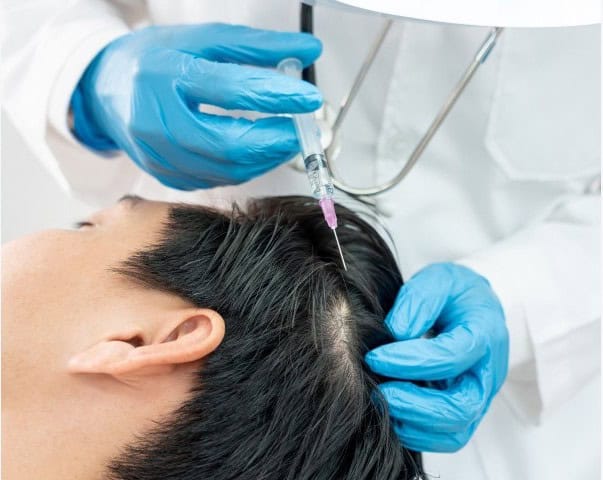
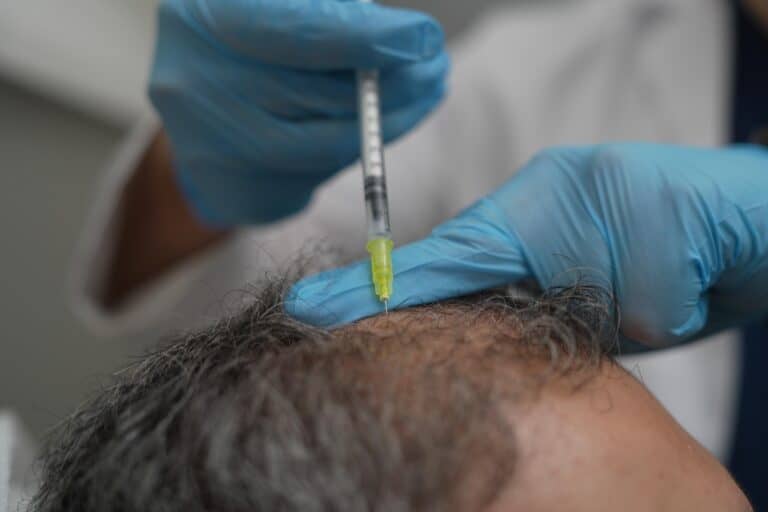
- Supplying growth factor signalling. Platelet-rich plasma delivers a concentrated mix of platelet-derived growth factors into the scalp. There is a plausible biological basis for this: platelet-derived growth factor signalling has been shown to be crucial for hair follicle dermal stem cell function, with PDGF-BB enhancing proliferation and improving the inductive capacity of those cells in experimental models. Clinical trial results are broadly positive, though protocols vary widely between clinics.
- Increasing cellular energy availability. Low-level laser therapy targets cytochrome c oxidase in the mitochondria of bulge stem cells, increasing ATP production. Meta-analysis of FDA-cleared devices found a significant density gain versus sham.
- Controlled micro-injury. Microneedling triggers a wound-healing signalling cascade and improves delivery of topical agents. Evidence is strongest for microneedling used alongside minoxidil or PRP.
- Restoring the signalling environment itself. This is the mechanism that the first four do not directly address. A follicle sitting in a degraded niche has lost access to the morphogens and mitogenic proteins it needs to hold anagen, and no vasodilator or DHT inhibitor replaces those. This is the rationale behind hair follicle regeneration stem cell therapy, which in our clinic takes the form of a secretome-led protocol rather than a live-cell injection. It delivers a concentrated set of signalling molecules to the follicular environment, with the aim of re-initiating the transcriptional programmes behind robust keratinisation.
- It is worth being straight about where this sits on the evidence ladder. The mechanistic rationale is well supported. The clinical trial base is still developing, and protocols vary widely between providers. We position it as a regenerative adjunct within a wider plan, not as a replacement for treatments with FDA approval behind them.
- Removing the obstacle. If seborrhoeic dermatitis, folliculitis, iron deficiency, thyroid dysfunction, or a medication is contributing, no amount of growth stimulation will outrun it. Correcting these is often the highest-yield part of a plan and the part most often skipped. It is also why our stem cell therapy for hair loss programme treats scalp preparation as a distinct step before any signalling is delivered, since scaling, hyperkeratosis, and heavy sebum physically block delivery to the follicular bulb.
A realistic recovery timeline
Period | What is happening biologically | What you will notice |
|---|---|---|
Days 0 to 30 | Treatment begins acting on the follicular environment; some resting follicles are pushed toward anagen | Possible increased shedding, especially with minoxidil. This is expected. |
Days 30 to 90 | Early anagen hairs emerging; inflammation settling | Shedding slows. Fine, short, pale hairs appear at the hairline or part. |
Days 90 to 180 | New hairs thickening and pigmenting; anagen lengthening | First fair visual assessment. Standardised photography needed. |
Days 180 to 365 | Progressive increase in shaft diameter and density | Most visible improvement occurs here. |
Beyond 12 months | Maintenance of gains against an ongoing genetic process | Stability. Stopping treatment means gradual return to baseline trajectory. |
The reason standardised photography matters so much is that a 10 to 15% density change is invisible in a bathroom mirror and obvious in a fixed-position photograph. Ask your clinic to take baseline images at day one. If they do not, take your own with a consistent part line, consistent lighting, and the same distance every time.
How to tell if your follicles are still alive
Some of this you can assess yourself, though none of it replaces an examination.
Encouraging signs:
- Fine, short, colourless hairs visible when you part the hair and look closely
- Hairs of noticeably different thicknesses in the same area, which indicates miniaturisation in progress rather than completed loss
- Scalp skin that looks normal, with visible pore openings
- Gradual thinning over years rather than sudden patches
Concerning signs that need prompt assessment:
- Smooth, shiny patches with no visible pore openings
- Redness, scaling, pustules, or tenderness around the hairline
- Burning or itching that precedes hair loss
- A hairline that has moved backwards with loss of the fine baby hairs entirely
- Hair loss over a previous burn, surgical site, or injury
The second list points toward scarring processes. In those conditions, the treatment window is defined by how much follicle you still have, and every month of delay costs you some of it.
Where scalp wound care and hair medicine overlap
Most hair clinics treat pattern hair loss. Fewer are set up to assess scalp scarring, burn-related alopecia, or chronic wounds on the scalp, and these need a different skill set: understanding tissue perfusion, scar remodelling, and when to intervene surgically.
If your hair loss followed a burn, a graft, radiotherapy, an infection, or a surgical scar, the question is not which growth serum to use. It is whether the tissue can support hair at all, and what can be done to improve the quality of that tissue first. That assessment belongs with a unit that handles wound care and dermatology together.
How we assess follicle viability at Vega Derma
The whole article above comes down to one question, and it takes about fifteen minutes to answer properly.
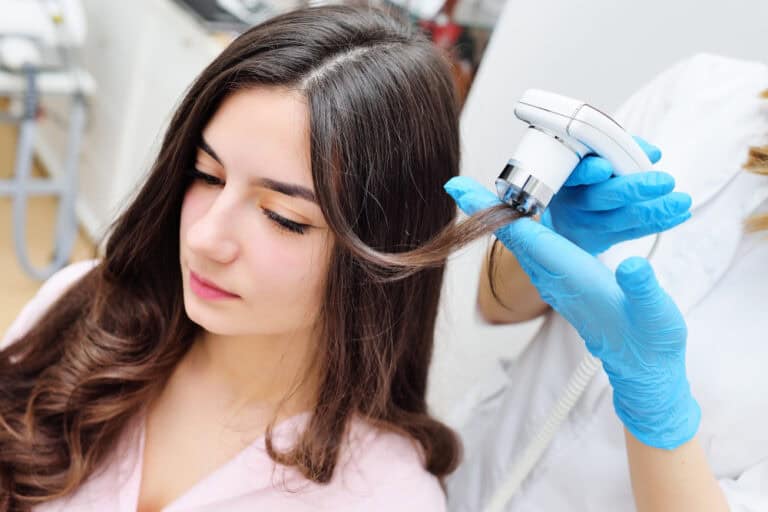
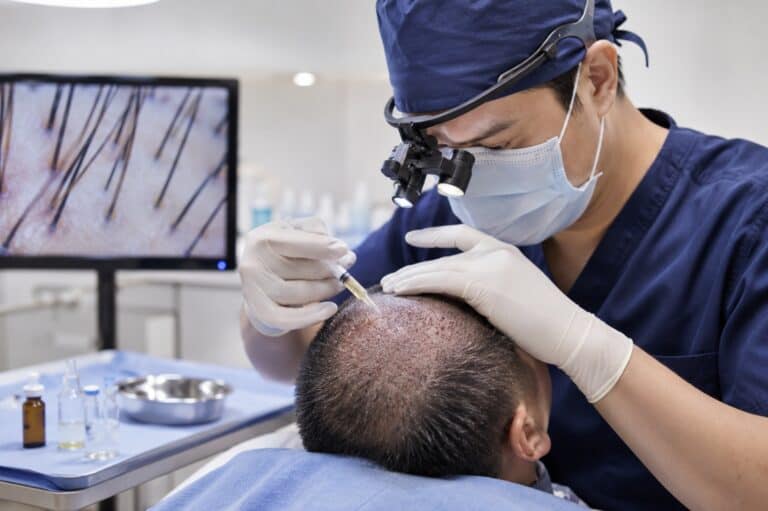
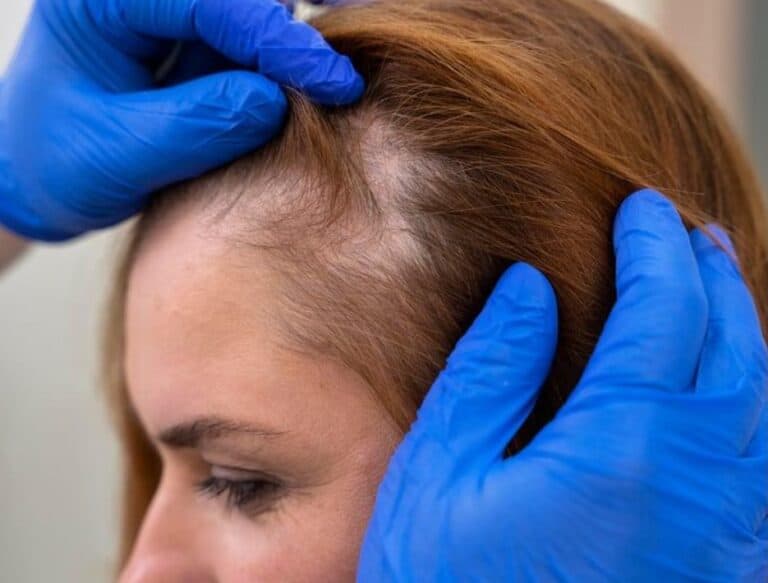
At Vega Derma clinic, every hair consultation begins with high-magnification trichoscopy and digital follicular mapping. We are looking for three things: whether follicular openings are still present, what your terminal-to-vellus hair ratio looks like across defined scalp zones, and whether there is perifollicular inflammation or early scarring in the pattern.
Those findings sort you into one of three groups, and the group determines everything that follows:
- Viable, miniaturised follicles. Regenerative and medical therapy is worth doing. Depending on the picture, that may mean stem cell therapy for hair loss with scalp preparation, hair follicle regeneration stem cell therapy as a standalone or transplant adjunct, or a medical backbone with procedural support.
- Follicles lost, tissue healthy. The conversation moves to hair transplantation.
- Follicles lost, tissue scarred. Scar and tissue remodeling comes first, and we are honest about whether grafting into that area is realistic.
We re-image at every follow-up against the same baseline, so you can see whether density is genuinely changing rather than relying on how it looked in this morning’s mirror. Our doctors will tell you at consultation if we think the answer is that no treatment is worth your money.
Frequently Asked Questions
Can dead hair follicles be brought back to life?
No. A follicle that has been destroyed and replaced by fibrous tissue cannot be regenerated with current treatments. What can be treated is a follicle that is miniaturised or dormant, where the stem cell population is still present. Distinguishing between the two is what trichoscopy is for.
How long does follicle repair therapy take to work?
Expect early signals at around three months, a fair assessment at six months, and peak benefit between nine and twelve months. Anything faster than that is not consistent with how the hair cycle works.
Is follicle repair permanent once achieved?
Not in androgenetic alopecia. The underlying genetic and hormonal drivers remain, so treatment is ongoing maintenance. In telogen effluvium or treated inflammatory conditions, recovery can be lasting once the cause is resolved.
Does scalp massage repair follicles?
Massage may modestly improve local blood flow and is harmless, but there is no good evidence it reverses miniaturisation. Treat it as supportive, not therapeutic.
Can I repair follicles with supplements alone?
Only if a deficiency is driving your hair loss. Correcting low iron, low vitamin D, or a thyroid abnormality can produce real improvement. Taking supplements you are not deficient in generally does nothing, and some, including excess vitamin A and selenium, can cause hair loss.
Is PRP or a hair transplant better for damaged follicles?
They address different problems. PRP aims to improve follicles that still exist. A transplant relocates healthy follicles into areas where follicles are gone. Many patients with mixed presentations need both, with medical therapy protecting the non-transplanted areas.
Does hair loss from a burn or scar respond to follicle repair therapy?
Usually not, because the follicular structures within the scar have been destroyed. The clinical conversation shifts to scar quality, tissue remodelling, and whether reconstruction or grafting into the area is feasible. This should be assessed by a clinician experienced in both wound care and hair, which is why our burn wound care and hair services are run by the same team.
What is the earliest sign that treatment is working?
A reduction in daily shedding, followed by the appearance of short, fine, often unpigmented hairs at the thinning margin. Both usually appear before any visible density change.
References:
- From a stem-cell-centered to a niche-centered view: the core role of collagen networks in hair loss and hair follicle miniaturization. Frontiers in Cell and Developmental Biology. https://www.frontiersin.org/journals/cell-and-developmental-biology/articles/10.3389/fcell.2026.1824126/full
- Functional regeneration strategies of hair follicles: advances and challenges. Stem Cell Research & Therapy. https://stemcellres.biomedcentral.com/articles/10.1186/s13287-025-04210-y
- Whiting DA. Possible mechanisms of miniaturization during androgenetic alopecia or pattern hair loss. J Am Acad Dermatol. https://www.sciencedirect.com/science/article/abs/pii/S0190962201432804
- Gonzalez R, et al. Platelet-derived growth factor signaling modulates adult hair follicle dermal stem cell maintenance and self-renewal. PMC. https://www.ncbi.nlm.nih.gov/pmc/articles/PMC5665619/
- Expanding the therapeutic landscape of minoxidil for androgenetic alopecia: topical, oral and sublingual formulations. PMC. https://www.ncbi.nlm.nih.gov/pmc/articles/PMC12898826/
- Gentile P, Garcovich S. Systematic Review of Platelet-Rich Plasma Use in Androgenetic Alopecia. PMC. https://www.ncbi.nlm.nih.gov/pmc/articles/PMC7216252/
- A Systematic Review and Meta-analysis of RCTs of FDA-Approved, Home-use, Low-Level Light/Laser Therapy Devices for Pattern Hair Loss. J Clin Aesthet Dermatol. https://pubmed.ncbi.nlm.nih.gov/34980962/
- Kanti V, et al. Evidence-based (S3) guideline for the treatment of androgenetic alopecia in women and in men. J Eur Acad Dermatol Venereol. https://pubmed.ncbi.nlm.nih.gov/29178529/
Medical Disclaimer: This article is for general information and does not replace individual medical advice. If you are unsure whether your follicles are still viable, a scalp examination with trichoscopy will answer that question directly. Book a consultation with Vega Dermatology & Wound Care Unit, Bangkok.

The Vega Derma Medical Team consists of board-certified dermatologists, specialized trichologists, and clinical researchers based in Bangkok, Thailand. Our team specializes in evidence-based regenerative dermatology, complex tissue repair, and advanced hair restoration (including precision FUE and FSE). Every protocol and article we publish is medically reviewed to ensure it meets international clinical standards, providing safe, science-backed guidance for our local and international patients.