
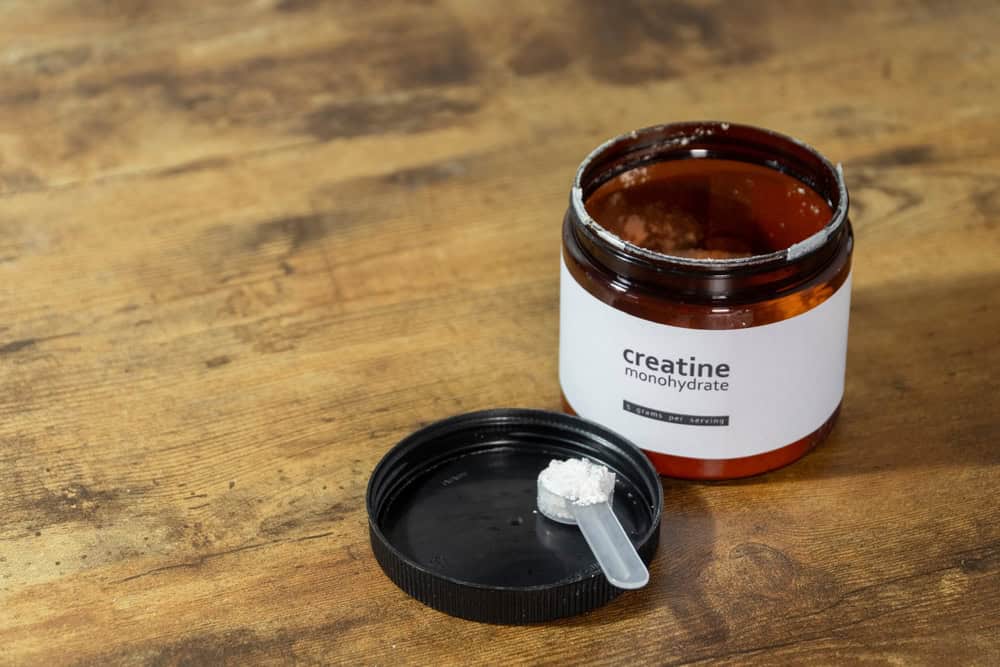
Could creatine be responsible for your hair loss? Despite months of consistent creatine use and effective training, you’re now seeing extra hair in the shower drain. You can find many online searches that link them with warnings, yet the information is typically vague and inconsistent.
Newer, more direct research tells a different story on whether creatine truly causes hair loss. Let’s take a closer look at what the evidence actually supports, and who should still take precautions.
Where the Creatine Hair Loss Fear Started
The concern of creatine causing hair loss comes from a 2009 study by van der Merwe and colleagues, published in the Clinical Journal of Sport Medicine. It looked at 20 college-aged rugby players in South Africa who followed a creatine loading protocol (25g per day for 7 days, then 5g per day for 14 days). Researchers observed a rise in dihydrotestosterone (DHT), a hormone linked to pattern hair loss, with DHT levels 56% higher after the loading phase and 40% above baseline during maintenance.
However, the problem is that the study never measured hair loss itself, but only tracked hormone levels. The sample size was small (around 20 men), the timeline was short, and DHT levels, while elevated, stayed within normal physiological range. Despite these limitations, the finding traveled far and became the default answer online.
What Newer Research Actually Shows
In April 2025, Lak and colleagues published a 12-week randomized controlled trial in the Journal of the International Society of Sports Nutrition. It was the first study to directly measure hair follicle health after creatine supplementation, not just hormones.
The design was rigorous. Thirty-eight resistance-trained men (aged 18 to 40) completed the study, randomized in a double-blind protocol to either 5g of creatine monohydrate per day or 5g of maltodextrin placebo. Researchers measured total testosterone, free testosterone, and DHT through blood samples, and used the Trichogram test and FotoFinder dermoscopic imaging to assess hair count, density, follicular units, terminal versus vellus hair rates, and cumulative hair thickness.
The results were clear: no group-by-time interactions were found for any hormone or hair outcome. There was no difference in DHT levels between the creatine and placebo groups. Both groups maintained consistent hair density, thickness, and follicular counts. The authors concluded that the study offers “compelling support refuting the notion that creatine causes hair loss.”
Broader reviews of creatine research reach similar conclusions. At standard doses, creatine does not appear to change hormonal profiles or hair outcomes for most users. Dermatologists and sports medicine specialists generally weigh this evidence against much stronger factors like genetics, age, and underlying scalp conditions.
The Real Drivers Behind Hair Thinning

If creatine is not the main risk, what is? For most people who experience thinning, the answer is a combination of genetic and biological factors that have little to do with supplements.
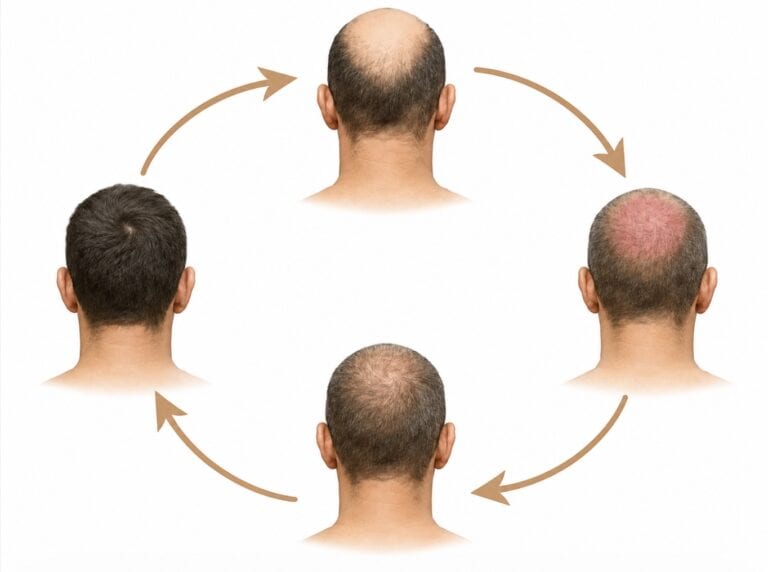
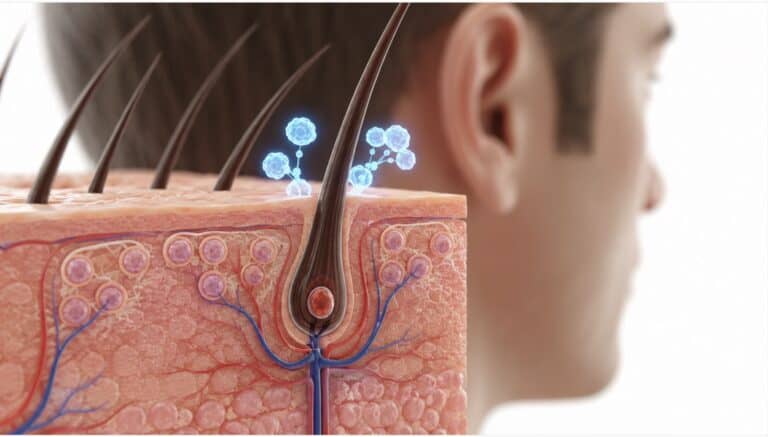
Genetic sensitivity of hair follicles to DHT drives androgenetic alopecia. For this reason, two people can have identical hormone levels and yet only one experiences thinning, because their follicles respond differently. Reduced scalp blood flow, chronic low-grade inflammation around the follicles, and follicular dormancy over time all disrupt the growth cycle and lead to miniaturization.
These factors add up, and creatine (if it plays any role at all) is just a small variable on top of this bigger biological picture.
Who Should Still Be Cautious With Creatine
Most people do not need to worry. If you have no family history of early pattern hair loss, a stable hairline, and take standard doses of creatine (3-5g per day, no aggressive loading), the evidence suggests creatine poses little risk to your hair.
In contrast, higher-risk profiles include a strong family history of pattern hair loss, visible miniaturization at the temples or crown, or recent unexplained shedding. If any of these apply, stick to 3-5g per day rather than loading, photo-track hair density every 4-6 weeks, and consider pausing creatine during active treatment evaluation. Take these as risk management, not a hard stop.
When to See a Specialist
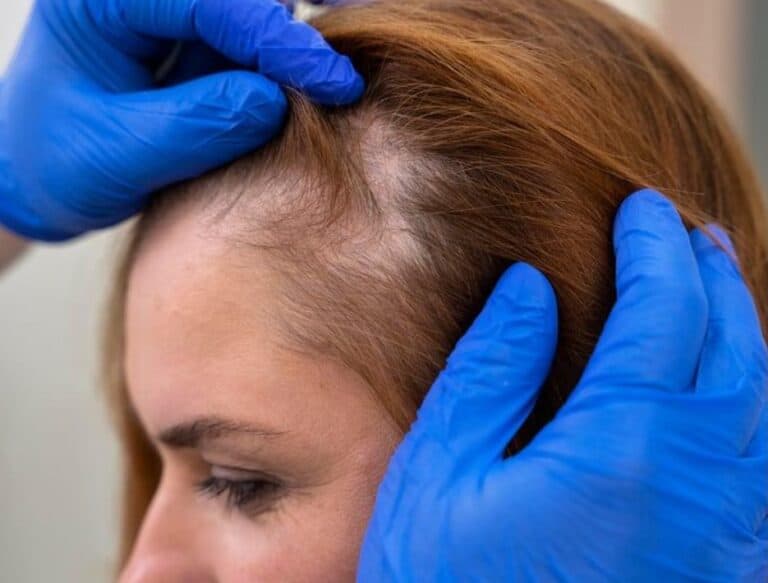
Some signs call for a professional evaluation regardless of creatine use. If you’re experiencing widening of the part line, receding temples, sudden diffuse shedding that lasts beyond a few weeks, and scalp irritation or itching, getting specialist attention is recommended.
A specialist can tell supplement-related issues apart from other causes like stress, thyroid problems, nutrient deficiencies, or early hair loss due to genetics. Avoid self-diagnoses because the observable signs might not reflect the actual reason.
Vega’s Approach to Hair and Scalp Regeneration
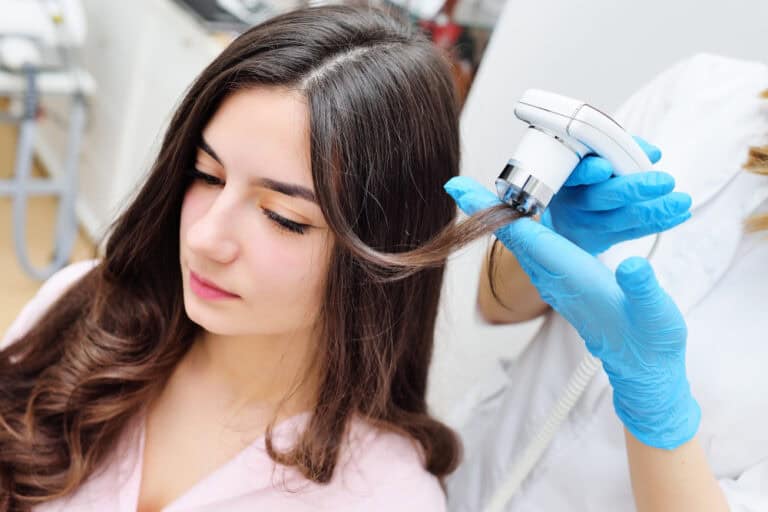
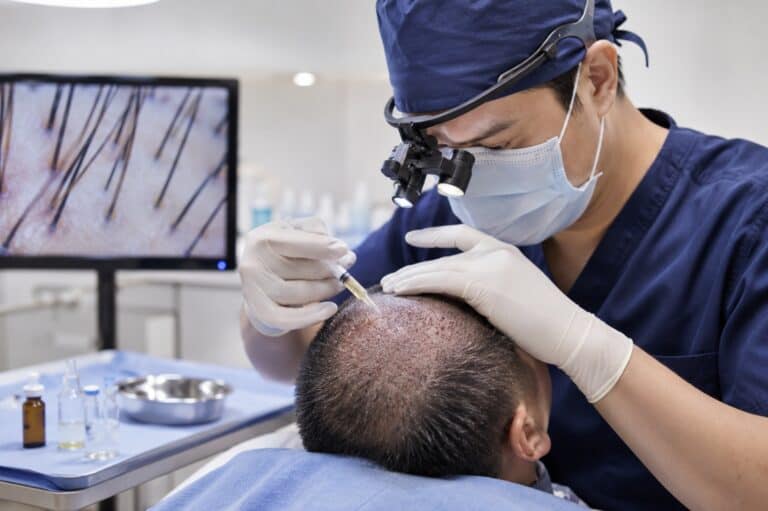
At Vega Dermatology & Wound Care Unit, we approach hair restoration with a physician-led assessment and trichoscopy. As visible thinning can stem from several biological pathways, we take special care to identify which one is active before determining the right treatment.
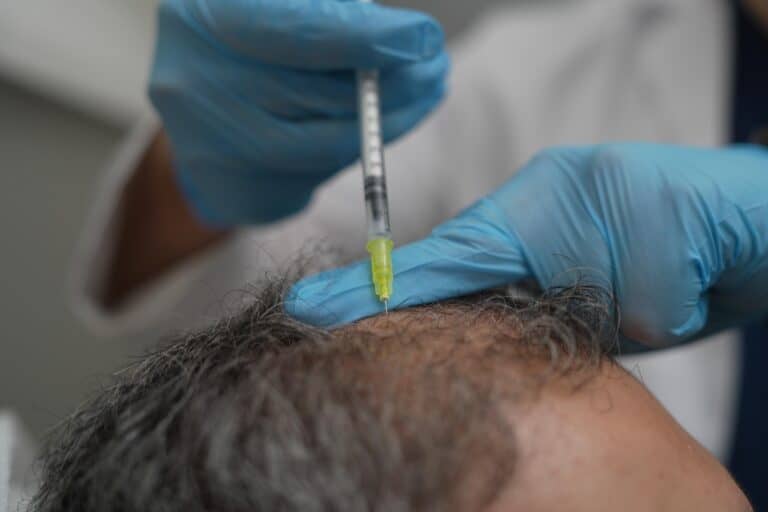
We provide Follicular Signaling Enhancement (FSE), a protocol that aids follicle progenitor cell activity and scalp health for eligible individuals. FSE focuses on microcirculation and inflammatory balance, both important regardless of creatine’s involvement.
For patients concerned that systemic factors may be affecting vulnerable follicles, structured scalp treatment for hair loss under medical supervision is a more direct path.
Build a Long-Term Plan for Hair Health
The evidence from recent research is clear: standard-dose creatine does not meaningfully cause hair loss. The main drivers of thinning are your genes, scalp circulation, and inflammation. Staying consistent with your routine helps with hair health, but in the event you are already noticing changes with your hair, a specialist is the fastest way to figure out what is going on.
At Vega Derma Stem Cell Clinic, we take a physician-led assessment and trichoscopy approach to identify what is actually driving your thinning. Through our options, our team may combine medical stabilization, physician-assessed regenerative support such as Follicular Signaling Enhancement for suitable candidates, and surgical restoration where appropriate. Every step of the process is tailored to your specific needs to ensure the best outcome.

The Vega Derma Medical Team consists of board-certified dermatologists, specialized trichologists, and clinical researchers based in Bangkok, Thailand. Our team specializes in evidence-based regenerative dermatology, complex tissue repair, and advanced hair restoration (including precision FUE and FSE). Every protocol and article we publish is medically reviewed to ensure it meets international clinical standards, providing safe, science-backed guidance for our local and international patients.