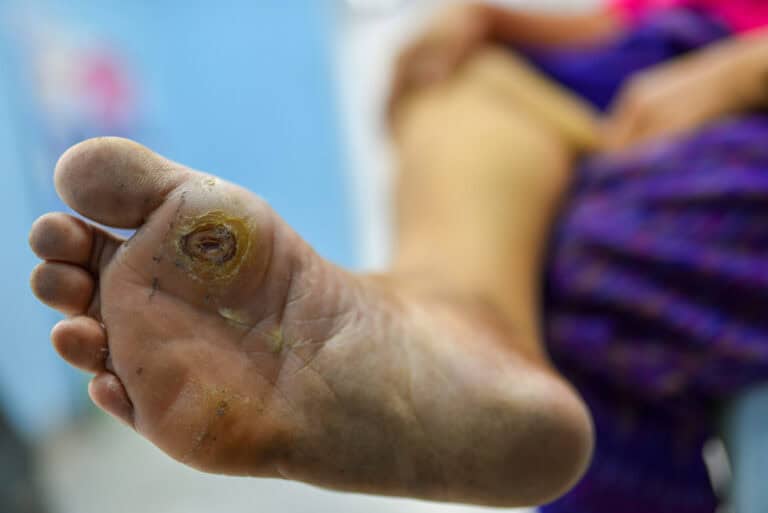

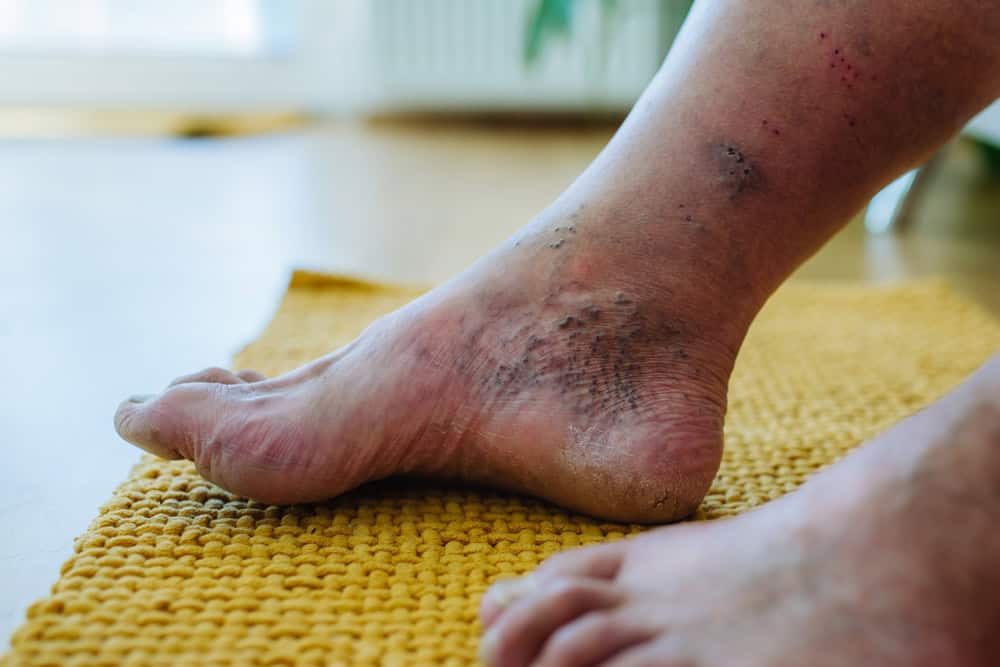
Diabetic foot ulcers are persistent wounds that can be difficult to heal because diabetes impairs circulation, nerve function, and the immune response needed for tissue repair. Left unmanaged, they carry real risks, including infection and amputation. Stem cell treatment for diabetic foot ulcers is an emerging regenerative approach being studied for wounds that have stopped responding to standard treatments.
What Is a Diabetic Foot Ulcer?
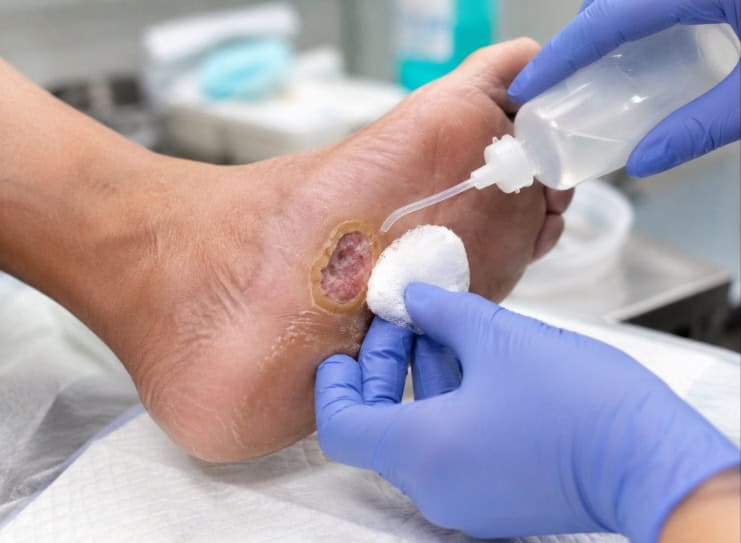
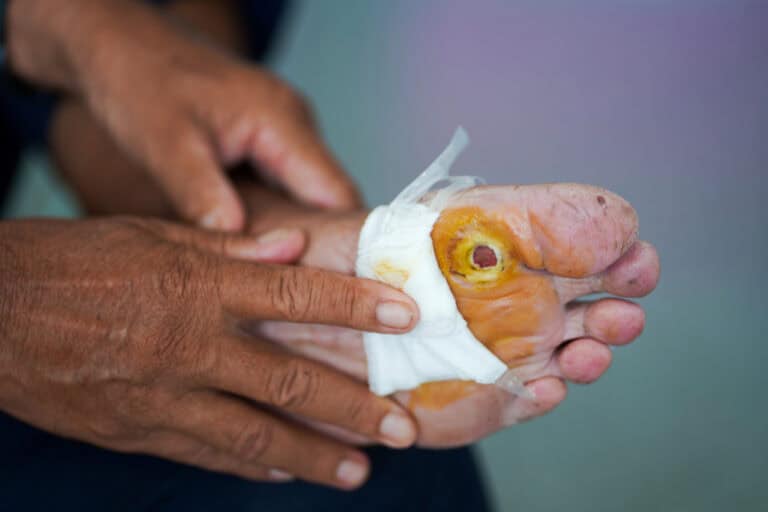
A diabetic foot ulcer is an open sore that forms most often under the toes, forefoot, or heel. It usually begins when prolonged pressure or a minor injury goes unnoticed on a foot with reduced sensation, then fails to heal at the normal pace. A wound that would close in weeks for most people can remain open for months in a person with diabetes.
How Diabetes Affects Wound Healing
Healing normally moves through predictable stages: clotting, inflammation, new tissue growth, and remodeling. Diabetes disrupts several of these at once, which is why these wounds behave differently from ordinary cuts:
- Elevated blood glucose slows the cells responsible for repair
- Poor circulation limits the oxygen and nutrients a wound needs
- Neuropathy (reduced nerve sensation) means injuries often go unfelt and untreated
- Impaired immune response raises the risk of infection
- Persistent inflammation and reduced oxygenation stall the healing stages
- Bacterial biofilms shield themselves from antibiotics
Common Causes of Diabetic Foot Ulcers
Most ulcers start from everyday sources of pressure or injury that would be minor on a healthy foot:
- Repeated pressure and friction, often from poorly fitting footwear
- Minor cuts, blisters, or burns that go unnoticed due to numbness
- Calluses that thicken and break down the skin beneath them
- Reduced blood flow that leaves tissue fragile and slow to recover
How Diabetic Foot Ulcers Are Graded

Clinicians commonly grade severity using the Wagner Classification:
- Grade 0: an at-risk foot with intact skin
- Grade 1: a superficial ulcer
- Grade 2 to 3: deeper ulcers reaching tendon, bone, or joint, with or without infection
- Grade 4 to 5: localized or extensive gangrene
Staging helps determine the most suitable diabetic ulcer foot treatment and whether regenerative support is appropriate for a given wound.
For more information on foot ulcers, read our related blog: Understanding The Stages Of Diabetic Foot Ulcers.
What Is Stem Cell Treatment for Diabetic Foot Ulcers?
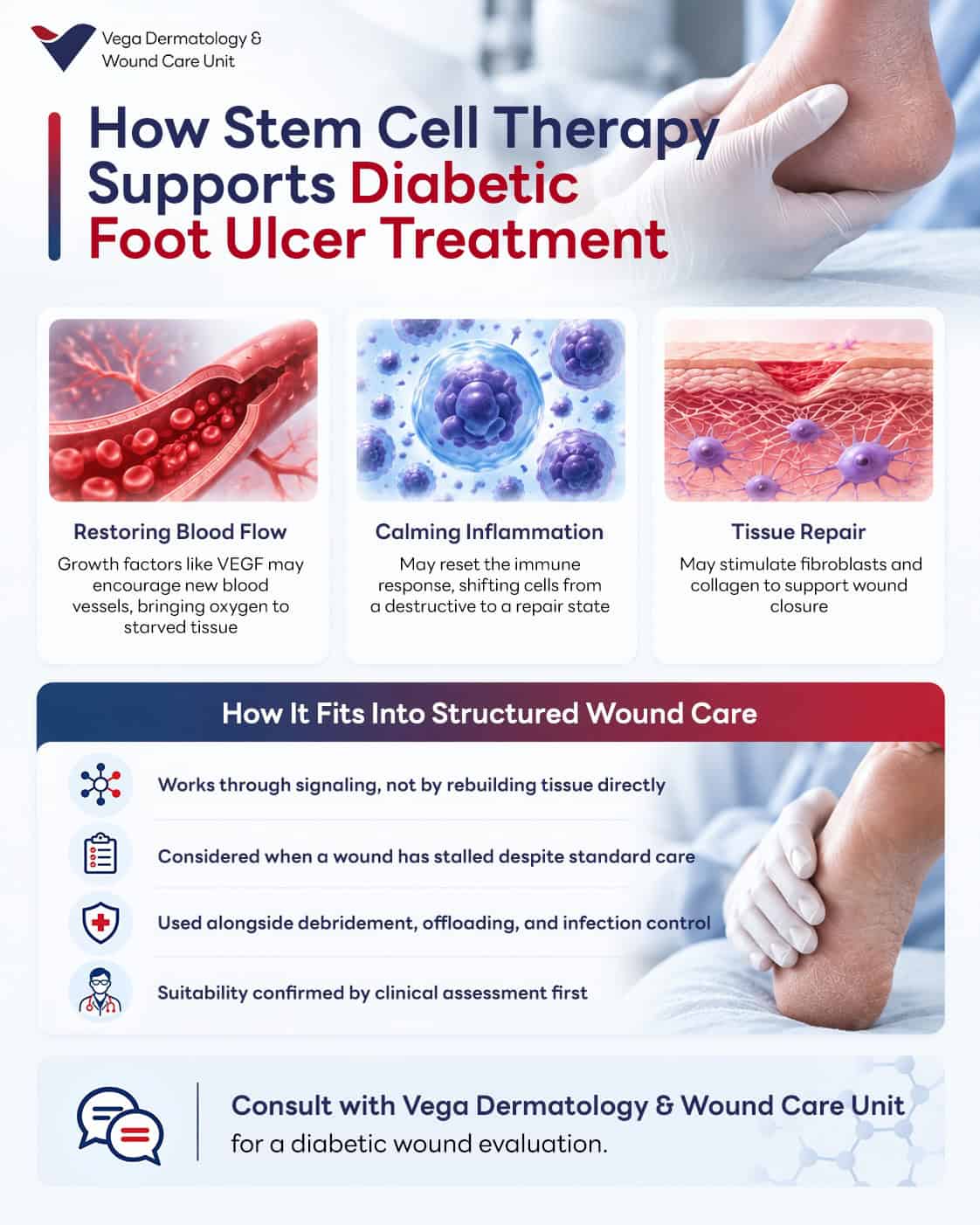
Stem cell treatment for diabetic foot ulcers is a regenerative approach studied for chronic, slow-healing wounds, using specialized cells, most often mesenchymal stem cells, that may help support tissue repair, calm inflammation, and improve blood supply. It is not one standardized therapy, and the effects below come from research rather than being guaranteed for every patient.
How Stem Cell Therapy May Work For Foot Wounds
- Restoring Blood Flow (Angiogenesis): The stem cells release signaling proteins (such as VEGF) that encourage new blood vessels to form, restoring oxygen to starved tissue.
- Calming Chronic Inflammation (Immunomodulation): They help reset the immune response, shifting local immune cells from a destructive state into an active repair mode.
- Tissue repair: Stem cells may stimulate fibroblasts and collagen production, supporting wound closure.
Cell Sources and Delivery
Cells are commonly harvested from the patient’s own bone marrow or adipose (fat) tissue or from donor sources such as umbilical cord tissue. The cells are typically delivered by local injection into and around the wound bed.
Because these ulcers heal poorly when blood supply is inadequate, much of the research focuses on whether the signaling effects can improve circulation, with outcomes measured through wound closure rate, blood flow markers, and time to healing.
Can Stem Cells Cure Diabetic Foot Ulcers?
Stem cells cannot currently be described as a guaranteed cure, but clinical research reports meaningful benefits in selected patients:
- Faster healing and lower amputation risk: A GRADE-compliant meta-analysis of randomized trials found stem cell therapy outperformed conventional care on wound healing rate and pain-free walking distance, improved the ankle-brachial index (a measure of blood flow to the legs) and new blood vessel formation, and significantly reduced the amputation rate, with no significant difference in adverse events between groups.
- Better circulation and less pain: A separate meta-analysis of stem cell therapy for diabetic foot found that beyond raising healing rates, cell therapy improved blood flow to the limb, increased pain-free walking distance, and lowered rest pain scores compared with conventional care.
- Consistent healing results across studies: A further meta-analysis of autologous stem cell treatment found cell therapy led to significantly higher ulcer healing rates than conventional care. Pooled data across this body of research reported wound healing in roughly 79% of cell-treated patients versus 40% of controls, and amputation in about 4% versus 20%.
Is Stem Cell Treatment for Diabetic Foot Ulcers Safe?
Risk depends on the specific cells, processing method, and delivery technique used. Since diabetic foot ulcers can deteriorate quickly, every regenerative diabetic ulcer wound care treatment should be reviewed with a qualified clinical team.
Not every individual is a suitable candidate for regenerative therapy:
Suitable candidates:
- Chronic non-healing ulcers, typically Wagner Grade 1 to 3, where infection is already controlled
Requires alternative or immediate surgical intervention:
- Uncontrolled systemic or spreading bone infections
- Severe arterial blockage (ischemia) requiring primary vascular surgery first
- Advanced gangrene requiring emergency surgical debridement
Chronic Wound Care Treatment at Vega Dermatology & Wound Care Unit
For an ulcer that will not close despite good standard care, regenerative therapy is one of the few options with randomized evidence behind it, and the data points to higher healing rates and fewer amputations.
At Vega Dermatology & Wound Care Unit, our regenerative chronic wound care treatment is integrated into a structured, multi-specialty treatment pathway, drawing on research from the Vega stem cell clinic.
Regenerative support is generally considered once infection is controlled and circulation has been assessed. Complex wound management is led by Dr. Issariya Wongla, a board-certified general surgeon specializing in advanced wound care and regenerative medicine.
Book a consultation with our clinical team at Vega Dermatology & Wound Care Unit for a diabetic wound evaluation if a foot wound has not responded to standard dressings.
References:
- Diabetic Foot Ulceration and Complications. Retrieved August 18, 2026, from
- https://www.ncbi.nlm.nih.gov/books/NBK499887/Effectiveness of Stem Cell Therapy for Diabetic Foot Ulcers: A Systematic Review and GRADE Compliant Bootstrapped Meta-Analysis of Randomized Clinical Trials. Retrieved August 18, 2026, from https://pubmed.ncbi.nlm.nih.gov/38298002/
- Meta-Analysis on the Treatment of Diabetic Foot Ulcers with Autologous Stem Cells. Retrieved August 18, 2026, from https://pmc.ncbi.nlm.nih.gov/articles/PMC5644171/

The Vega Derma Medical Team consists of board-certified dermatologists, specialized trichologists, and clinical researchers based in Bangkok, Thailand. Our team specializes in evidence-based regenerative dermatology, complex tissue repair, and advanced hair restoration (including precision FUE and FSE). Every protocol and article we publish is medically reviewed to ensure it meets international clinical standards, providing safe, science-backed guidance for our local and international patients.