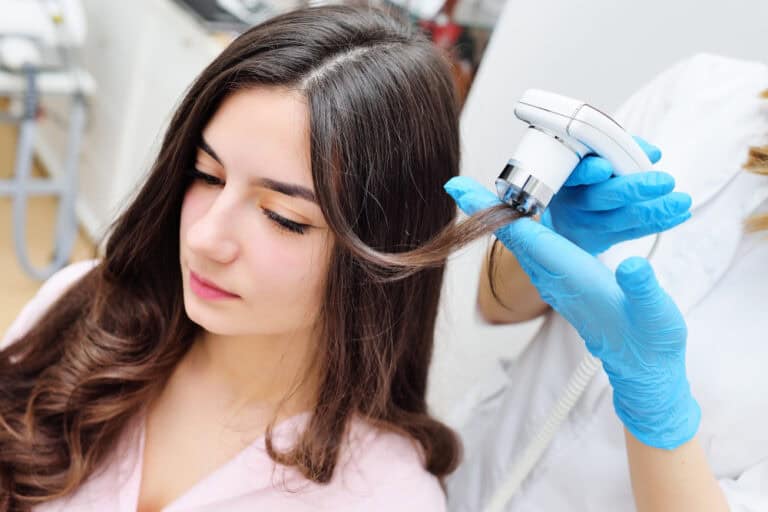


Seeing hair gather in the shower drain or a ponytail looking thinner can cause alarm. For many patients, sudden diffuse shedding is not the start of ongoing balding but a recognizable, often reversible condition linked to an upstream trigger.
This type of hair shedding is referred to as telogen effluvium. Though it may be upsetting, this differs from pattern hair loss. Here’s what to know about the condition.
What Is Telogen Effluvium and How It Works
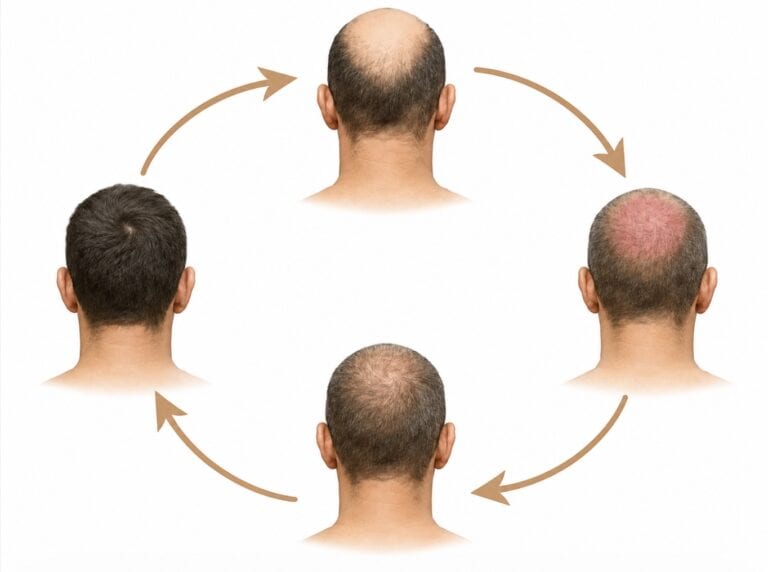
Telogen effluvium is a temporary shift in the hair growth cycle. Hair moves through three phases: anagen (growth), catagen (transition), and telogen (resting). Normally, only a small portion of follicles are in telogen at any given time. When a physical or emotional shock disturbs the cycle, a larger than usual proportion of follicles enters telogen at once, and two to three months later, those follicles release their hair, producing visible diffuse shedding.
However, the follicles themselves are usually still alive, which is what separates telogen effluvium from pattern hair loss, where follicles progressively miniaturize over years. As such, the shedding here is a signal, not a primary follicle disease, meaning that the clinical question is not “how do we stop the hair from falling,” but “what disturbed the cycle in the first place.”
Common Telogen Effluvium Symptoms
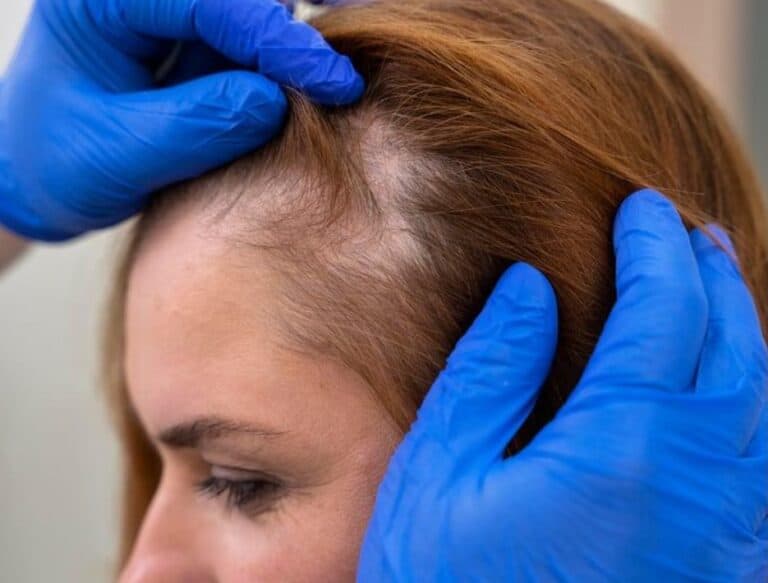
Unlike patchy conditions such as alopecia areata, telogen effluvium’s symptoms present as diffuse thinning across the whole scalp. Patients often notice increased shedding when washing, brushing, or drying the hair. However, the scalp typically appears normal, creating a sense of disconnect between the shedding and any apparent reason.
Telogen effluvium can present differently in opposite sexes. Women often notice reduced ponytail volume or a wider central part, whereas telogen effluvium in men may manifest as diffuse shedding across the scalp and may overlap with early androgenetic alopecia.
The two to three month gap between the trigger and shedding is a key characteristic, frequently preventing patients from connecting the two events.
What Causes Telogen Effluvium Hair Loss
Hair Loss From Stress and Psychological Triggers
Emotional stress is one of the most common triggers behind telogen effluvium hair loss. Major life events, bereavement, or sustained anxiety can disturb the hair cycle, and because shedding appears months after the stressor, many patients only recognize the link in hindsight.
Fortunately, hair loss from stress is typically reversible once the underlying stressor resolves and the scalp is given time to recover.
Physical and Medical Triggers
Post-viral illness, high fever, surgery, thyroid imbalance, iron deficiency, and vitamin D deficiency are all recognized triggers. Postpartum shedding is a well-known form of telogen effluvium, driven by hormonal shifts after childbirth.
Blood tests are frequently used in evaluations to uncover hidden causes not evident from patient history.
Medication and Lifestyle Triggers
Certain medications, rapid weight loss, restrictive dieting, and low protein intake can all influence follicle activity. Reviewing recent medication changes and nutritional patterns is a routine part of physician-led evaluation before any treatment plan is built.
How Long Does Telogen Effluvium Last
Acute cases typically resolve within six to nine months after the trigger is addressed, though visible density recovery may extend to nine to twelve months because new hair needs time to grow out. Shedding tends to slow before regrowth becomes obvious, which is often the point at which patients feel most discouraged.
When shedding continues beyond six months, chronic telogen effluvium should be considered and a more detailed workup is warranted, particularly if pattern hair loss may be overlapping.
Telogen Effluvium Treatment Pathways

Address the Underlying Trigger
The foundation of telogen effluvium treatment is identifying and correcting the trigger. This may involve bloodwork for iron, ferritin, thyroid function, and vitamin D, along with a medication review and a nutritional assessment. Without this step, other interventions rarely deliver durable results.
Supportive Scalp and Topical Care
Topical therapy may play a supporting role in select patients, particularly where shedding overlaps with early pattern thinning. Not every case of diffuse shedding needs the same topical plan, which is why physician supervision matters.
Regenerative Hair Regrowth Therapy
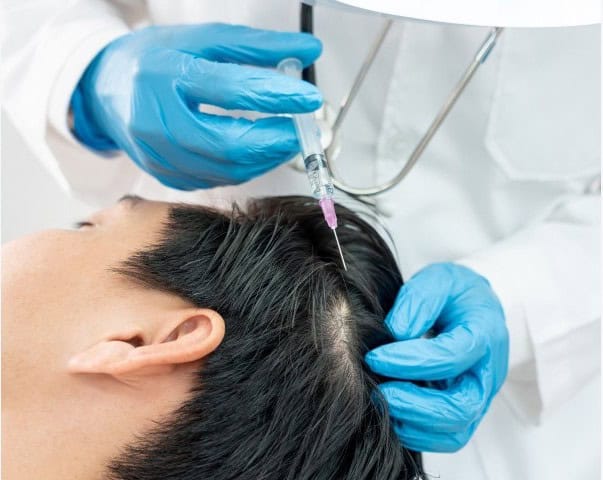
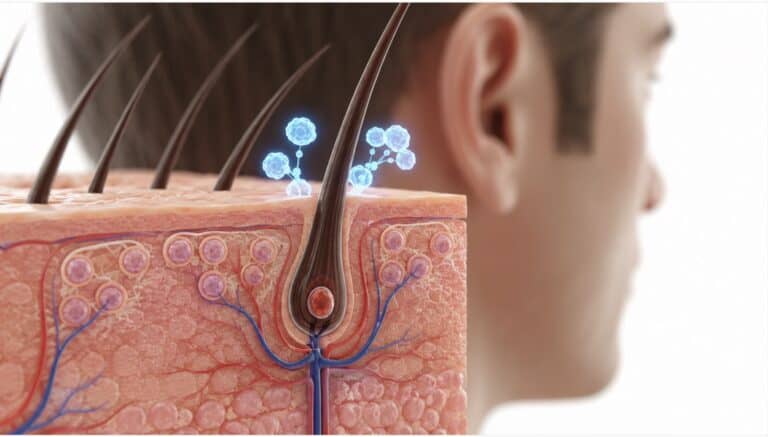
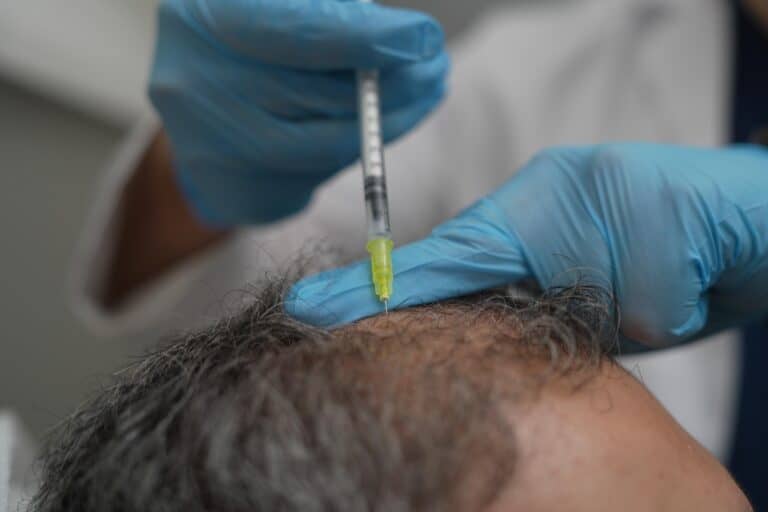
For suitable candidates, regenerative hair regrowth therapy may be considered as supportive care once the trigger has been identified. Vega Derma is one place that offers this approach, which draws on bio-active signaling concepts such as VEGF and PDGF Ultra Enhanced Media, complemented by secretome-based cellular messengers that support follicular signaling.
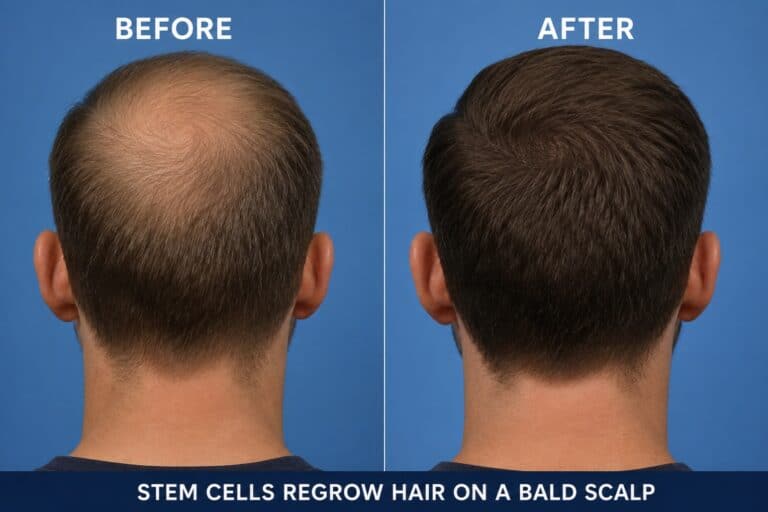
The aim is not to force new growth but to support the scalp environment while the hair cycle re-establishes itself. Other options such as stem cell therapy for hair loss fall within this category of regenerative support and are physician-assessed for candidacy.
When Transplantation Is and Is Not Appropriate
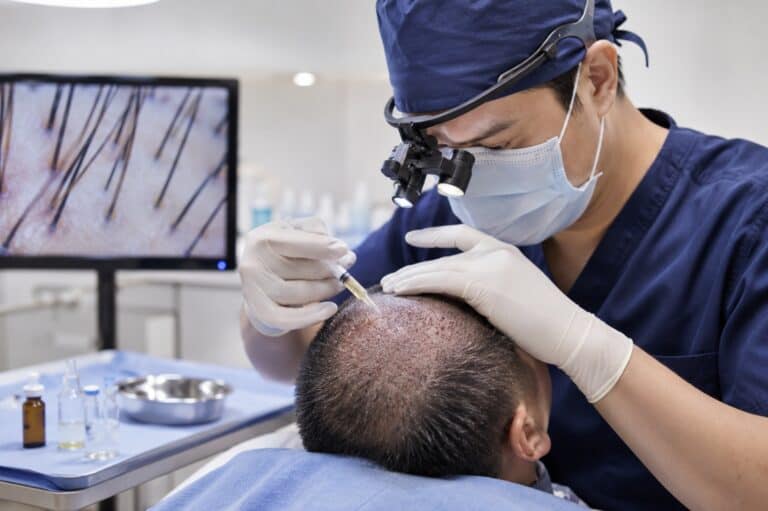
Because follicles in telogen effluvium are usually still alive, hair transplantation is generally not the first-line approach. However, surgical planning may be considered later if the shedding overlaps with established androgenetic alopecia or permanent thinning.
What Recovery From Stress Shedding Looks Like
Recovery from stress-induced telogen effluvium tends to happen in stages. Shedding slows first, followed by short new hairs which then appear near the hairline or part line, often noticeable when the hair is wet. Visible density improves over the following months.
Patients who describe having “cured” their telogen effluvium have usually done three things: addressing the trigger, allowing at least six months of recovery, and supporting the scalp with appropriate nutrition and medical care. To reiterate, telogen effluvium is not a follicle disease in itself, but a condition triggered by something else.
When to See a Specialist for Ongoing Shedding
Telogen effluvium can resolve on its own, but consultation is recommended when shedding persists beyond six months, when the scalp becomes visibly wider at the part line, when patchy loss or scalp symptoms appear, or when there is a family history of early pattern hair loss. Early evaluation helps distinguish reversible shedding from progressive thinning and shapes the treatment plan accordingly.
At Vega Derma, our care for telogen effluvium begins with clinical evaluation for identifying the likely trigger and distinguishing reversible shedding from patterns that may need longer-term management. From there, we provide supportive scalp care where appropriate, and physician-assessed hair regrowth therapy for suitable candidates. Progress is tracked over time and we adjust the plan as recovery develops to ensure the best outcomes.

The Vega Derma Medical Team consists of board-certified dermatologists, specialized trichologists, and clinical researchers based in Bangkok, Thailand. Our team specializes in evidence-based regenerative dermatology, complex tissue repair, and advanced hair restoration (including precision FUE and FSE). Every protocol and article we publish is medically reviewed to ensure it meets international clinical standards, providing safe, science-backed guidance for our local and international patients.