
Key Takeaways
- FSE hair restoration focuses on the biological environment around each follicle, using growth factors and signaling molecules to support healthier growth cycles rather than only stimulating existing follicles.
- It is minimally invasive and may complement existing options such as PRP, minoxidil, finasteride, and hair transplantation, rather than replacing them.
- Suitable candidates include patients with androgenetic alopecia, telogen effluvium, and selected forms of pattern hair loss who still have viable follicles.
- A physician-assessed consultation is essential to determine candidacy, plan combination protocols, and set realistic expectations.
Hair loss can profoundly impact your confidence and overall quality of life. For decades, patients have relied on structural fixes or lifelong medications. Today, modern regenerative hair restoration is shifting the focus toward the biological care of the follicle itself.
FSE is an innovative approach that utilizes bio-signaling principles to optimize the microenvironment around each hair follicle, supporting natural hair follicle regeneration. In this comprehensive guide, we will explore the cellular science behind FSE, how it compares to traditional treatments, and whether you might be a suitable candidate.
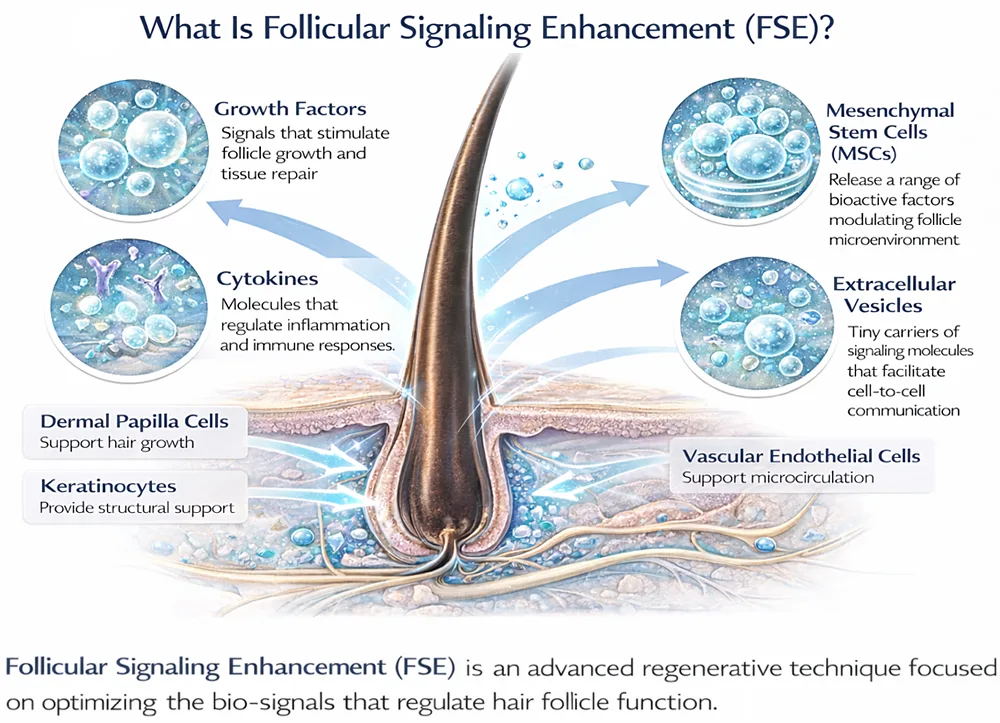
What Is Follicular Signaling Enhancement (FSE)?
Follicular Signaling Enhancement (FSE) is a minimally invasive regenerative strategy designed to optimize the biochemical signals that regulate hair follicle activity.
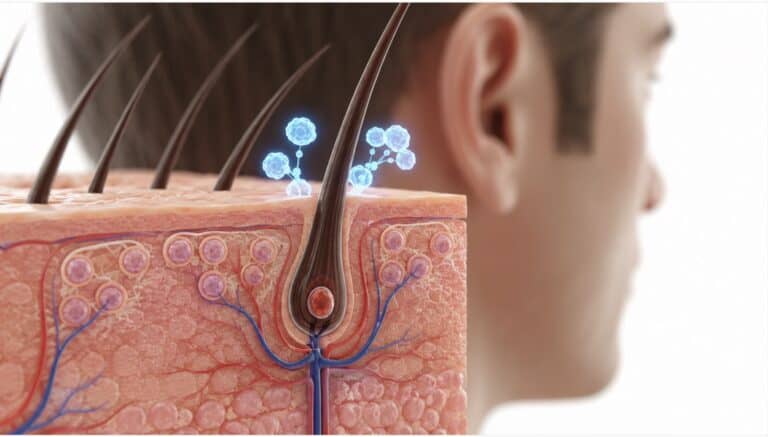
Hair follicles do not function in isolation; they are highly dynamic mini-organs that rely on constant communication between surrounding cells. These essential cells include:
Dermal papilla cells
Keratinocytes
Fibroblasts
Immune cells
Vascular endothelial cells
These cells communicate via signaling molecules—like growth factors, extracellular vesicles, and cytokines—which regulate tissue repair, stem cell activation, and hair growth. FSE approaches aim to restore these critical signaling pathways to prolong the follicle’s active growth phase.
Understanding the Biology of Hair Loss
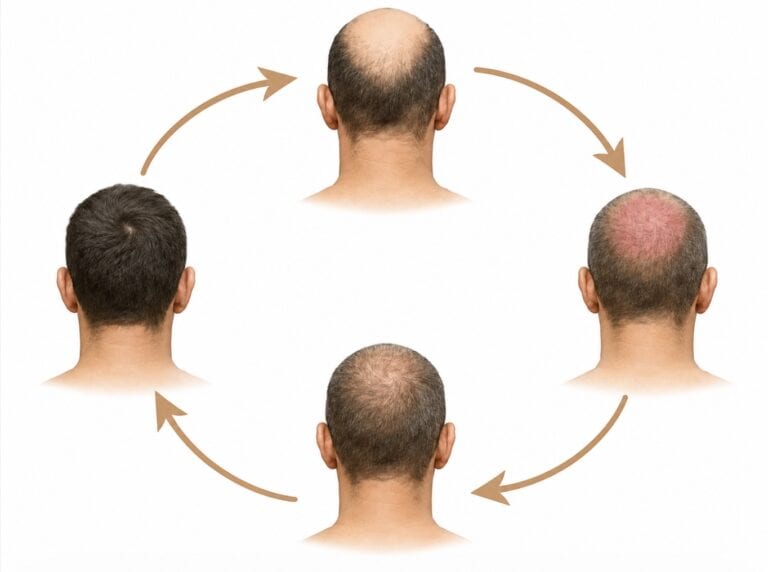
To understand how FSE hair restoration works, we must first look at the natural hair cycle. Each follicle cycles through three primary phases:
Anagen (Growth Phase): Active hair growth occurs as follicular cells rapidly divide.
Catagen (Transition Phase): Cellular activity slows, and the follicle begins to shrink.
Telogen (Resting Phase): Hair growth pauses before shedding and eventually re-entering the anagen phase.
In conditions like androgenetic alopecia (AGA), this cycle is severely disrupted. The anagen phase shortens, and follicles undergo miniaturization (shrinking), resulting in thinner, weaker hair.
Biological factors driving this disruption include:
Hormonal influences, specifically dihydrotestosterone (DHT).
Reduced vascular blood supply to the follicles.
Chronic inflammatory signaling and oxidative stress.
Impaired cellular communication within the scalp’s microenvironment.
FSE specifically targets these underlying biological factors to rebuild a healthy environment for the follicle.
How FSE Compares to Traditional Hair Restoration
FSE is designed to be minimally invasive and biologically targeted. It is often used to complement established treatments rather than completely replace them. Here is how FSE compares to traditional methods:
| Treatment Method | Primary Mechanism | Delivery & Maintenance |
| FSE Hair Restoration | Focuses on the broader follicle environment through bio-signaling. | Minimally invasive; designed to work alongside established treatments. |
| Minoxidil | Stimulates follicles topically. | Requires ongoing daily use. |
| Finasteride | Blocks DHT systemically. | Oral medication with possible side effects. |
| PRP Therapy | Delivers platelet-derived growth factors. | Delivered via injection. |
| FUE or FUT Transplant | Surgically relocates donor follicles. | Surgical procedure. |
The Cellular Mechanisms: Bio-Signaling and Growth Factors
At its core, FSE focuses on paracrine signaling—the process where neighboring cells communicate via bioactive messengers. Unlike topical treatments that sit on the scalp, FSE targets the underlying follicular microenvironment.
Within the scalp, numerous signaling molecules dictate follicle regulation. Key growth factors targeted by FSE include:
Vascular Endothelial Growth Factor (VEGF): Improves oxygen and nutrient delivery by promoting blood vessel formation.
Fibroblast Growth Factor (FGF): Crucial for follicle development and dermal papilla cell function.
Insulin-Like Growth Factor (IGF-1): Directly associated with a prolonged anagen (growth) phase.
Transforming Growth Factor Beta (TGF-β): Regulates tissue remodeling and follicle cycling.
Platelet-Derived Growth Factor (PDGF): Vital for cellular repair and regeneration.
The Role of Bioelectric Signaling
Emerging research indicates that follicles are also influenced by bioelectric activity. Studies suggest that fibroblast membrane hyperpolarization, calcium regulation, and the enhancement of the Wnt signaling pathway play major roles in follicle stem cell activation and anagen entry.
Clinical Applications: Is FSE Right for You?
Not every patient is an ideal candidate for FSE, making a physician-assessed consultation essential.
Ideal Candidates and Hair Loss Types
FSE may support the following patterns of hair loss:
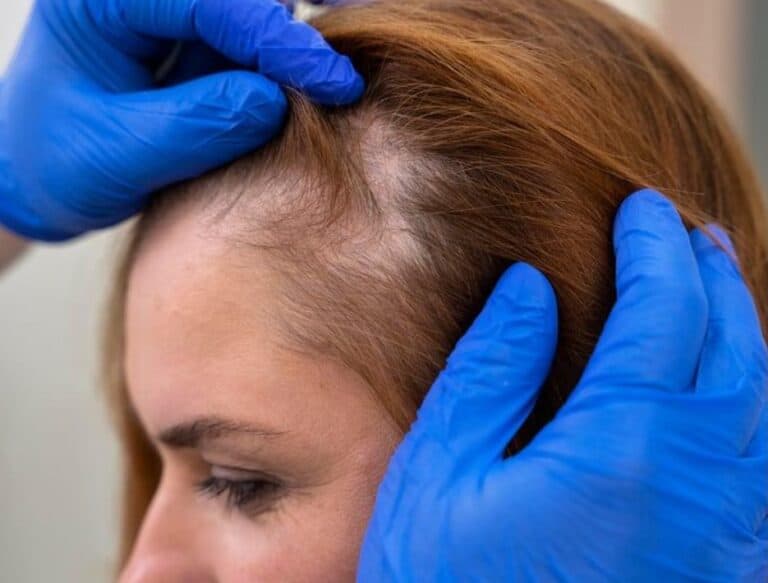
Androgenetic Alopecia (Male/Female Pattern): Supports miniaturizing follicles before they are permanently lost.
Telogen Effluvium: Assists in restoring disrupted cycles triggered by stress, hormones, or illness.
Age-Related Follicle Decline: Improves overall scalp health and microenvironment.
Alopecia Areata: May be utilized in highly selected cases alongside dedicated dermatologist-led care.
Treatment Timelines and Safety
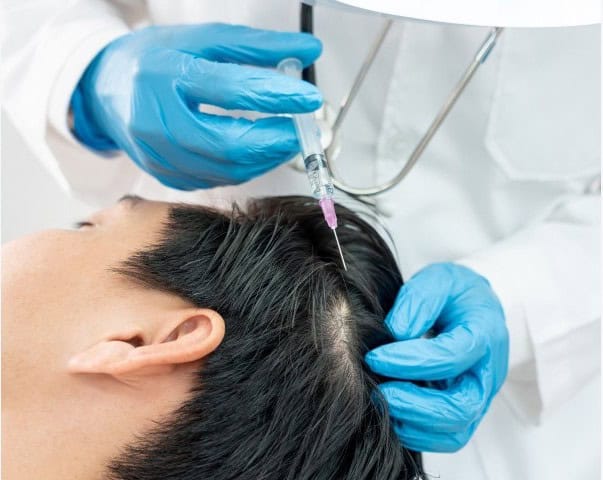
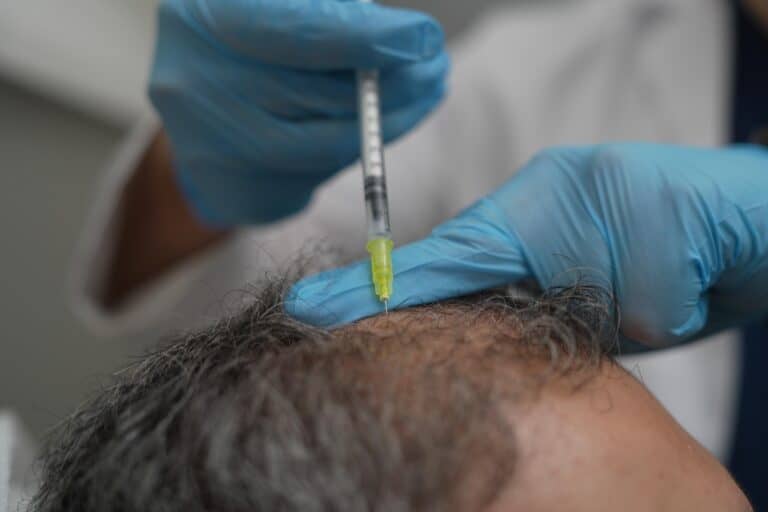
FSE is delivered via a series of in-clinic sessions spaced weeks apart.
Timeline: Most patients begin noticing gradual changes within 3 to 6 months, with continued improvements visible over 9 to 12 months.
Safety Profile: FSE boasts a favorable safety profile when performed by trained specialists. Potential mild side effects include temporary scalp tenderness, swelling, or redness at the injection site, which usually resolves in a few days.
Contraindications: FSE may not be suitable for pregnant women, or patients with active scalp infections, bleeding disorders, or certain autoimmune conditions.
Conclusion
Take the Next Step with Vega Dermatology & Wound Care
At Mega Dermatology & Wound Care, our foundation in advanced wound healing and tissue regeneration uniquely positions us to optimize your scalp’s microenvironment. The exact biological principles that drive complex tissue repair—cellular communication, blood flow, and growth factor signaling—are exactly what your hair follicles need to thrive.
Why trust our physician-led team for your Follicular Signaling Enhancement (FSE)?
Specialized Diagnostics: We assess the precise biological barriers disrupting your natural hair growth cycle.
Regenerative Expertise: Our background in advanced wound care translates directly to mastering the cellular pathways required for true follicle repair.
Customized Protocols: We design safe, personalized FSE treatment plans tailored to your specific hair loss profile.
Frequently Asked Questions About Hair Follicle Regeneration
Q: What makes FSE different from PRP therapy for hair restoration?
A: PRP primarily delivers platelet-derived growth factors from your own blood to stimulate follicles. FSE hair restoration takes a broader approach, working on the full biochemical signaling environment, including dermal papilla cell activity and paracrine communication. For suitable candidates, the two may also be combined under physician supervision.
Q: How long does it take to see results from FSE hair restoration?
A: FSE typically involves multiple sessions over several months. Many patients begin noticing changes between three and six months as follicles transition into the anagen growth phase, with continued improvement often visible up to nine to twelve months. Individual response varies based on hair loss type, severity, and overall scalp health.
Q: Can FSE reactivate completely dormant hair follicles?
A: FSE aims to support miniaturized and weakened follicles by improving their signaling environment, rather than restoring follicles that are fully scarred or permanently lost. Research suggests it may help reactivate follicular progenitor cells and improve dermal papilla responsiveness, but complete regeneration of long-dormant follicles remains under investigation.
Q: Is FSE treatment safe, and what are the potential side effects?
A: Regenerative hair restoration approaches such as FSE generally show favorable safety profiles when performed by trained specialists. Possible side effects include mild scalp tenderness, redness, or minor swelling at injection sites, typically resolving within a few days. Patients with autoimmune conditions, bleeding disorders, or active scalp infection should be carefully screened before treatment.
Q: What growth factors are most important in FSE protocols?
A: Key signals include VEGF for scalp microcirculation, FGF-7 and FGF-9 for dermal papilla cell support, IGF-1 for prolonging the anagen growth phase, and carefully balanced TGF-beta for healthy follicle cycling. Optimal bio-signaling hair restoration depends on the right combination and concentration of these factors.
Q: Can FSE be combined with hair transplant surgery?
A: Yes, FSE may complement hair transplantation by optimizing the recipient site environment before surgery and supporting transplanted follicle survival afterward. Combined protocols aim to improve graft support, healing, and overall density outcomes. Candidacy and protocol design are determined through a physician-assessed consultation.
Q: Who is an ideal candidate for FSE hair restoration?
A: Suitable candidates often include people with androgenetic alopecia showing follicle miniaturization, those with thinning hair who still have viable follicles, and patients seeking non-surgical regenerative options. Realistic expectations and commitment to a series of sessions are important for the best outcomes.

The Vega Derma Medical Team consists of board-certified dermatologists, specialized trichologists, and clinical researchers based in Bangkok, Thailand. Our team specializes in evidence-based regenerative dermatology, complex tissue repair, and advanced hair restoration (including precision FUE and FSE). Every protocol and article we publish is medically reviewed to ensure it meets international clinical standards, providing safe, science-backed guidance for our local and international patients.