
Introduction
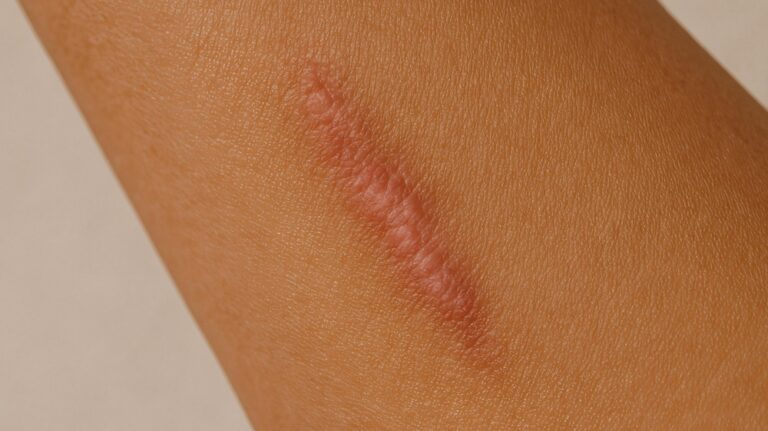
Some scars just don’t fade the way they’re supposed to. You’d expect an old scar, a surgical scar, or one left behind from a bad injury to soften over the years but plenty of them stay hard, tight, and stubbornly pull at the skin around them no matter how much time passes. That tightness has a name: fibrous tissue, or what most people just call scar tissue buildup. And figuring out how to actually break it down is exactly where scar tissue therapy comes in.
Old scars, surgical scars, scars that just won’t budge no matter what cream you throw at them that’s what we’re actually talking about here. Not keloids, not acne scars. Those two play by completely different rules and need their own approach, so we’re leaving them out of this one on purpose. What follows is a real look at what’s happening underneath a scar that’s stuck, and the clinical techniques that actually soften that fibrous tissue and get some elasticity back into the skin.
Understanding Scar Tissue Buildup: Why Some Scars Stay Hard and Tight
How Fibrous Tissue Actually Forms
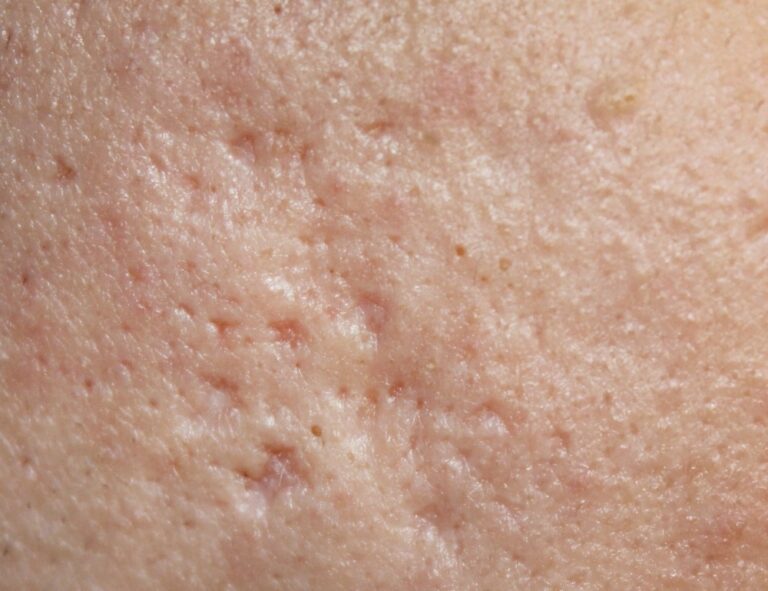
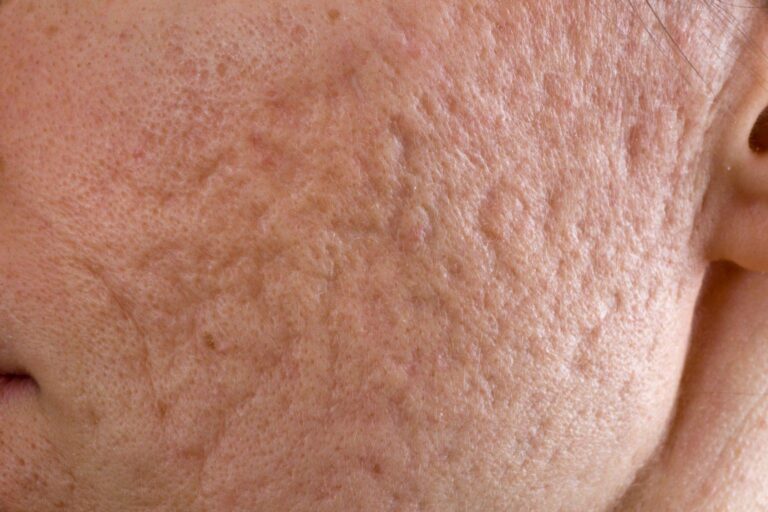
When skin gets injured, the body jumps into repair mode fast, laying down a huge amount of collagen to close the wound as quickly as possible. Speed is the priority there, not precision so that collagen often gets laid down in a tangled, disorganized pattern instead of the neat, aligned structure you’d find in healthy skin. Over time, that disorganized mass hardens into what’s known as fibrous scar tissue, and it tends to pull on the surrounding skin as it does.
Why Older Scars Are Harder to Treat Than New Ones
The longer a scar sticks around, the tighter that fibrous tissue tends to bind, and the less blood supply it has feeding it. Less blood flow means a slower response to treatment which is exactly why treating older, stubborn scars almost always takes longer and typically needs more than one technique working together, rather than a single quick fix.
How Scar Tissue Affects Movement, Not Just Appearance
Scar tissue that forms near a joint elbows, knees, anywhere that moves constantly can genuinely restrict range of motion. This isn’t just a cosmetic issue for a lot of people. It shows up in daily life: trouble bending, reaching, or moving normally through a joint that used to work fine.
Manual Techniques for Breaking Down Scar Tissue
Scar Massage: Simple, But It Actually Works
Scar massage is exactly what it sounds like a physical therapist or physician applies focused pressure and specific movement patterns to loosen tightly bound collagen fibers, encouraging them to realign in a more natural direction. Done consistently, it genuinely reduces tightness and improves flexibility in the scarred area over time.
Myofascial Release for Deeper Restrictions
When the restriction goes deeper down into the fascia, the connective tissue surrounding muscles myofascial release comes into play. This technique uses slow, sustained pressure to release tension in that deeper layer, and it’s often paired with a broader physical therapy program, especially for patients recovering from larger surgical scars.
Instrument-Assisted Soft Tissue Mobilization (IASTM)
IASTM uses specialized metal or rigid tools to apply more targeted, controlled pressure than hands alone can manage. It’s typically reserved for particularly dense scar tissue that hasn’t responded well to manual massage on its own.
Clinical Technologies for Scar Tissue Breakdown and Skin Restoration
Fractional Laser: Prompting Collagen to Rebuild Itself
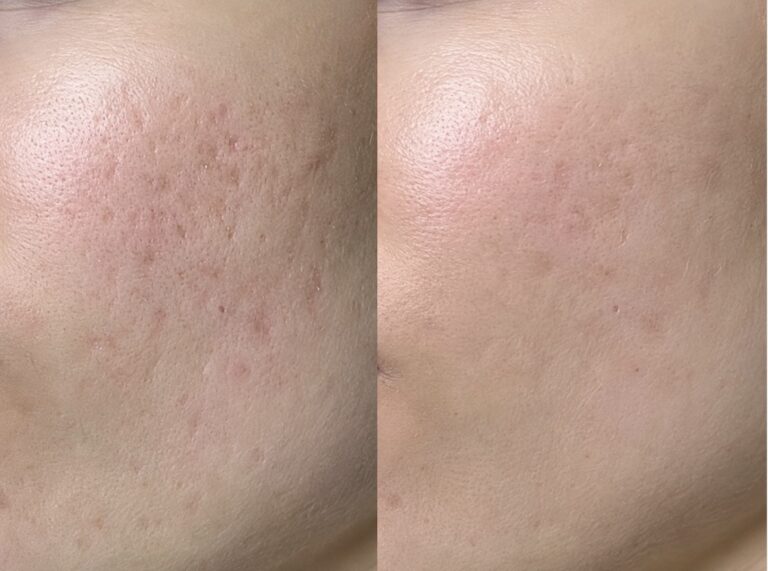
Fractional laser therapy works by delivering targeted micro-beams into the skin, triggering the body to produce fresh, better-organized collagen in place of the tangled fibrous tissue that’s already there. Over a series of sessions, the treated area typically becomes noticeably softer, more flexible, and closer in tone to the surrounding skin. It’s become one of the go-to laser treatments for scar tissue breakdown for good reason the results tend to hold up.
Pulsed Dye Laser for Red or Purple Scarring
Some older or surgical scars carry a reddish or purplish tint, caused by abnormal blood vessels sitting close to the surface. Pulsed dye laser targets those vessels directly, fading the discoloration while also nudging the underlying collagen structure toward a healthier pattern.
RF Microneedling for Deeper Tissue Remodeling
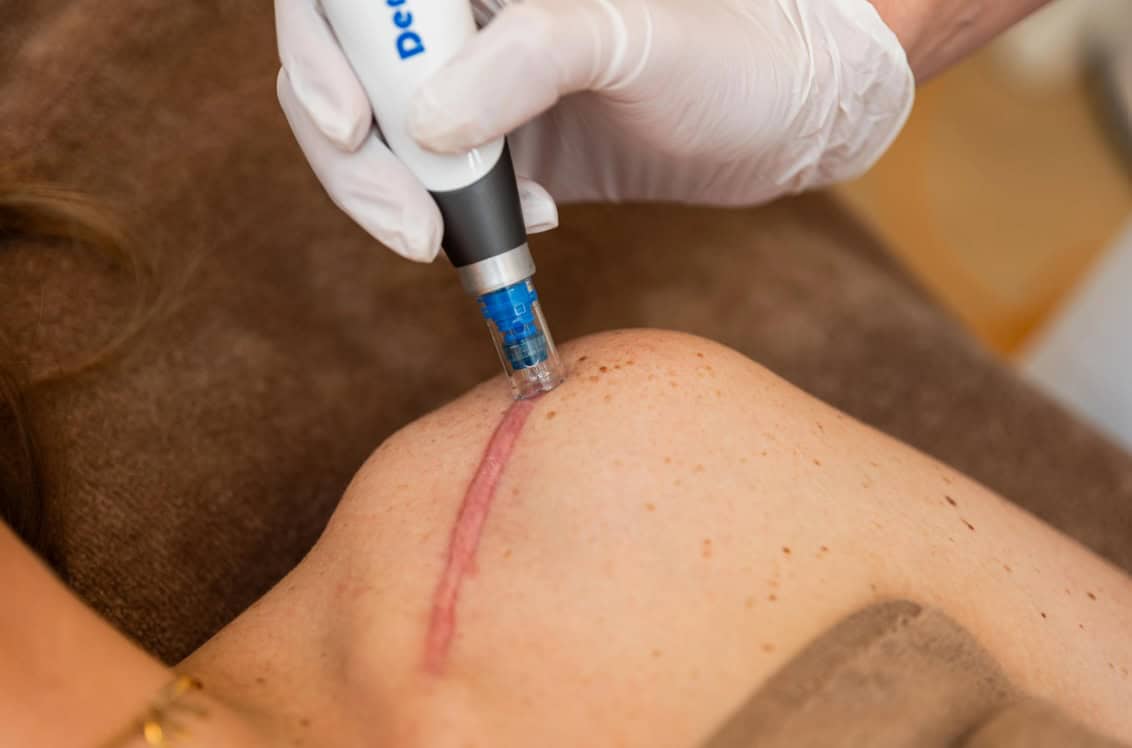
RF microneedling pairs microneedling with radiofrequency energy, driving heat down into the deeper dermal layer where the fibrous tissue actually lives. That combination breaks down old, poorly organized collagen and encourages new collagen with noticeably better elasticity which makes it particularly useful for surgical scars with visible tightness or pulling.
Ultrasound Therapy: Sound Waves That Loosen Tissue
Therapeutic ultrasound sends high-frequency sound waves deep into the tissue, generating heat that improves blood flow around the scar and helps loosen tightly bound fibrous tissue. It’s frequently combined with a physical therapy program for patients whose movement is genuinely limited by scar tightness.
Injections and Enzymatic Treatments for Stubborn Tissue
Corticosteroid Injections for Thick, Raised Scarring
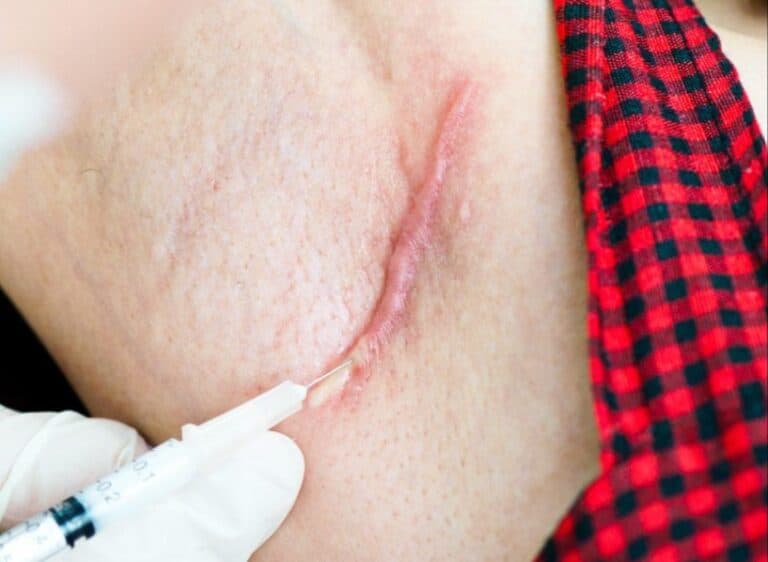
For hypertrophic scars the raised, thickened kind that isn’t a keloid corticosteroid injections help slow excess collagen production and gradually flatten the scar. These are usually given as a series, spaced several weeks apart, for results that actually last.
Collagenase Injections: Breaking Bonds With Enzymes
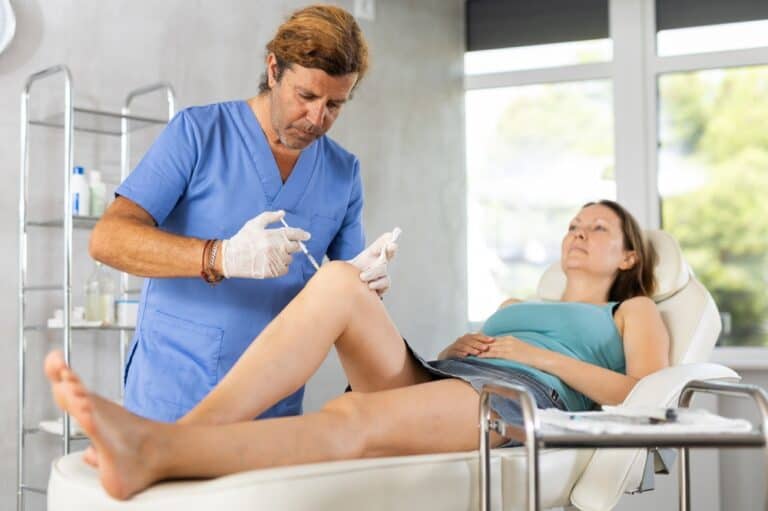
Collagenase is a specialized enzyme injected directly into fibrous tissue to break down the tightly bound collagen bonds holding it together. It’s often used when scar tissue is genuinely restricting joint movement, and it works as a solid option for patients who haven’t gotten enough out of massage or laser treatment alone.
Why Combining Techniques Usually Wins Out Long-Term
In practice, getting a real, lasting result from stubborn scar tissue almost always means layering more than one approach relying on just one method rarely gets it done. A typical treatment sequence might look something like this:
- Start with ultrasound therapy or myofascial release to loosen the deeper fibrous tissue first
- Follow with RF microneedling or fractional laser to trigger fresh, higher-quality collagen production
- Reinforce it with consistent scar massage at home to maintain flexibility over the long run
That layered structure is really what makes scar tissue breakdown treatment durable, rather than something that fades within weeks of the last session.
Finding a Clinic That Actually Assesses Your Scar Properly
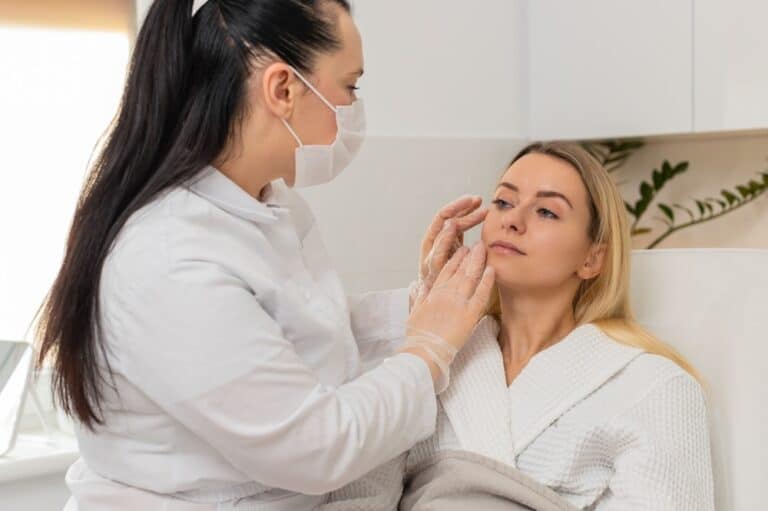
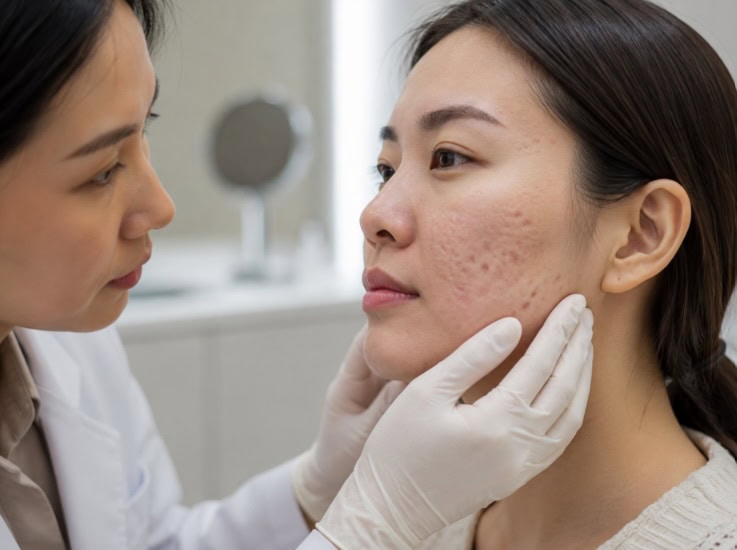
Getting good results from stubborn scar treatment starts with an accurate assessment how deep the fibrous tissue goes, how old the scar is, and whether its location is affecting movement. All of that shapes which technique actually makes sense for a given patient.
At Vega Derma, the clinical and physical therapy team evaluates each scar individually before building a treatment for scar tissue plan tailored to the patient’s skin and lifestyle — whether that ends up involving laser, microneedling, injections, or some combination of all three.
To learn more about a complete scar tissue therapy approach, you can read our full guide to treatment for scar tissue.
Frequently Asked Questions
Can a really old scar still be treated effectively?
Yes. Even scars that have been around for years can still be prompted to remodel it just tends to take more sessions and more patience than it would with a newer scar.
How many sessions does it usually take to see results?
That depends on how dense the fibrous tissue is and which technique is being used, but most protocols run four to eight sessions, spaced several weeks apart, before real changes in flexibility become noticeable.
Does scar massage at home actually make a difference?
It genuinely does, especially alongside clinical treatment. Consistent massage at home helps the results from in-clinic procedures hold up for longer instead of gradually reverting.
The Bottom Line
An old scar, a surgical scar, or one that’s stopped responding to regular creams isn’t a dead end. Techniques like scar massage, myofascial release, RF microneedling, fractional laser, and enzymatic injections are all clinically established tools for genuinely breaking down fibrous tissue and restoring real elasticity to the skin.
A consultation with a specialized team at a clinic like Vega Derma for a proper assessment and a plan built around your specific scar is the right first step toward getting movement and confidence back.

The Vega Derma Medical Team consists of board-certified dermatologists, specialized trichologists, and clinical researchers based in Bangkok, Thailand. Our team specializes in evidence-based regenerative dermatology, complex tissue repair, and advanced hair restoration (including precision FUE and FSE). Every protocol and article we publish is medically reviewed to ensure it meets international clinical standards, providing safe, science-backed guidance for our local and international patients.