
Introduction
Walk into any pharmacy and you’ll find an entire shelf dedicated to acne scar creams, spot serums, and “fading” gels all promising smoother skin within weeks. For surface-level marks, some of these products genuinely help. But for anyone dealing with real texture, pitting, or scarring that’s stuck around for years, those same products tend to disappoint.
That gap between what over-the-counter (OTC) products can do and what they’re actually being asked to do is where most people get stuck. Acne scar treatment at a clinical level works differently it targets the structure of the skin itself, not just its surface appearance. This article breaks down why OTC remedies hit a ceiling, what professional treatments actually do differently, and when it’s worth moving beyond the drugstore aisle entirely.
1. Why Over-the-Counter Remedies Have a Ceiling
Most OTC acne scar products are built around one of a few active ingredients: retinol, vitamin C, niacinamide, or mild acids like glycolic acid. These aren’t useless they can genuinely improve tone and encourage some surface cell turnover. The problem is depth.
- Retinol and vitamin C work primarily in the outer layers of skin. They can brighten discoloration and support collagen signaling to a degree, but the concentrations sold without a prescription are capped for safety, which limits how much change they can actually produce.
- Mild acids exfoliate the surface, which can smooth out very shallow texture. They don’t reach the deeper dermal layer where true acne scarring the kind involving lost collagen actually lives.
- Consistency requirements are steep. Most OTC routines need months of daily use just to show modest results, and even then, they rarely touch a genuine pitted or “ice pick” scar.
The Core Issue: Depth of Damage
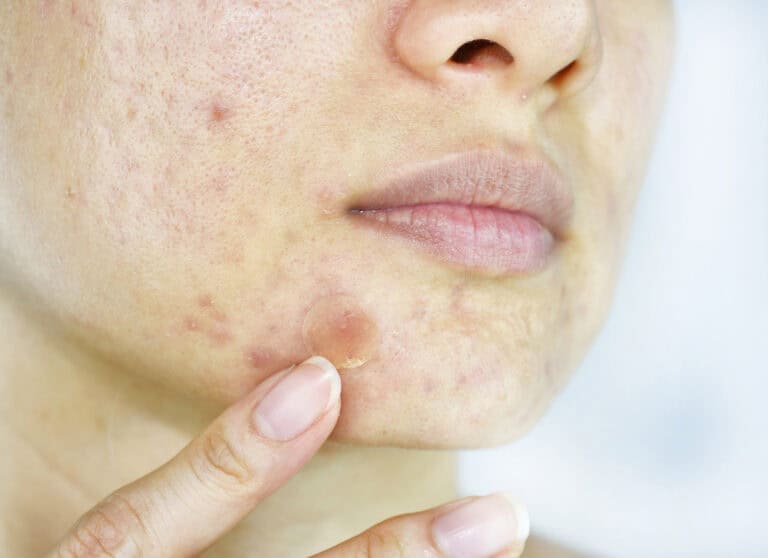
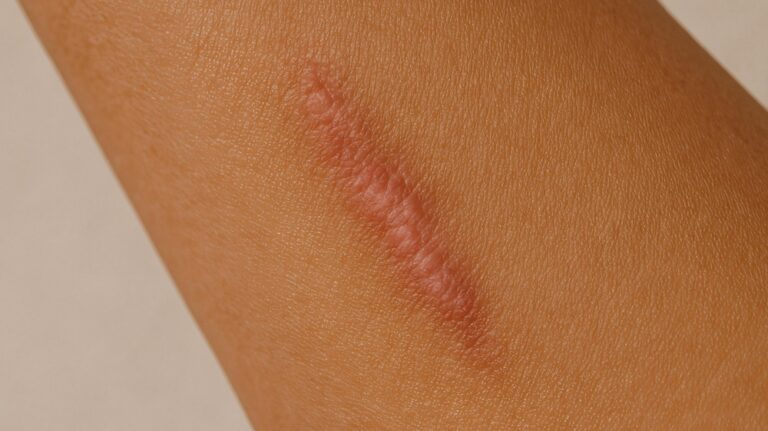
Acne scars form when inflammation destroys collagen beneath the skin’s surface. The body tries to repair itself, but the new tissue rarely matches the original structure leaving a depression, a raised patch, or uneven texture behind. A cream applied to the surface simply isn’t positioned to rebuild what was lost several layers down. This is the single biggest reason advanced acne scar treatment exists as its own category of care, separate from everyday skincare.
2. What Kind of Scarring Actually Needs Professional Treatment
Not every mark needs a clinic visit but knowing which ones do can save years of frustration with products that were never going to work.
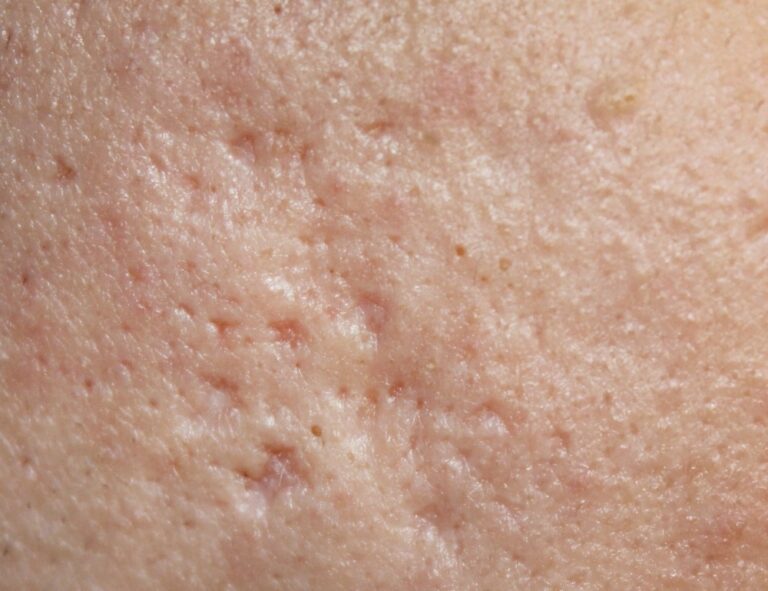
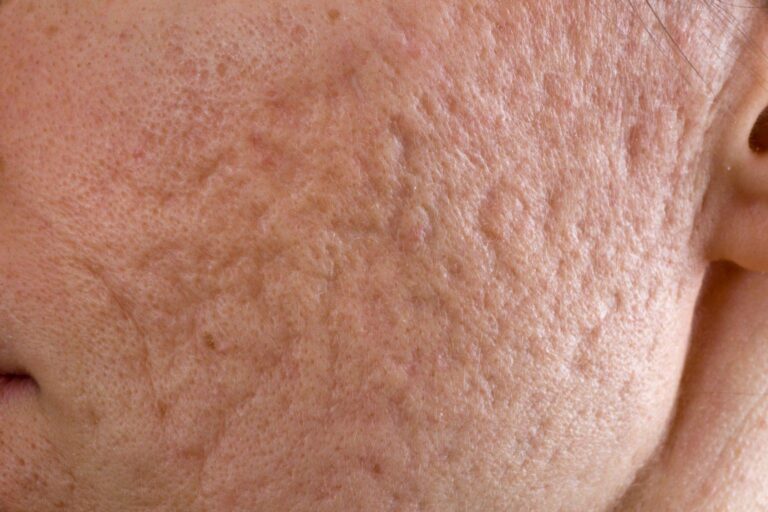
- Ice pick scars : narrow, deep, and pitted almost never respond to topical products. Their depth requires targeted intervention.
- Boxcar scars : wider depressions with sharply defined edges usually need resurfacing technology to soften the edges and encourage collagen fill.
- Rolling scars : broader, wave-like depressions caused by fibrous bands pulling the skin down typically require treatments that release that tethering and rebuild volume underneath.
- Hypertrophic or raised scarring needs an entirely different approach, focused on breaking down excess collagen rather than stimulating more of it.
If any of these sound familiar and months of serums haven’t made a visible dent, that’s usually the signal that it’s time to look at professional acne scar treatment options instead.
3. Clinical Treatments That Actually Change the Skin’s Structure
This is where the real difference between drugstore products and clinical care shows up. Professional treatments work below the surface, where OTC formulas simply can’t reach.
Laser Resurfacing
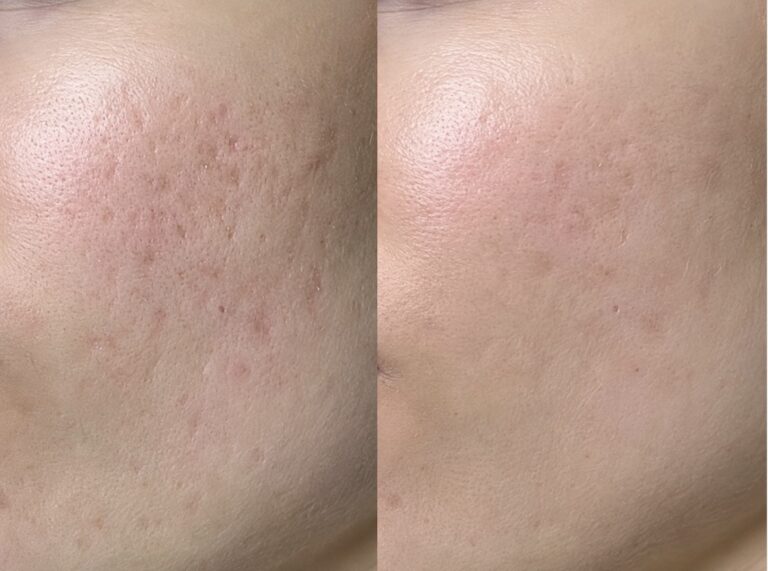
Fractional CO2 laser treatment is one of the most well-established options for deeper scarring. It creates thousands of microscopic treatment zones in the skin, triggering an intense collagen rebuilding response while leaving the surrounding tissue intact to speed healing. Results are often visible after just one or two sessions, though it does come with several days of downtime.
For shallower texture and residual redness, Pico laser for acne scars offers a gentler alternative. Its ultra-short pulses target pigment and stimulate collagen with far less disruption to the skin’s surface, which means less downtime a good fit for people who can’t take a week off their regular routine.
Microneedling and RF Microneedling
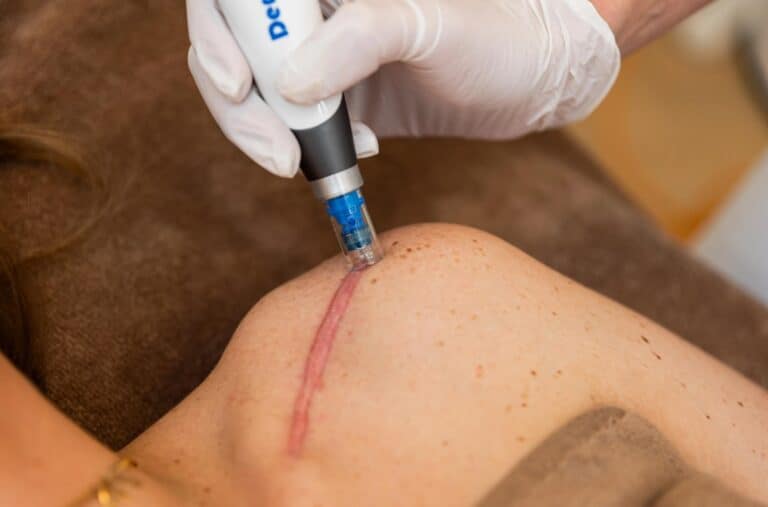
Traditional microneedling uses fine needles to create controlled micro-injuries that prompt the skin to heal itself with fresh collagen. RF microneedling takes this further by pairing the needles with radiofrequency energy, delivering heat precisely into the deeper layers of skin. This combination tends to produce more noticeable improvement than needling alone, particularly for rolling scars and enlarged pores.
Most people need a series of microneedling scar treatment sessions usually three to six, spaced four to six weeks apart before the full effect becomes visible.
Chemical Peels at Clinical Strength
Chemical peels available in a clinical setting use far higher concentrations than anything sold over the counter, and they’re applied under medical supervision.
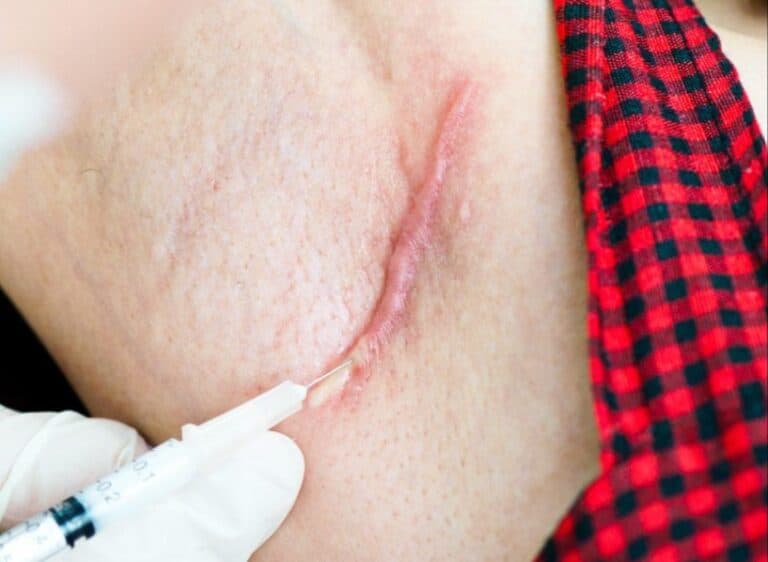
TCA CROSS is a technique built specifically for ice pick scars a physician applies a high-strength trichloroacetic acid solution directly into individual scars, triggering localized collagen production without affecting the surrounding skin. It’s one of the few treatments genuinely capable of addressing narrow, deep pitting.
Broader clinical-strength AHA and BHA peels work more generally across the skin, improving tone, smoothing mild texture, and fading lingering redness or discoloration often used alongside laser or microneedling rather than as a standalone fix for deep scarring.
4. Why Combining Treatments Usually Works Better Than Picking One
Dermatologists rarely rely on a single method for meaningful scarring. Instead, they build a combination acne scar treatment plan tailored to the specific mix of scar types present because most people have more than one.
A typical staged approach might look like:
- TCA CROSS first, to address any deep ice pick scarring
- Fractional CO2 laser next, to resurface the broader texture
- RF microneedling as a final phase, to reinforce collagen and tighten the skin over time
This layered approach tends to produce more complete, longer-lasting results than any single treatment on its own and often requires fewer total sessions in the long run.
When Acne Scars Need a Professional Assessment
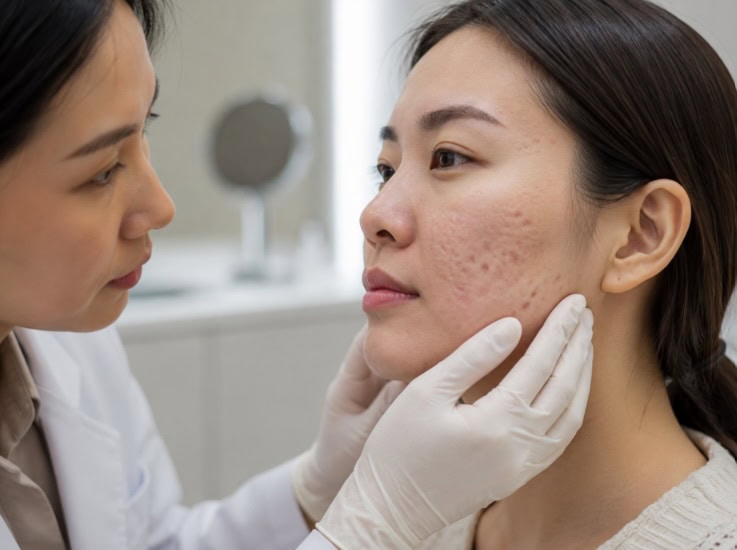
If OTC products haven’t moved the needle after months of consistent use, or if scarring involves real pitting, unevenness, or raised tissue, it’s worth having it properly evaluated. A dermatologist can identify exactly what type of scarring is present and which treatment or combination of treatments actually fits your skin.
At Vega Derma, the clinical team builds individualized treatment plans starting with a full assessment of scar type and skin condition, then selects from laser resurfacing, RF microneedling, and clinical-strength chemical peels based on what will genuinely move the needle not a one-size-fits-all protocol.
To explore a complete acne scar treatment approach, you can read more in a full guide to treating deep acne scars with medical-grade technology.
Frequently Asked Questions
How many sessions does professional treatment usually take?
Most laser and microneedling protocols run three to six sessions, spaced several weeks apart, with results building progressively as the skin rebuilds collagen between visits.
Is downtime the same across all treatments?
No. Pico laser and standard microneedling generally involve minimal downtime, while fractional CO2 laser can require five to seven days of visible healing. Your provider will match the treatment intensity to how much recovery time you can realistically manage.
Can scars be removed completely?
Most acne scars can’t be erased entirely, but advanced acne scar treatment can meaningfully reduce depth and visibility often enough that scarring becomes barely noticeable in everyday life.
The Bottom Line
If you’ve spent years on creams and serums with little to show for it, that’s not a personal failure it’s a sign the tools weren’t built for the depth of the problem. Fractional CO2 laser, Pico laser, RF microneedling, and TCA CROSS are all clinically established methods for rebuilding what topical products simply can’t reach.
A consultation with a dermatologist at a clinic like Vega Derma is the first real step toward understanding what’s actually causing your scarring and building a plan designed around your skin, not a shelf full of guesses.

The Vega Derma Medical Team consists of board-certified dermatologists, specialized trichologists, and clinical researchers based in Bangkok, Thailand. Our team specializes in evidence-based regenerative dermatology, complex tissue repair, and advanced hair restoration (including precision FUE and FSE). Every protocol and article we publish is medically reviewed to ensure it meets international clinical standards, providing safe, science-backed guidance for our local and international patients.