
Key Takeaways:
- Acne scars are not one condition. Ice pick, boxcar, rolling, and hypertrophic scars have different anatomy and respond to different procedures. A single laser applied to all of them will underperform on most.
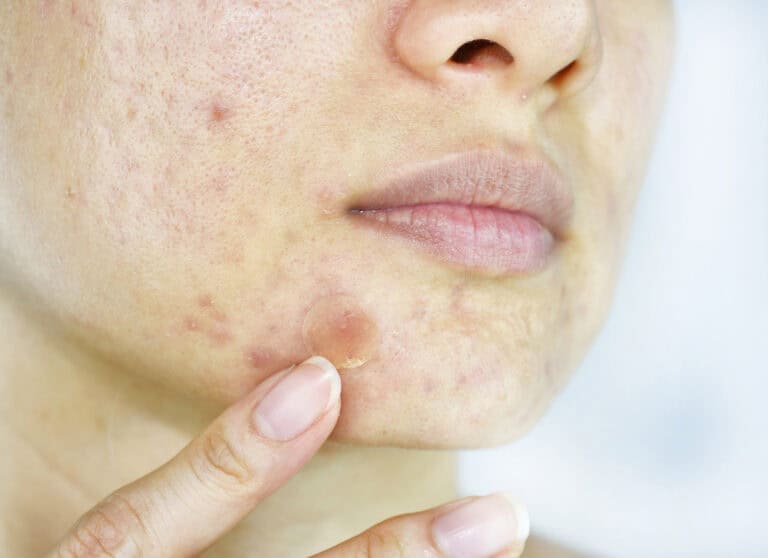
- The red or brown marks left after a spot are usually not scars at all. Post-inflammatory erythema and hyperpigmentation are pigment and vessel changes that often fade on their own or with topical treatment.
- Combination treatment outperforms single-modality treatment. In one comparison of 413 patients, fractional CO2 laser combined with subcision achieved a 92.09% overall efficacy rate versus 77.78% for laser alone.
- Skin type changes the plan. Most Thai and Southeast Asian patients fall into Fitzpatrick III to V, where post-inflammatory hyperpigmentation after aggressive laser settings has been reported in up to 100% of cases in some series. Conservative energy, fractional delivery, and pre-conditioning matter more than device brand.
- Active acne should be controlled first. Treating scars while inflammation continues means creating new scars behind the ones you just treated.
- Expect three to six sessions spaced four to eight weeks apart for most atrophic scarring, with collagen remodelling continuing for months after the final session.
Why your last treatment may have disappointed you
A very common story in our clinic sounds like this. A patient books a course of laser, completes it, sees maybe 20 to 30% improvement, and concludes that acne scars simply cannot be fixed.
Usually the problem was not the laser. It was that the laser was asked to treat a scar type it was never going to solve on its own.
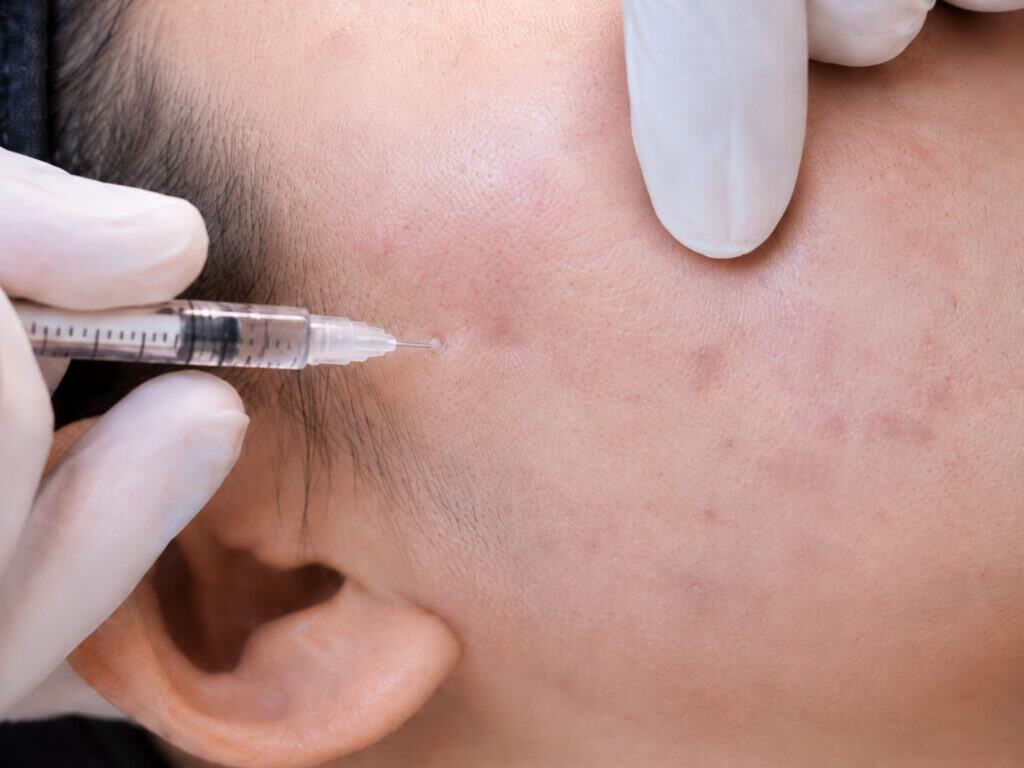
Deep ice pick scars extend into the deep dermis through a narrow opening. Fractional resurfacing treats a column of tissue but cannot reach the base of a scar that goes deeper than the device penetrates. Rolling scars are held down by fibrous bands tethering the skin to underlying tissue. No amount of surface resurfacing will release a tether. It has to be cut.
Matching procedure to anatomy is the whole discipline. Everything else is detail.
First, work out what you are actually looking at
Atrophic scars (depressed, roughly 80 to 90% of acne scarring)
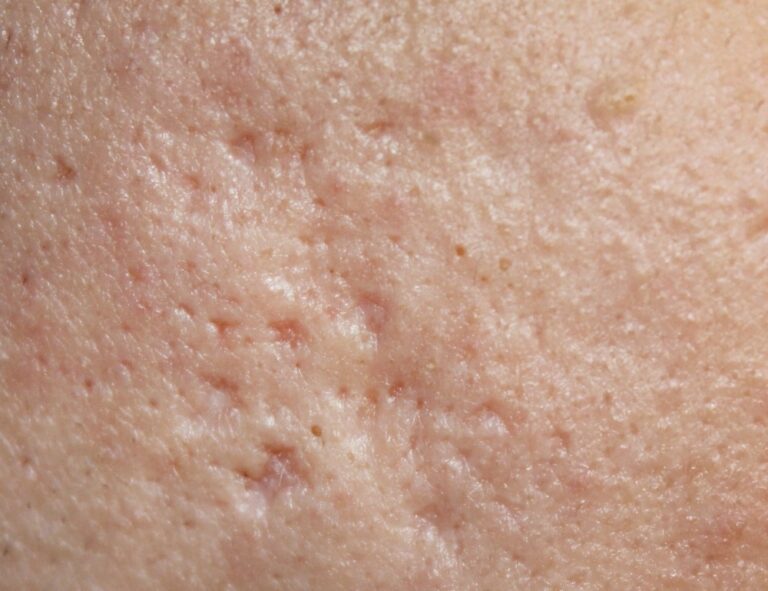
- Ice pick scars. Narrow, deep, V-shaped. Look like a puncture from a fine needle. Often on the cheeks. Under 2mm wide but reach deep into the dermis.
- Boxcar scars. Round or oval with sharply defined vertical walls, like a small crater. Shallow or deep. Commonly on cheeks and temples.
- Rolling scars. Wide, shallow, with soft sloping edges that give the skin an undulating appearance. Caused by fibrous tethering below the surface. Often most visible in raking side light.
Raised scars
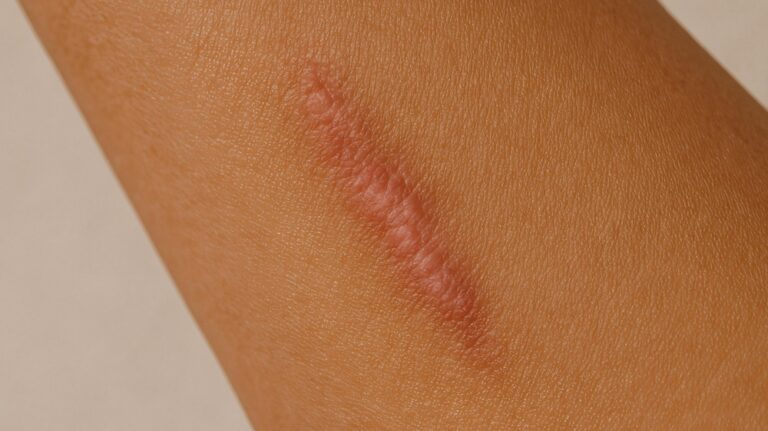
- Hypertrophic scars. Raised, firm, staying within the boundary of the original lesion. More common on the chest, shoulders, and jawline.
- Keloids. Raised scars that grow beyond the original lesion boundary and do not regress on their own. Higher risk in Asian, African, Middle Eastern, and Latin American skin, which makes them a common presentation in Thailand. They behave differently enough from hypertrophic scars to need their own approach, covered on our keloid treatment page.
Not scars
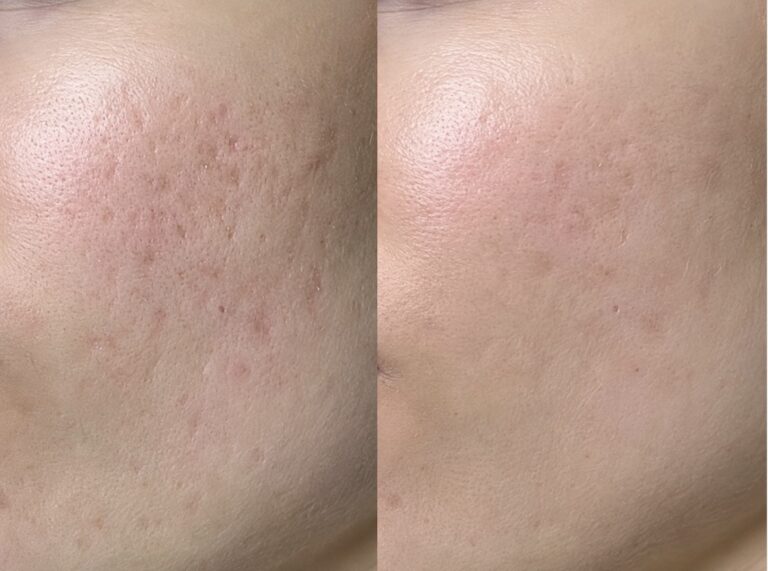
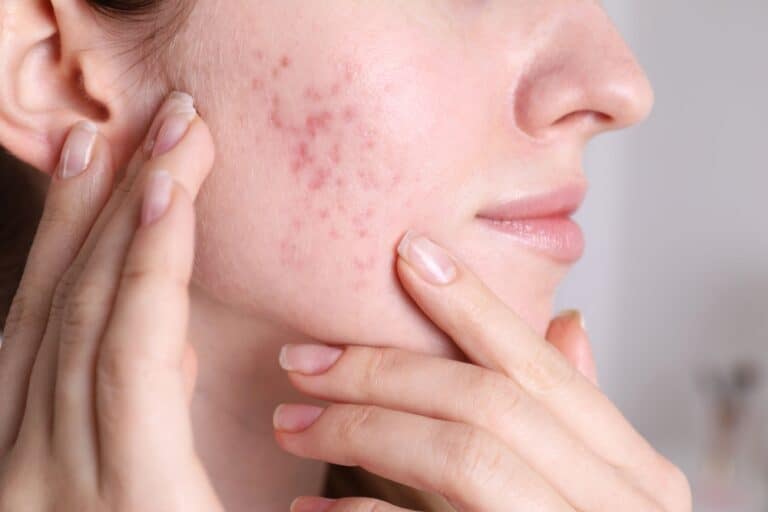
- Post-inflammatory erythema (PIE). Flat pink or red marks. Dilated capillaries left after inflammation. Common in lighter skin.
- Post-inflammatory hyperpigmentation (PIH). Flat brown or grey-brown marks. Excess melanin left after inflammation. Very common in Thai and other Asian skin.
Both are flat. Run a fingertip over them. If the surface is smooth and level, it is discolouration and not a scar, and it should not be treated with an aggressive resurfacing device. Many patients spend a great deal of money resurfacing marks that would have faded with sun protection and a topical.
Treatment matched to scar type
Scar type | Primary treatment | Common adjuncts | Typical sessions | Downtime |
|---|---|---|---|---|
Ice pick | TCA CROSS | Fractional laser, punch excision for wide ones | 3 to 6 | 5 to 7 days of dark crusting per session |
Boxcar (shallow) | Fractional laser or RF microneedling | Chemical peel | 3 to 5 | 3 to 7 days |
Boxcar (deep, sharp-edged) | Punch elevation or excision | Fractional laser after healing | 1 to 2 surgical, then 2 to 3 laser | 7 to 14 days |
Rolling | Subcision | Fractional laser, filler, biostimulator | 2 to 4 subcision | Bruising 7 to 14 days |
Mixed atrophic (most patients) | Combination protocol | Sequenced across sessions | 4 to 6 | Varies |
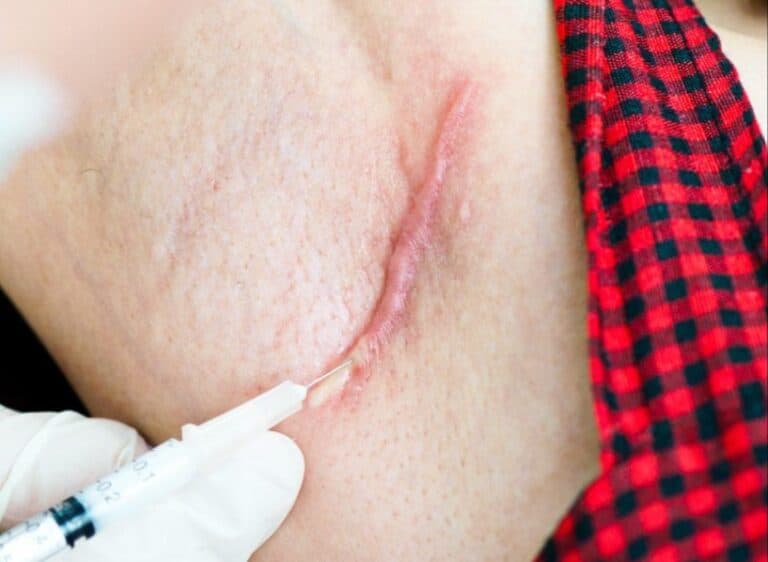
Hypertrophic | Intralesional corticosteroid | Silicone, pulsed dye laser | 3 to 6 injections, 4 weeks apart | Minimal |
Keloid | Intralesional corticosteroid, sometimes with 5-FU | Silicone, pressure, surgical excision with adjuvant | Ongoing | Minimal |
PIE (red marks) | Vascular laser, time | Sun protection, topicals | 1 to 3 or none | Minimal |
PIH (brown marks) | Topical pigment therapy, sun protection | Gentle peels | 8 to 12 weeks topical | None |
What the evidence says about combining treatments
The clearest message across the research is that combinations work better than monotherapy.
A retrospective analysis of 413 patients found that fractional CO2 laser combined with subcision achieved a 92.09% overall efficacy rate compared with 77.78% for fractional CO2 laser alone. A randomised study of 40 patients found that subcision combined with either fractional CO2 laser or cross-linked hyaluronic acid filler produced significantly greater improvement than subcision alone, measured on Goodman and Baron grading. Systematic review evidence similarly reports that combination therapy generally achieves superior clinical improvement over single-modality treatment, particularly for scar texture, depth reduction, and patient-reported satisfaction.
Case series using triple combinations of TCA CROSS, subcision, and microneedling, each targeting a different mechanism, report consistently high patient satisfaction.
The reason is mechanical. Subcision releases tethering. TCA CROSS reaches into narrow deep scars that lasers cannot. Fractional resurfacing rebuilds collagen across the surface. Fillers or biostimulators restore volume. They address different problems, so stacking them compounds the result rather than duplicating it.
Where regenerative therapy fits
A newer layer sits alongside these. Regenerative and cell-based approaches, which many patients search for as stem cell therapy for acne scars Bangkok clinics offer, aim to improve collagen production, elasticity, and overall tissue quality rather than to reshape the scar mechanically.
Our position on this is deliberately conservative. Early studies and clinical experience suggest a benefit in atrophic scarring, particularly when used inside a broader programme, but long-term data is still developing. We treat it as a promising adjunct that supports tissue quality after the structural work has been done, not as a stand-alone cure and not as a substitute for subcision or resurfacing. Any clinic presenting it as a single-session fix for deep scarring is overselling it.
The Asian skin factor, which many articles skip
This is the part that matters most for patients in Bangkok.
Most Thai patients fall into Fitzpatrick skin types III to V. Melanocytes in these skin types are more reactive, so heat and inflammation are more likely to trigger post-inflammatory hyperpigmentation. Fractional CO2 laser is widely regarded as an effective option for acne scar remodelling across skin types I to V, but its use in darker skin types is challenging, with PIH incidence reported as high as 100% in some case series.
That does not mean lasers are off the table for Thai skin. It means technique matters more:
- Conservative energy and density. Comparative review data shows adverse effects in 28% of patients treated with high-energy fractional CO2 settings versus 9% with low-energy protocols. More sessions at lower energy is often the better trade for pigmented skin.
- Fractional rather than fully ablative delivery. Treating microscopic columns and sparing surrounding tissue speeds healing and lowers inflammatory load.
- Non-ablative and radiofrequency microneedling options. A retrospective review of 115 sessions using a 1,550nm non-ablative fractional laser in Fitzpatrick IV to VI patients recorded PIH in only 4% of sessions. RF microneedling delivers energy into the dermis through insulated needles while largely sparing the epidermis, which reduces pigment risk.
- Pre-conditioning and post-treatment protocols. A study of pre- and post-treatment chemical peeling around fractional CO2 resurfacing reported a median PIH severity score of zero in the treated group, versus meaningful pigmentation in controls.
- Strict sun protection. Non-negotiable in Bangkok. Daily broad-spectrum SPF 50, reapplied, plus physical shade for the weeks after each session.
If a clinic proposes the same settings for you that they would use on a Northern European patient, that is a reason to ask more questions.
The order of operations
Step 1: Control active acne. Resurfacing skin that is still breaking out produces new scars. Acne should be stable before scar treatment begins. If you are on or recently finished isotretinoin, your doctor will discuss timing for procedures.
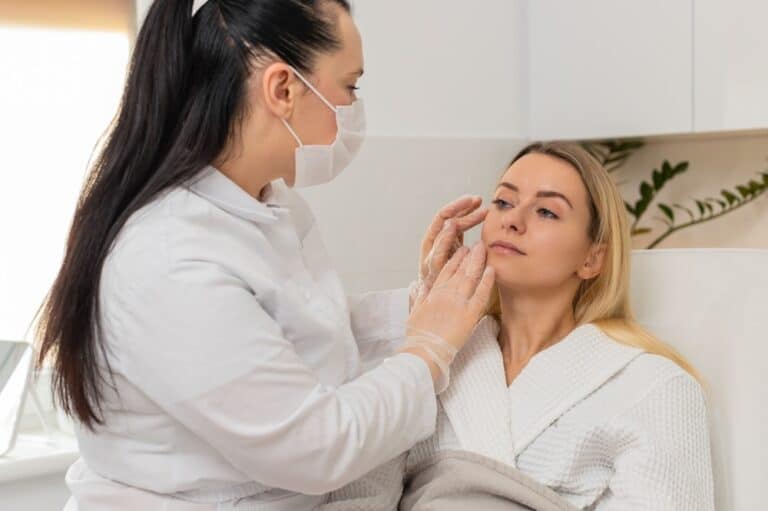
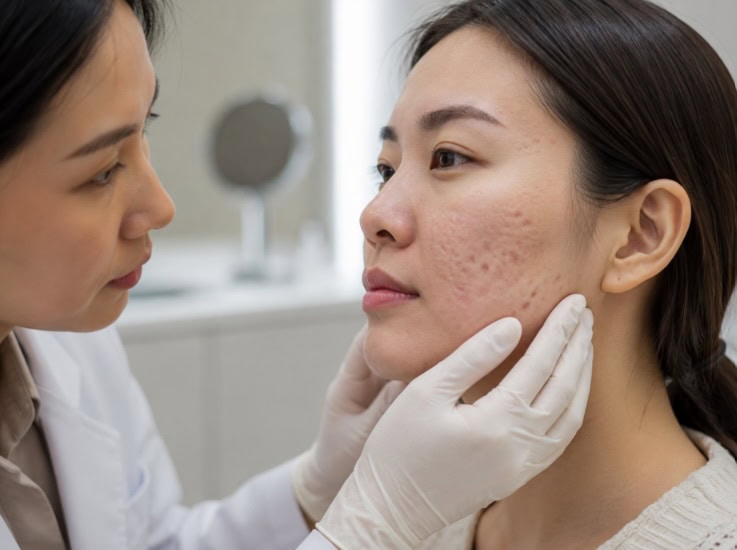
Step 2: Map the scars. A proper consultation should identify which types you have and in what proportion, ideally with photography under angled lighting that reveals depth. Most patients have a mixture, which is why one procedure rarely does everything.
Step 3: Sequence the plan. Deep and structural work first, in many cases. Subcision and TCA CROSS address architecture. Resurfacing then smooths what remains. Volume correction comes last, once you can see what is left.
Step 4: Space sessions properly. Four to eight weeks between sessions gives collagen remodelling time to happen. Collagen continues to reorganise for three to six months after your last session, which means your final result is not the one you see at the two-week review.
Step 5: Maintain. Sun protection, a retinoid if appropriate, and ongoing acne control protect the result.
What to ask a Bangkok clinic before booking
- Which scar types do I have, and in what proportion?
- Which procedure are you using for each type, and why that one?
- Is the procedure performed by a doctor, and what is their specialty training?
- What settings will you use for my skin type, and what is your protocol for preventing PIH?
- What is the full course cost, and what does it include if I need an extra session?
- Can I see before and after photographs of patients with my scar type and my skin tone?
- What happens if I develop pigmentation afterwards, and is that follow-up included?
The photograph question is the most revealing. Results on Fitzpatrick II skin tell you very little about what will happen to Fitzpatrick IV skin.
Recovery, honestly
- Fractional laser: Redness and a sandpaper texture for three to seven days. Swelling for the first 48 hours. Fine bronzing and flaking as the treated columns shed. Makeup usually possible from day five to seven.
- TCA CROSS: Small dark crusts at each treated point, resembling scattered dots. These last five to seven days and must not be picked. Visible and difficult to hide, so plan around social commitments.
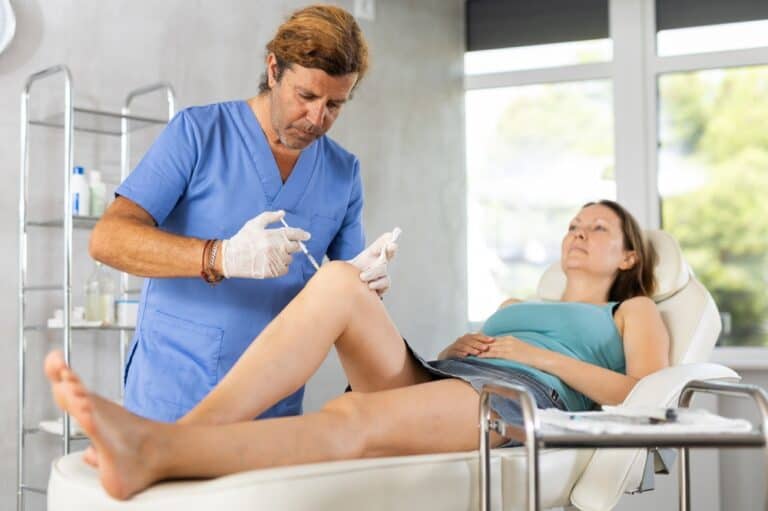
- Subcision: Bruising and swelling for seven to fourteen days, sometimes significant. Small lumps can occur as healing tissue forms and usually settle.
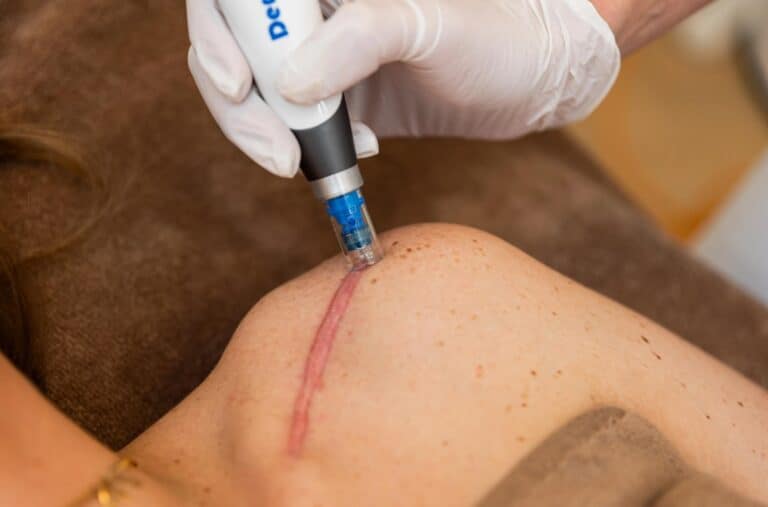
- RF microneedling: Redness for one to three days, sometimes grid-pattern marks for 24 to 48 hours.
Across all of them, the two rules that most affect your outcome are: do not pick, and do not expose the area to direct sun.
How acne scar treatment is planned at Vega Derma, Bangkok
Because most patients arrive with a mixture of scar types, we start with scar mapping rather than with a device.
At consultation we photograph the face under angled lighting and map which scars are rolling, boxcar, ice pick, hypertrophic, or keloidal, and separately identify which marks are actually PIE or PIH and therefore should not be resurfaced at all. That map is what the protocol is built from.
A typical acne scar treatment in Bangkok plan with us combines two to four of the following, sequenced across sessions:
Element | Purpose |
|---|---|
Subcision | Releases the fibrous bands tethering rolling scars |
Microneedling RF | Deep collagen remodelling for boxcar, rolling, and mixed scarring |
Fractional and pico laser | Resurfacing for texture, tone, and mixed scarring |
TCA CROSS | Targeted reconstruction from the base of ice pick scars |
Biostimulators | Structural collagen support where volume loss accompanies scarring |
Regenerative support | Tissue quality and collagen production as an adjunct |
Chemical peels | Surface refinement and residual pigmentation |
Two things we do differently, and both are specific to treating Thai and Southeast Asian skin. Device settings, post-procedure care, and session spacing are adjusted for your Fitzpatrick type rather than run at default parameters, because aggressive protocols on pigmented skin cause more harm than benefit. And progress is tracked with standardised photography at every visit, so improvement is documented rather than remembered.
Frequently Asked Questions
Can acne scars be removed completely?
Realistically, no. Well-planned combination treatment commonly achieves substantial improvement, and many patients reach a point where scarring is no longer noticeable in normal lighting and conversation. Complete erasure is not an outcome any honest clinic should promise.
How many sessions will I need?
Most patients with mixed atrophic scarring need three to six sessions across a treatment course, spaced four to eight weeks apart. Deep ice pick scarring and severe boxcar scarring often need more, and may need surgical steps as well.
Is laser safe for Thai skin?
Yes, when the settings and protocol are chosen for your skin type. The risk that needs managing is post-inflammatory hyperpigmentation, which is more common in Fitzpatrick III to V skin. Lower energy, fractional delivery, pre-conditioning, and rigorous sun protection substantially reduce that risk.
Are the red or brown marks after acne considered scars?
Usually not. Flat red marks are post-inflammatory erythema and flat brown marks are post-inflammatory hyperpigmentation. Both are discolouration rather than a change in skin structure, and both often improve with time, sun protection, and topical treatment. Run your finger over the area. If it is smooth, it is likely not a scar.
How long before I see results?
You will see swelling-related smoothing in the first week that is not real improvement. Genuine change appears from around six to eight weeks after the first session and continues building for three to six months after your final session as collagen remodels.
Does microneedling at a beauty salon work for acne scars?
Superficial cosmetic microneedling can improve skin texture modestly. It does not reach the depth needed to remodel true atrophic scars, and it cannot release tethering. Medical microneedling at appropriate depths, and radiofrequency microneedling, are different procedures performed under medical supervision.
Does stem cell therapy for acne scars actually work?
The current honest answer is that it looks promising as an adjunct and is not yet proven as a stand-alone treatment. Early studies and clinical experience point to improvements in collagen production, elasticity, and general skin quality in atrophic scarring, especially when it forms part of a wider programme alongside subcision and resurfacing. Long-term data is still developing. We would not recommend it as your only treatment for structural scarring, and we would be cautious about any clinic that does.
What is TCA CROSS and does it hurt?
Chemical Reconstruction of Skin Scars uses a high concentration of trichloroacetic acid applied only into the base of individual ice pick scars, which triggers focal collagen formation that lifts the scar floor. It stings sharply for a few seconds per point. The main downside is the visible dark crusting for about a week.
Should I fix my acne first or start on scars?
Acne first. Treating scars while inflammatory acne is active means you will keep generating new scars, and some procedures can aggravate active lesions.
Is a filler a permanent fix for rolling scars?
Hyaluronic acid fillers give a temporary lift, typically lasting six to eighteen months depending on product and area. They pair well with subcision, which addresses the underlying tether. For longer-lasting change, the structural work matters more than the filling.
References
- Comparative Efficacy and Safety of Fractional CO2 Laser and Gold Microneedling Radiofrequency for Atrophic Acne Scars: A Systematic Review. PMC.
https://pmc.ncbi.nlm.nih.gov/articles/PMC13052295/ - A combined subcision approach with either fractional CO2 laser or cross-linked hyaluronic acid versus subcision alone in atrophic post-acne scar treatment. PMC.
https://www.ncbi.nlm.nih.gov/pmc/articles/PMC9789008/ - The Use of Chemical Reconstruction of Skin Scars (CROSS) Method With Trichloroacetic Acid for Atrophic Scars: A Comprehensive Review. J Clin Aesthet Dermatol.
https://jcadonline.com/the-use-of-chemical-reconstruction-of-skin-scars-cross-method-with-trichloroacetic-acid-for-atrophic-scars/ - Kravvas G, Al-Niaimi F. A systematic review of treatments for acne scarring. Part 2: Energy-based techniques. Scars, Burns & Healing.
https://journals.sagepub.com/doi/10.1177/2059513118793420 - A Novel Peel to Prevent Post-Inflammatory Hyperpigmentation After CO2 Resurfacing for Acne Scars. J Cosmet Dermatol.
https://onlinelibrary.wiley.com/doi/10.1111/jocd.70366 - A Retrospective Chart Review to Assess the Safety of Nonablative Fractional Laser Resurfacing in Fitzpatrick Skin Types IV to VI. J Drugs Dermatol.
https://jddonline.com/articles/a-retrospective-chart-review-to-assess-the-safety-of-nonablative-fractional-laser-resurfacing-in-fit-S1545961613P0428X - Efficacy and adverse effects of ablative fractional CO2 laser in atrophic acne scar treatment in Asians with Fitzpatrick skin types III–IV. Lasers Med Sci.
https://link.springer.com/article/10.1007/s10103-022-03528-w - High-energy versus low-energy fractional CO2 laser in the treatment of hypertrophic scars: a comparative review. Cosmoderma.
https://cosmoderma.org/high-energy-versus-low-energy-fractional-co2-laser-in-the-treatment-of-hypertrophic-scars-a-comparative-review-of-efficacy-safety-and-tissue-remodeling/ - Subdermal Laser-Assisted Scar Subcision Combined With Fractional CO2 Laser for Acne Scars: Efficacy Evaluation. PMC.
https://www.ncbi.nlm.nih.gov/pmc/articles/PMC12038311/
This article is for general information and does not replace individual medical advice. Treatment outcomes vary between individuals and no result is guaranteed. Acne scar treatment should follow an in-person assessment of your scar types and skin type. Book a consultation with our medical team at Vega Dermatology & Wound Care Unit (Vega Derma), 3/6 The Primary 101, Lad Phrao 101 Road, Khlong Chan, Bangkapi, Bangkok 10240.

The Vega Derma Medical Team consists of board-certified dermatologists, specialized trichologists, and clinical researchers based in Bangkok, Thailand. Our team specializes in evidence-based regenerative dermatology, complex tissue repair, and advanced hair restoration (including precision FUE and FSE). Every protocol and article we publish is medically reviewed to ensure it meets international clinical standards, providing safe, science-backed guidance for our local and international patients.