

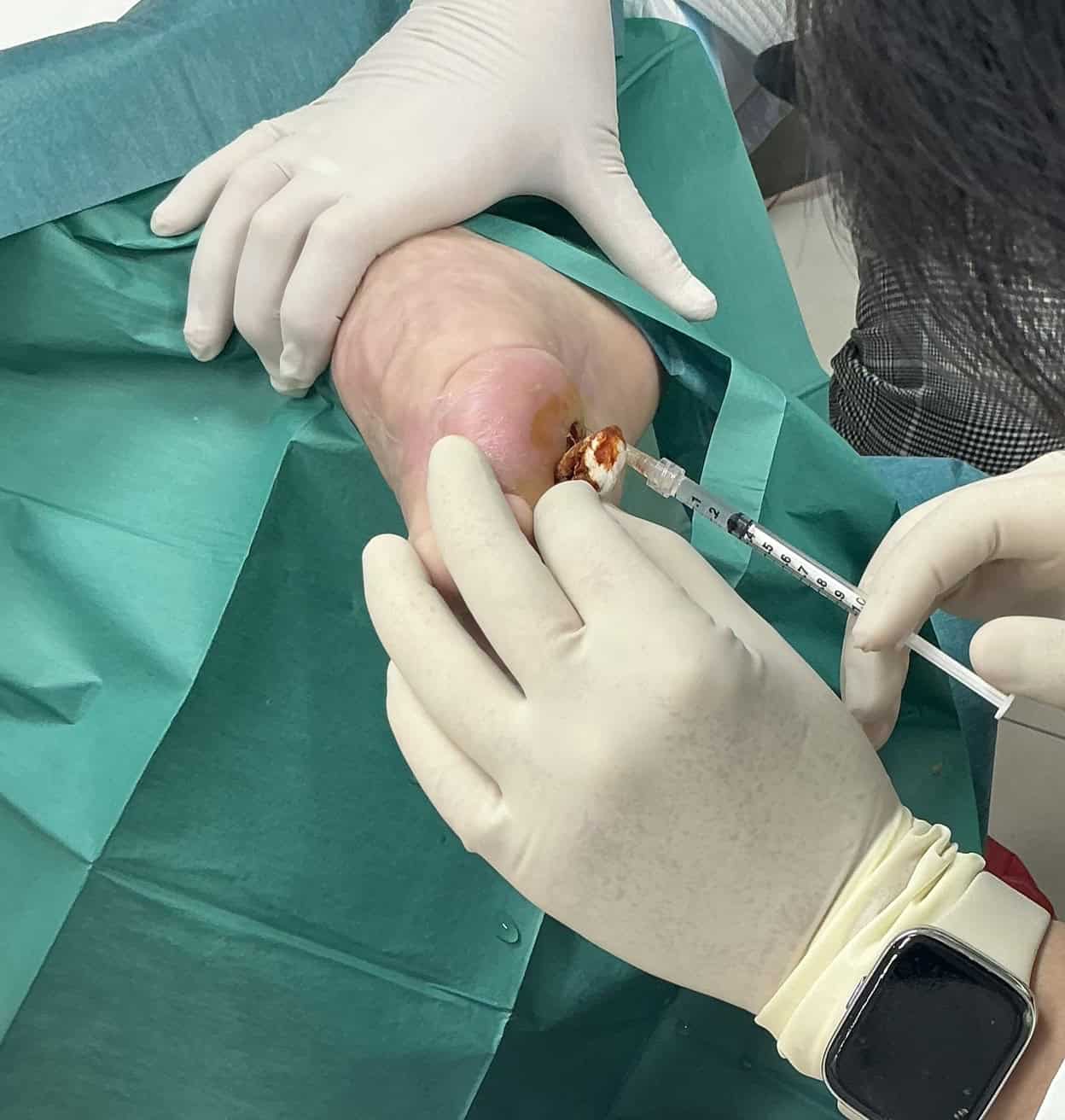
Why Diabetic Foot Ulcers Don’t Heal on Their Own
Peripheral Artery Disease and Poor Foot Circulation
Peripheral artery disease (PAD) narrows the arteries supplying the legs and feet, reducing blood flow. With less oxygen and fewer nutrients reaching the wound, the body’s repair machinery cannot function properly, and healing stalls, often for months at a time even with diligent dressing changes. This is one of the main reasons a foot ulcer can look almost unchanged week after week despite consistent home care, which is frequently the signal that specialist treatment for diabetic foot ulcer cases is needed rather than continuing the same routine indefinitely.
Diabetic Neuropathy and Hidden Injuries
Nerve damage from diabetes can cause numbness, meaning small injuries, blisters, or repetitive pressure points may go unnoticed entirely. These hidden injuries continue to be aggravated by walking and pressure, allowing minor wounds to grow into deeper ulcers before the patient is even aware anything is wrong. This is part of why diabetic foot wounds are frequently discovered later and further along than a typical injury would be, and why regular foot checks matter as much as the treatment itself.
Bacterial Biofilms in Chronic Foot Wounds
Chronic foot wounds often develop bacterial biofilms, microscopic communities of bacteria that shield themselves from antibiotics and the immune system. Standard antibiotics alone may not clear these infections, which is why diabetic foot ulcer wound care typically requires debridement and advanced biological strategies rather than an antibiotic course in isolation. Without addressing the biofilm directly, even an otherwise well-managed wound can remain infected beneath the surface.
Stages of Diabetic Foot Ulcers (Wagner Classification)
The Wagner Classification is a widely used clinical grading system that helps physicians plan treatment for diabetic foot ulcers and assess amputation risk.
Grade | Description |
Grade 0 | At-risk foot with no open ulcer; intact skin but high-risk features such as calluses or deformities |
Grade 1 | Superficial ulcer involving only the skin’s top layers |
Grade 2 | Deeper ulcer reaching tendon, bone, or joint capsule, but without abscess or osteomyelitis |
Grade 3 | Deep ulcer with abscess, osteomyelitis, or joint infection |
Grade 4 | Localized gangrene, typically in the toes or forefoot |
Grade 5 | Extensive gangrene involving the whole foot, often requiring urgent surgical intervention |
At Vega, Wagner staging is part of the initial assessment, helping the medical team set realistic expectations and structure a treatment plan suited to the wound’s severity, rather than applying the same protocol regardless of how advanced the ulcer already is. Knowing your grade also helps clarify which diabetic foot ulcers treatment options are realistically on the table for your specific case.
Diabetic Foot Ulcer Treatment Options in Thailand
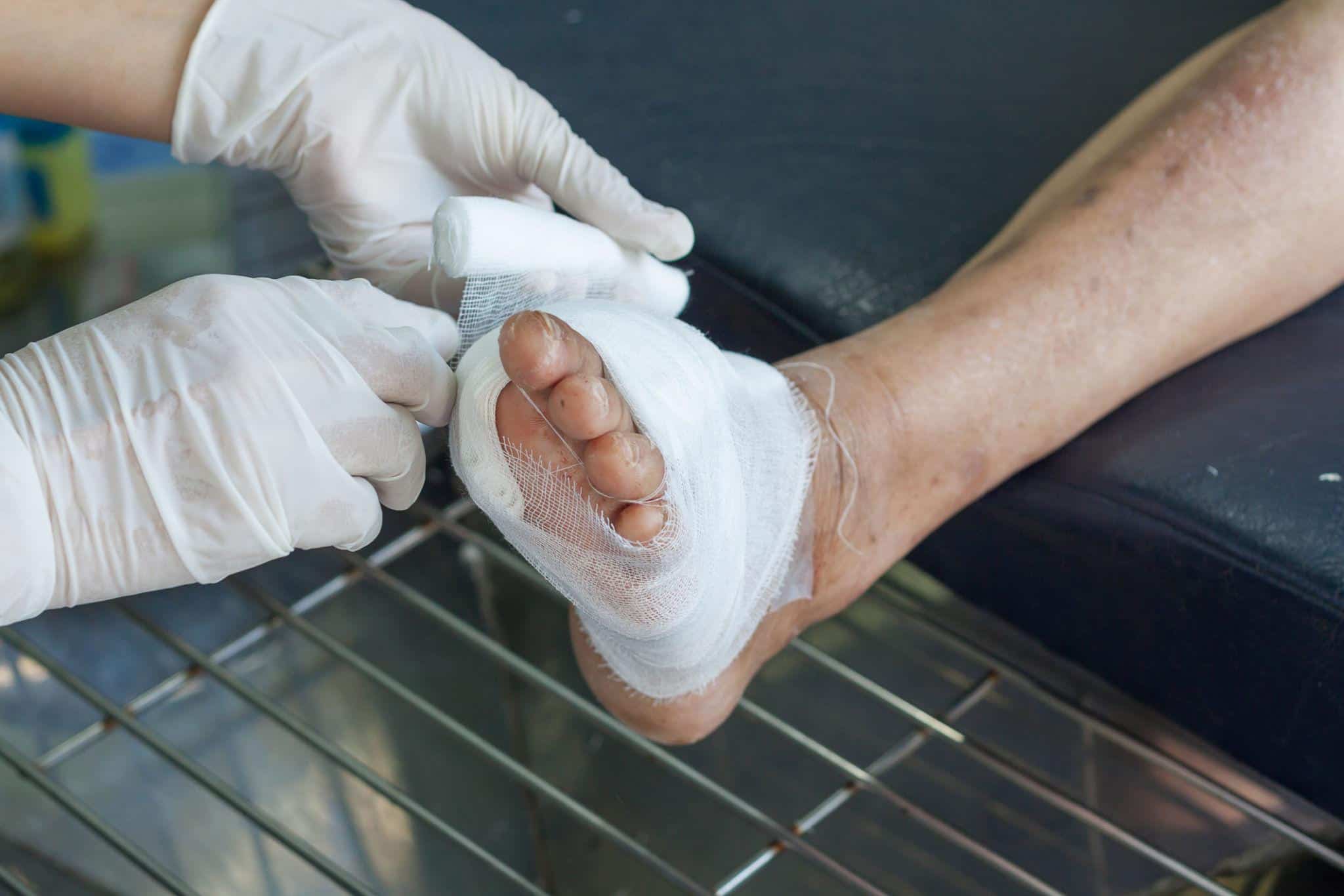
Conventional Wound Care and Dressings
Standard care includes wound cleaning, debridement, dressing changes, blood sugar control, and infection management. For many superficial ulcers, this is enough, and patients recover with routine care alone. For non-healing wounds, however, conventional care alone often plateaus, and continuing the same approach without change rarely produces a different result. This is usually the point at which patients begin researching more structured diabetic foot wound treatment options.
Debridement and the TIME Protocol
The TIME framework (Tissue management, Infection control, Moisture balance, Edge stimulation) is the evidence-based standard for preparing a wound bed. Skipping this preparation step is one of the more common reasons advanced therapies underperform elsewhere, since applying regenerative media to an unprepared wound significantly limits how much benefit it can deliver. Read more about our diabetic wound care protocol.
Offloading and Pressure Relief for the Foot
Offloading is critical in diabetic foot wound treatment. Total contact casts, specialty footwear, and custom orthotics redistribute pressure away from the ulcer so it has the chance to heal without constant mechanical stress. Without consistent offloading, even the most advanced regenerative therapy is working against repeated pressure that can undo progress between visits, which is why this step is treated as a core part of the plan rather than an optional add-on.
Regenerative Treatment for Diabetic Foot Ulcers
Stem cell treatment for diabetic foot ulcers is a term many patients encounter while researching regenerative options, referring broadly to the study of growth factors and cellular messengers and their ability to support diabetic wound healing. Research suggests these regenerative approaches may help support angiogenesis (new blood vessel formation), modulate inflammation, and encourage tissue regeneration in suitable candidates. At Vega, these regenerative principles are delivered through bio-active growth factor media rather than live cell implantation, giving patients access to this evolving science within a structured, physician-supervised protocol, as described below.
VEGF & PDGF Ultra Enhanced Media
VEGF (Vascular Endothelial Growth Factor) and PDGF (Platelet-Derived Growth Factor) are signaling proteins that drive new blood vessel formation and granulation tissue production. Vega’s VEGF & PDGF Ultra Enhanced Media applies these growth factors directly to the wound bed, supporting the underlying biology rather than just covering the wound. Because these two proteins address different stages of healing, blood supply and tissue rebuilding, using them together is designed to address more of the healing cascade than either factor alone.
Hyperbaric Oxygen and Adjunct Therapies
Hyperbaric oxygen therapy (HBOT), negative pressure wound therapy (NPWT), and PRP are adjunct tools used by many hospitals and centers as part of broader diabetic ulcer foot treatment programs. Vega’s role is as a specialist outpatient regenerative wound care clinic; for cases requiring inpatient or surgical adjuncts, we coordinate with appropriate facilities rather than attempting to manage every stage of care in-house.
The Vega Approach to Diabetic Foot Wound Care in Bangkok
Vega’s diabetic foot wound care in Bangkok is built on an integrated protocol: comprehensive assessment, Wagner staging, debridement and TIME-based preparation, VEGF & PDGF regenerative therapy, foot-specific offloading, objective monitoring, and prevention planning. This structured pathway is designed to support consistent progress and reduce the risk of complications across diverse foot ulcer treatment programs in Thailand, rather than treating each stage of care as a separate, disconnected service.
Step-by-Step Treatment Pathway
Stage | What Happens |
Initial assessment | Vascular, neurological, and wound evaluation; Wagner staging |
Wound bed preparation | Debridement and TIME protocol (tissue, infection, moisture, edge) |
Regenerative therapy | VEGF & PDGF Ultra Enhanced Media applied to support angiogenesis and tissue rebuilding |
Offloading | Foot-specific pressure relief tailored to wound location |
Monitoring | Objective wound measurements and serial photo documentation at every visit |
Prevention planning | Education on foot care, footwear, and long-term risk reduction |
Progress is tracked closely rather than guaranteed within a fixed timeline, since individual response depends on wound severity, blood sugar control, and adherence to offloading.
Foot-Specific Offloading at Vega
Offloading is tailored to wound location: heel ulcers, plantar ulcers, and toe ulcers each require different mechanical strategies, since pressure distribution across the foot varies significantly depending on where the wound sits. Our team collaborates with patients on footwear, orthotics, and lifestyle adjustments to keep pressure off the wound between visits, recognizing that the hours spent outside the clinic matter just as much to healing as the treatment delivered inside it.
Who Is a Candidate for Regenerative Foot Ulcer Treatment?
Not every diabetic foot wound is a candidate for the same diabetic foot ulcers treatment, which is why an accurate assessment matters more than self-diagnosis. Suitable candidates typically include patients with:
- Chronic non-healing ulcers, often Wagner Grade 1 to 3
- Adequate infection control already established
- Realistic expectations and willingness to adhere to offloading
Caution applies to patients with uncontrolled systemic infection, severe ischemia awaiting vascular surgery, or advanced gangrene requiring urgent surgical decisions. Every treatment plan is individualized and must be reviewed with our clinical team.
Regenerative Foot Ulcer Treatment vs Conventional Wound Care
Regenerative wound care is considered an adjunct to conventional care, not a replacement, and understanding where each approach fits is usually more useful than comparing them as competing options.
Approach | Mechanism | Best Suited For | Considerations |
Regenerative (VEGF & PDGF Media) | Bio-active growth factor signaling to support angiogenesis and tissue rebuilding | Non-healing or stalled ulcers, Wagner 1 to 3 | Used alongside debridement, infection control, and offloading |
Conventional Wound Care | Cleaning, dressings, debridement, glucose control | Acute or early-stage ulcers responding to standard care | May plateau in chronic wounds |
Surgical Intervention | Excision, revascularization, amputation | Advanced ischemia, deep infection, gangrene | Considered when conservative care is not viable |
Evidence suggests regenerative approaches may support faster healing and reduce amputation risk in some cases, but results vary by patient, wound severity, and adherence to the full protocol.
Preventing Amputation: What the Evidence Suggests
Chronic diabetic foot ulcers significantly increase the risk of amputation, particularly when wound progression is not actively managed, and the risk compounds the longer a wound remains open and untreated. Early multidisciplinary care and regenerative wound strategies may help reduce this risk in suitable candidates, which is why the interval between noticing a non-healing wound and seeking specialist wound care diabetic foot ulcer treatment is one of the most consequential decisions in the entire care pathway. Delaying specialist assessment rarely improves the odds, and in many cases the wound continues to progress through the Wagner stages while conventional care alone is applied. For background on the science behind our approach, see our research page.
Foot Care Tips: Preventing Recurrence After Healing
Even after closure, a previously ulcerated foot remains at risk (Wagner Grade 0), which is a detail that is easy to overlook once a wound has finally healed. Practical prevention steps include:
- Daily inspection of feet for blisters, redness, or cuts
- Professional nail and callus care, avoiding self-treatment
- Diabetic-appropriate footwear and custom orthotics
- Tight blood sugar control
- Prompt review of any new wound or pressure point
Maintaining these habits is often what separates a single successfully treated ulcer from a pattern of recurring wounds, since the underlying circulation and nerve changes that caused the first ulcer do not disappear once it closes.
Cost of Diabetic Foot Ulcer Treatment in Thailand
The cost of diabetic foot ulcer treatment at Vega is based on the Wagner stage of the ulcer, the presence of infection or biofilm, offloading requirements, and whether regenerative treatment is combined with conventional wound care. Given the risks associated with non-healing foot wounds, our priority is an accurate assessment first; pricing follows from the specific pathway your case requires. After staging, we provide an itemised quotation and outline the anticipated course of care, so you understand both the plan and its cost before proceeding.
Why Choose Vega for Diabetic Foot Ulcer Treatment in Thailand
Patients often come to Vega after a diabetic foot wound has not responded to routine care, specifically looking for a structured diabetic foot ulcer treatment Thailand program rather than a repeat of the same approach. Here’s what distinguishes ours:
- Regenerative wound care specialization: Focused on chronic wound and skin repair, not general hospital care, which means your diabetic foot wound treatment plan is designed by a team whose primary focus is this exact category of wound rather than one department among many.
- Bio-active signaling protocol: VEGF & PDGF Ultra Enhanced Media applied within a structured clinical pathway, targeting the biological reasons a wound has stalled rather than only managing its surface.
- Foot-specific offloading: Mechanical and biological strategies aligned together, so pressure relief and regenerative treatment work in support of each other rather than one undermining the other.
- International patient support: English-speaking clinical team serving patients from across Thailand and overseas seeking foot ulcer treatment Thailand programs, with consultation options designed around the practical needs of patients traveling for care.
If you are looking for specialist diabetic ulcer foot treatment for a wound that has not responded to standard dressings, our clinical team can assess your case and outline what a structured plan would involve.
Book a consultation with our clinical team for wound care or diabetic wound evaluation, and find out whether a structured plan combining regenerative therapy, offloading, and monitoring is the right fit for your foot.