

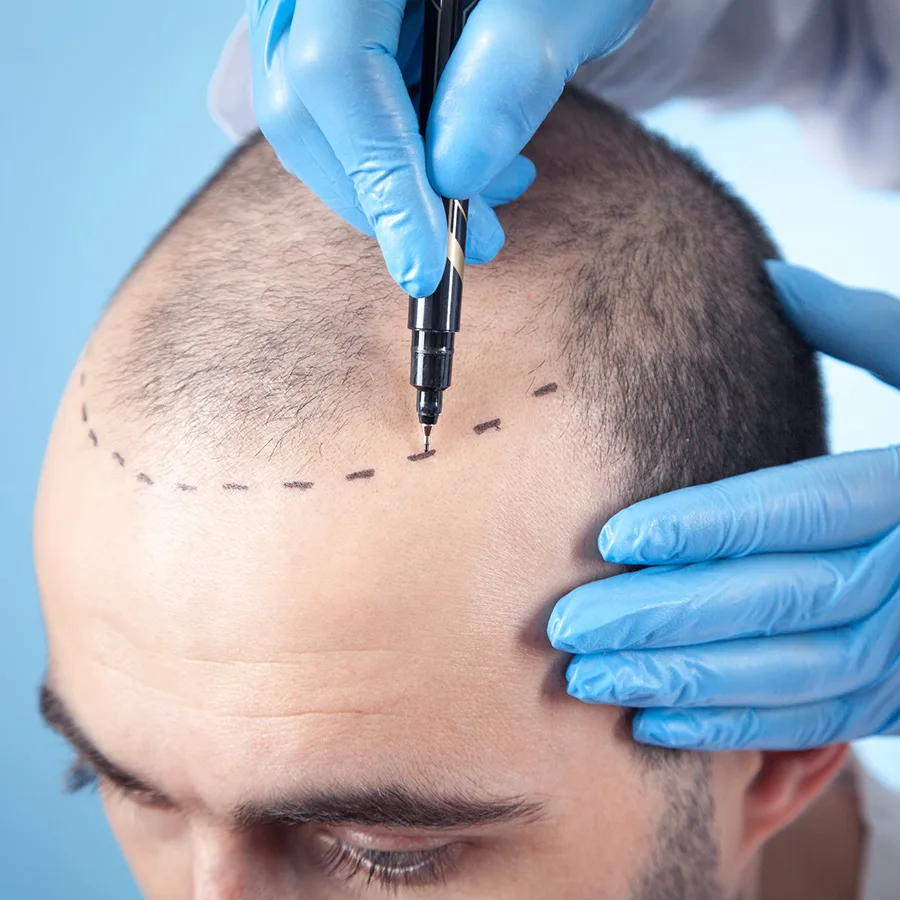
What Makes Hair Transplantation a Medical, Not Cosmetic, Procedure
Many patients consider hair transplantation services based on graft count and price alone. At Vega, the procedure is built on a different foundation. The hair follicle is a sophisticated mini-organ, and its survival after relocation depends on a sequence of controlled biological events: viable extraction, protected handling, optimized recipient tissue, and managed inflammatory response.
This medical framing influences every decision in our hair transplantation clinic, from how we evaluate donor reserves to how we support the scalp in the critical hours and months that follow surgery. Patients who have researched multiple providers often tell us this is the distinction that ultimately guided their decision, since a lower graft price rarely reflects the level of biological safeguarding involved in the procedure.
Comprehensive Donor Evaluation: Safeguarding the Reservoir
The efficacy of any hair restoration treatment starts with the donor zone, the specific area of the scalp where follicles are collected. Vega manages this resource with a philosophy centered on conservation.
Donor Limit and Follicular Density
Before a single unit is relocated, our team performs an in-depth trichoscopic analysis to establish the total harvestable capacity. We evaluate the quantity of follicular units and, more crucially, the structural integrity of the hair fibers. This allows us to plan a graft strategy that meets your goals without compromising the long-term appearance of the donor area.
We frequently see patients who were promised graft counts elsewhere that exceeded what their donor zone could reasonably support. Our assessment is designed to set an honest, evidence-based ceiling from the outset, so your plan reflects what your biology can actually sustain rather than a number chosen to close a sale.
Protecting Dermal Integrity
Aggressive harvesting can result in noticeable thinning or compromised texture in the donor region. Vega employs high-precision FUE extraction methods engineered to reduce tissue trauma. Our team works to ensure the scalp remains healthy and elastic, facilitating a smooth recovery and preserving the option for future interventions if required.
This distinction matters most years after the procedure, when a donor area harvested too aggressively can show visible patchiness that limits any further treatment. Protecting dermal integrity today is part of how we protect your options tomorrow.
Advanced Graft Management: The Physiology of Endurance
The moment a hair follicle is transitioned from the scalp, it enters a highly sensitive state. It is momentarily severed from its supply of blood, oxygen, and vital nutrients. Vega implements strict medical protocols to bridge this critical gap.
The Ex Vivo Interval
The duration between extraction and re-insertion is a high-stakes window. During this interval, the follicle is essentially in biological limbo, cut off from the nutrient supply it depends on, and every additional minute outside the body increases the risk of cellular stress. We employ specialized storage media and climate-controlled environments to sustain the biological viability of every graft during this period, rather than relying on standard saline or ambient room conditions that offer less protection.
For high graft-count procedures in particular, where thousands of follicles may be outside the body at different points in the session, this protocol becomes one of the most consequential factors in overall graft survival, which is why we treat it as a defined clinical step rather than an incidental part of the workflow.
Prevention of Physical Trauma
Hair follicles are intricate biological units. Undue pressure during relocation can impair the follicular bulb, the command center for hair production. Vega utilizes micro-surgical instrumentation and high-magnification optics so each graft is handled with care, shielding its regenerative capacity.
Manual handling without this level of magnification and precision is one of the more common reasons transplant results fall short of expectations, since damage to the bulb is not always visible to the naked eye at the time of the procedure. Our approach is designed specifically to reduce this invisible point of failure.
Clinical Benchmarks: Inflammation Modulation and Recovery
The scalp is a dynamic biological environment. For a transplant to flourish, the recipient site must be sufficiently healthy to support new growth. Our team regulates the inflammatory equilibrium to support the best possible outcomes.
Conditioning the Recipient Area
Placing grafts involves creating microscopic pathways in the skin. If the inflammatory response is left unmanaged, it can contribute to poor graft retention or diminished survival rates. We use advanced topical management to calm the tissue and mitigate oxidative stress immediately following the session.
This step is often where the difference between a well-supported recovery and a difficult one becomes apparent in the first 24 to 48 hours, which is why our post-procedure protocol addresses it directly rather than leaving recovery entirely to the body’s unassisted response.
Encouraging New Vascular Connectivity
For a graft to endure, it must rapidly establish a fresh blood supply, a process known as angiogenesis. Our team supports this transition by ensuring the recipient tissue is primed for new micro-vascular links. The more efficiently the blood supply is reconnected, the higher the likelihood that transplanted follicles thrive.
This is ultimately the biological event that determines whether a graft becomes a permanent, functioning hair-producing unit or fails to take, which is why our team treats vascular support as a defined clinical objective rather than something assumed to happen automatically.
Hair Transplantation vs. Other Hair Regrowth Treatments
Different hair regrowth therapy options work through different mechanisms, and the right approach depends on your hair loss pattern, scalp health, and treatment goals. The table below outlines how a hair transplant in Bangkok at Vega compares with non-surgical alternatives.
Treatment | Mechanism | Surgical? | Best Suited For | Result Permanence |
Hair Transplant (FUE / DHI) | Relocates healthy follicles from the donor zone to thinning or bald areas | Yes | Defined recession, advanced androgenetic alopecia, or clearer pattern loss | Long-lasting for transplanted grafts in suitable candidates; native hair may still need maintenance |
Bio-signaling support designed to help dormant follicles and post-transplant recovery | No | Early to mid-stage thinning and transplant support | Long-term with maintenance, for suitable candidates | |
Regenerative scalp-focused support for scalp condition and diffuse thinning | No | Scalp health and non-surgical support | Maintenance-based | |
PRP | Uses growth factors from the patient’s own blood | No | Mild thinning | Typically temporary and maintenance-dependent |
Minoxidil / Finasteride | Topical or oral maintenance treatment | No | Ongoing medical management of hair loss | Benefits often reduce if treatment is discontinued |
Many patients benefit from a combined plan. During consultation, our doctors will discuss whether hair transplantation alone, or in combination with regenerative therapies, is the most appropriate route for your case.
Enhanced Rehabilitation with Biological Messengers
To support the healing timeline and follicle retention, our team incorporates biological signaling into the post-operative care protocol. The first 72 hours following a hair restoration treatment are among the most critical for graft survival. During this window, relocated follicles are in a state of metabolic transition, and the scalp is undergoing a complex inflammatory response.
Boosting Follicular Integration and Viability
- Directing growth and transition: Bio-active messengers are designed to deliver biochemical instructions that help relocated follicles anchor into their new environment, supporting a shift back into the anagen (active production) phase and helping to reduce post-transplant dormancy.
- Minimizing ischemic stress: Because grafts are temporarily without a blood supply, they face oxidative stress. Our team uses biological signals to shield follicular bulbs and preserve their internal structures until new micro-vascular connections are established.
Speeding Scalp Restoration and Comfort
Recovery is not just about the hair, it is about the skin. By delivering these bio-active cues, our team supports faster scalp tissue recovery:
- Reduction of post-operative sequelae: Advanced signaling may help minimize localized redness, swelling, and heavy crusting in the treated areas.
- Dermal repair: Messengers support the repair of micro-incisions made during implantation. Faster closure of these entry points helps reduce the risk of environmental irritation and contributes to a shorter clinical recovery time.
The Vega Hair Transplant Process Step by Step
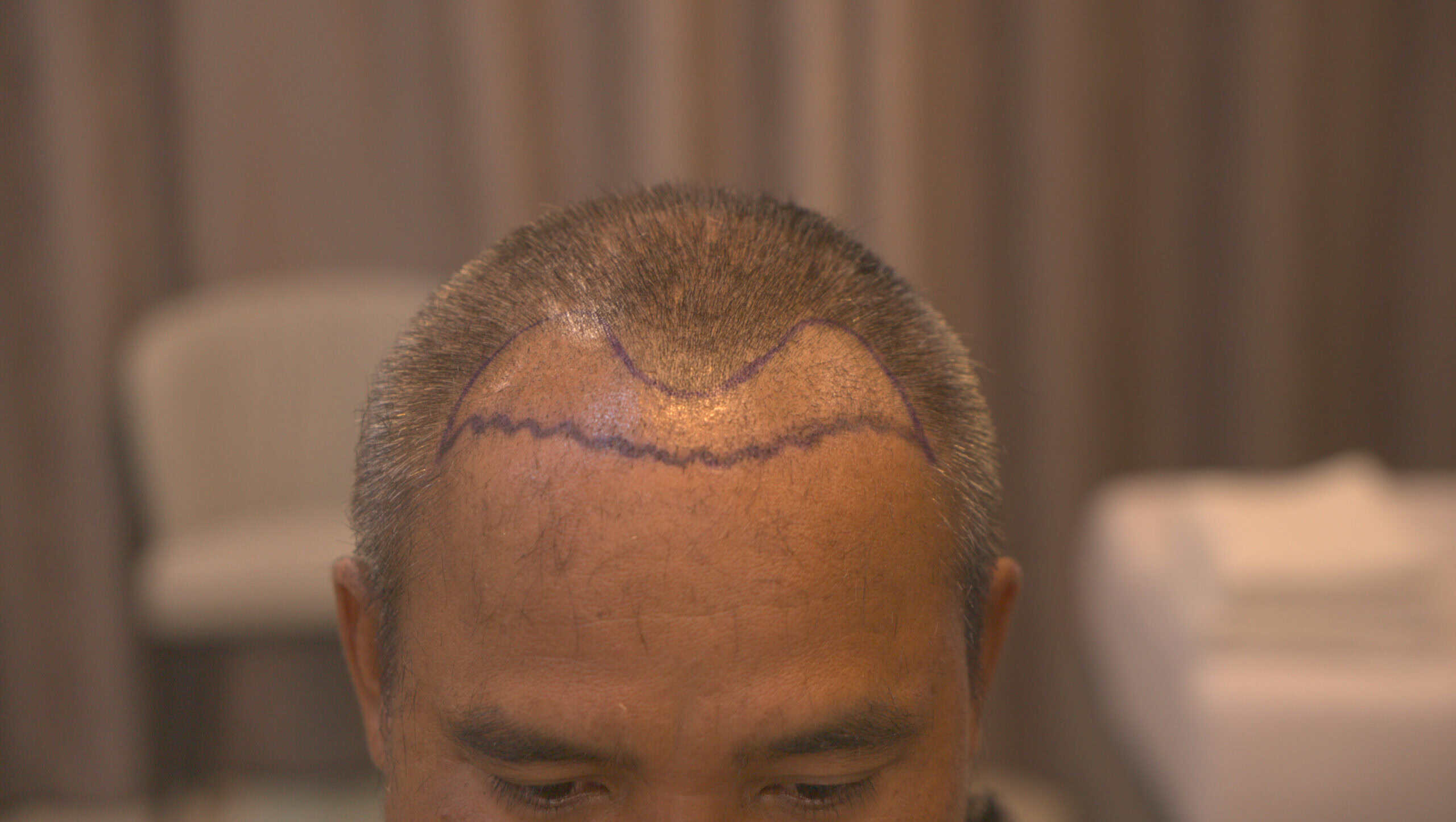
Every hair transplantation plan at Vega is structured as a sequence of medical stages, from initial assessment through to final outcome review. The table below outlines the typical journey for a hair restoration patient at our hair transplantation clinic in Bangkok.
Stage | When | What Happens |
Consultation | Day -14 to -1 | Trichoscopy, donor mapping, hairline planning, and graft estimate |
Procedure day | Day 0 | Extraction, graft handling, and implantation; duration depends on graft count and method |
Critical 72 hours | Days 1 to 3 | Early aftercare, redness and swelling management, and graft protection |
Shedding phase | Weeks 2 to 8 | Transplanted shafts may shed normally while follicles remain in place |
New growth begins | Months 3 to 4 | Early visible regrowth typically starts in suitable candidates |
Density build-up | Months 6 to 9 | Hair continues to thicken and fill in further |
Final result review | Month 12 | Trichoscopy and photo comparison to assess the outcome |
Individual responses vary, and your doctor will explain the expected sequence and any case-specific considerations during your consultation.
Continuous Oversight and Lasting Results
At Vega, our commitment to each patient extends well beyond the conclusion of the procedure. Unlike programs that consider the case closed once the procedure ends, our team provides a structured follow-up schedule to observe the maturation of transplanted follicles across the full first year, which is when the most meaningful changes in density actually become visible.
- Sequential visual tracking: We monitor the evolution of growth over a 12-month period, providing objective documentation of the procedure’s progress
- Follicular health screenings: During review appointments, our team uses trichoscopy to confirm that emerging hair maintains the intended thickness and density
- Long-term viability: By emphasizing the health of the scalp and the follicular micro-environment, we aim to ground results in a stable medical foundation rather than short-term aesthetics
Cost of Hair Transplantation in Bangkok
The cost of a hair transplant in Bangkok at Vega is determined by clinical need, not graft count alone. Key factors include the number of follicular units your plan requires, the extraction method (FUE/DHI), the complexity of your hairline design, and any post-operative bio-active signaling included in recovery. Because we plan a graft strategy around what your donor zone can sustainably support, your quotation reflects a realistic, medically sound plan rather than an inflated number. After your consultation and donor evaluation, we provide a fully itemised estimate with no hidden costs.
Why Choose Vega for Hair Transplantation in Bangkok
- Clinical dermatological approach: Vega treats hair transplantation as a medical procedure grounded in dermatology and regenerative medicine, not a volume-driven cosmetic service, which shapes how carefully every stage of your hair transplant in Bangkok is planned and executed.
- Donor zone conservation philosophy: Precision FUE extraction and trichoscopy-led donor mapping are designed to protect long-term scalp health and future treatment options, rather than maximizing graft count for a single procedure.
- Integrated hair restoration model: Hair transplant, Follicular Signaling Enhancement (FSE), and Hair & Scalp Regeneration are offered under one medical team for combined planning, so your care does not need to be coordinated across separate, disconnected providers.
- Bio-active signaling in recovery: Post-operative protocols use biological messengers to support graft integration, reduce ischemic stress, and shorten scalp recovery time, giving your hair restoration therapy an added layer of support that standard aftercare alone does not provide.
- Structured 12-month oversight: Every patient is followed with sequential trichoscopy and photo tracking to provide objective evidence of progress, rather than being left to judge results on their own after the initial procedure.
The result is a hair transplantation clinic built on medical foundations, offering hair transplant Bangkok patients a plan designed for natural-looking, lasting results in suitable candidates.
Book a consultation with our clinical team for scalp assessment or hair restoration planning, and find out whether hair transplantation, a combined regenerative approach, or a staged plan across both is the right fit for your goals.