

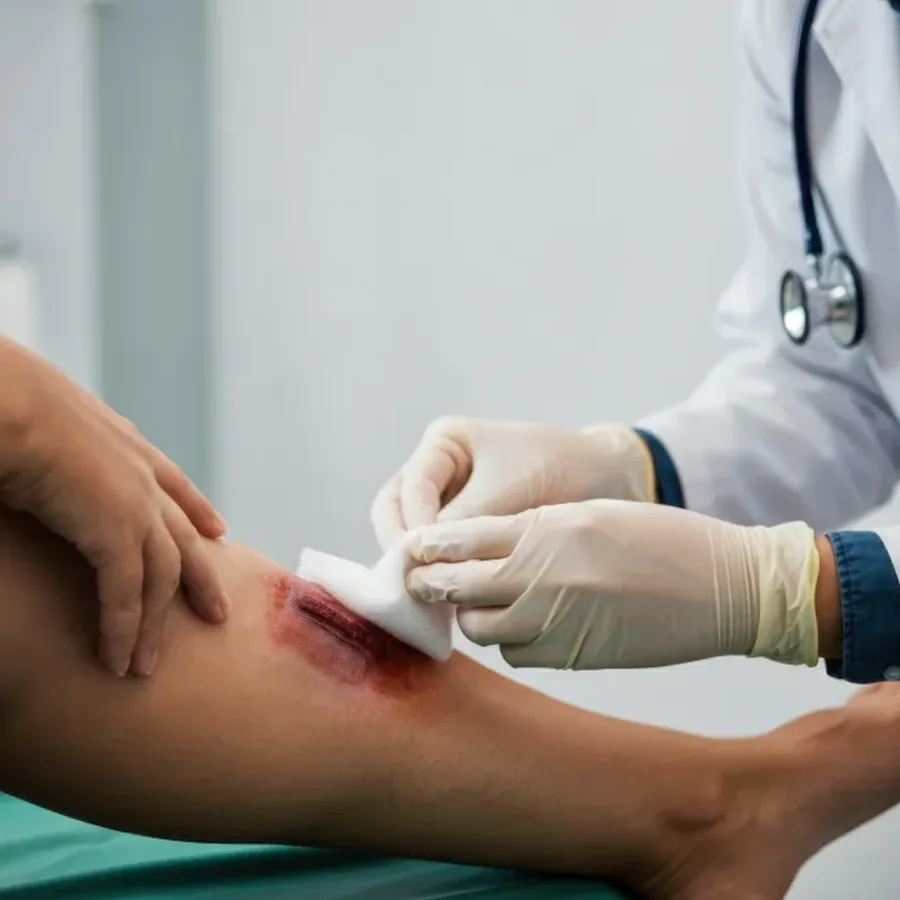
What Is a Chronic Wound or Chronic Ulcer?
A chronic wound is defined as a lesion that fails to progress through an orderly and timely series of reparative steps. While a healthy body typically closes a wound within 4 to 6 weeks, a chronic wound enters a state of Biochemical Stagnation.
This failure often occurs because the wound environment is “stuck” in the inflammatory phase, which is why specialized chronic wound care treatment is required. Excessive destructive enzymes (MMPs), persistent bacterial biofilms, and a lack of proper cellular signaling create a hostile environment where new tissue cannot survive. Our team focuses on transforming this hostile environment into a fertile one, using a structured clinical pathway that begins with a thorough assessment and leads through staged wound preparation, advanced dressings, and, where appropriate, regenerative support.
Recognizing these biological barriers early is critical. If your wound has stalled beyond 4 to 6 weeks, a consultation with Vegaderma’s wound care specialists can help determine the underlying cause and the right treatment pathway.
Chronic Ulcer Treatment and Non-Healing Wounds We Treat
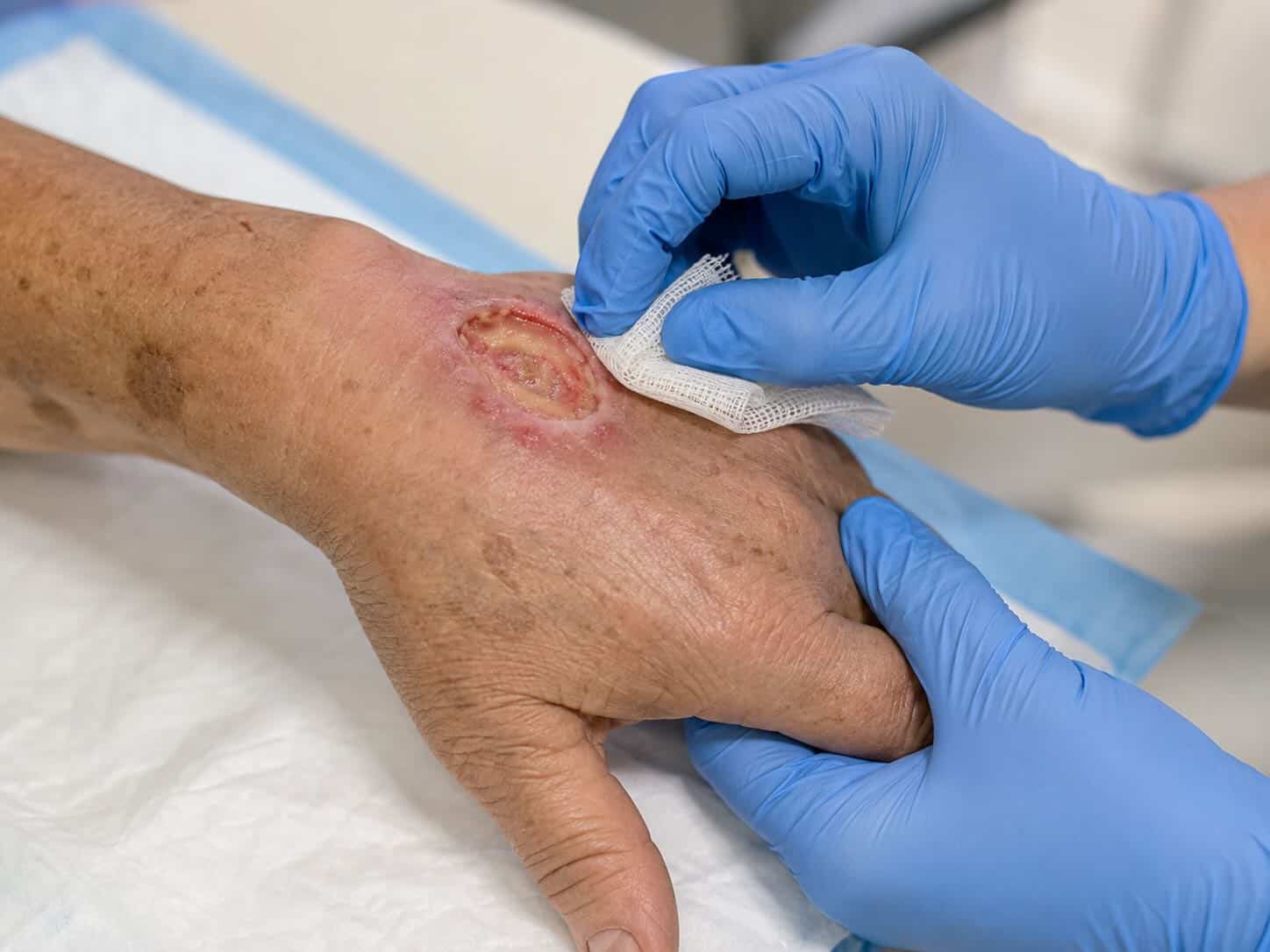
Our Team provides expert chronic ulcer treatment and care for a wide variety of complex skin and tissue conditions, including:
- Diabetic Foot Ulcers (DFUs): These are particularly dangerous due to “Neuropathy” (loss of sensation) and “Ischemia” (lack of blood flow). Vegaderma offers structured diabetic wound protocols that combine assessment, offloading, advanced dressings, and regenerative support. For dedicated diabetic wound care, visit our Diabetic Wound Care service page.
- Pressure Injuries (Bedsores): Common in patients with limited mobility, these injuries occur when skin and underlying tissue are starved of oxygen due to prolonged pressure. Our team evaluates tissue viability and designs care plans that address both the wound and the contributing factors.
- Venous Leg Ulcers: Often associated with swelling (edema) and poor circulation in the lower extremities. Treatment at Vegaderma includes compression strategies alongside wound bed preparation and regenerative options where indicated.
- Post-Surgical Non-Healing Wounds: Occur when surgical incisions fail to close properly due to infection, tension, or poor local perfusion. Our protocols focus on resolving the underlying stall factors before introducing advanced therapies.
- Traumatic Skin Injuries: Severe skin losses from accidents that have failed to heal through standard medical care. Vegaderma supports post-acute recovery with structured wound care pathways and scar-prevention strategies.
If your condition falls within any of these categories, book a consultation to discuss a tailored treatment plan with our clinical team.
Stem Cell Support for Chronic Wound Healing
When a wound has plateaued after conventional dressings, antibiotics, and standard wound care, it often signals that the underlying biology has stopped cooperating with the healing process. Stem cell-supported chronic wound healing treatment is Vegaderma’s flagship approach for these difficult cases – a regenerative pathway designed for wounds that simply will not close on their own.
Unlike standard protocols that focus mainly on cleaning and covering the wound, our approach works at the cellular level to help restart the body’s natural repair signals. This positions stem cell-supported care as a meaningful next step for patients in Thailand who have already exhausted conventional options. For international patients, Thailand’s advanced medical infrastructure and competitive treatment costs make Vegaderma a practical choice compared to similar regenerative wound care in Western countries.
How Stem Cells Support Chronic Wound Healing
Stem cells contribute to chronic wound healing through a mechanism known as paracrine signaling – they release growth factors and signaling molecules that influence the cells already in the wound bed. In practical terms, this support may help in three key ways:
- Angiogenesis: Stem cells may encourage the formation of new blood vessels, restoring oxygen and nutrient supply to tissue that has been starved by poor circulation.
- Inflammation modulation: They may help reduce the excessive, prolonged inflammation that keeps chronic wounds stuck in a destructive phase.
- Tissue repair coordination: By signaling to fibroblasts and other repair cells, stem cells help re-establish the orderly sequence of healing that has broken down.
It is important to understand that stem cells do not replace standard wound preparation; they enhance it. At Vegaderma, stem cell-supported care is always introduced after proper assessment and wound bed preparation, never as a standalone solution.
Is Stem Cell Wound Therapy Right for You?
Stem cell-supported chronic wound care treatment is not appropriate for every wound. Honest candidacy assessment is part of our clinical pathway.
Generally suitable:
- Chronic non-healing wounds that have remained open beyond 6 weeks despite standard care
- Selected diabetic, venous, and pressure ulcers with adequate blood supply
- Post-surgical wounds that have stalled after appropriate wound management
Not suitable as a standalone therapy:
- Wounds requiring urgent hospital-based surgical intervention
- Cases of severe ischemia where vascular surgery is the priority
- Active, uncontrolled infection requiring inpatient antibiotic care
In these situations, we refer patients to the appropriate hospital service first and reassess for regenerative support once the acute issue is stabilized. This candidacy-first approach ensures that every patient receives the right care at the right time. To find out whether your wound qualifies, request a consultation with our team.
Our Step-by-Step Chronic Wound Care Treatment Pathway
To ensure clinical accountability and consistent results, Our Team follows a rigorous, evidence-based chronic wounds treatment protocol for every patient. This structured approach is what sets Vegaderma apart from standard wound clinics, where treatment often begins and ends with dressing changes.
Step 1: Full Assessment and Wound Staging
Before treatment begins, Our Team performs a deep-dive analysis. We don’t just look at the wound; we assess the patient’s vascular status, nutritional levels, and underlying metabolic factors. Staging the wound correctly allows us to set realistic goals and communicate clearly with patients and their families. This assessment also determines whether regenerative therapies are appropriate, or whether the wound requires conventional medical or surgical intervention first.
Step 2: Wound Bed Preparation and Biofilm Removal
This is the “cleaning and clearing” phase. Our Team focuses on removing necrotic (dead) tissue and disrupting Biofilms. Protective layers of bacteria that are resistant to standard antibiotics. Without proper preparation, even the most advanced therapies will fail. Vegaderma uses systematic debridement protocols and antimicrobial strategies tailored to each wound’s microbial profile and tissue status.
Step 3: Advanced Dressings and Moisture Control
Healing requires a specific micro-environment. Our Team utilizes advanced dressings that maintain a precise balance, ensuring the wound is moist enough for cells to migrate but dry enough to prevent skin maceration. Dressing selection is matched to wound stage and adjusted at each visit based on documented progress, not a fixed rotation.
Bio-Regenerative Innovation: VEGF & PDGF Enhanced Media
When a wound has plateaued during chronic wound healing, it often means the body has lost the “blueprint” or the “signals” required to continue repair. This is where Our Team introduces our proprietary VEGF & PDGF Ultra Enhanced Media.
How VEGF and PDGF Support Wound Repair
Instead of relying solely on the body’s weakened signals, Our Team utilizes this high-quality media to provide essential growth factors:
- VEGF (Vascular Endothelial Growth Factor): This serves as the primary architect for Angiogenesis. It signals the body to sprout new blood capillaries in the wound bed. By restoring blood flow, our team ensures that oxygen and nutrients can finally reach the site of the injury.
- PDGF (Platelet-Derived Growth Factor): This acts as the “Master Recruiter.” It calls upon fibroblasts, the cells responsible for producing collagen, to migrate to the wound and begin building the new tissue framework.
This proprietary protocol is a core differentiator in Vegaderma’s wound care services. Patients receive VEGF & PDGF media as part of their structured treatment plan, applied during scheduled clinical visits and monitored for response at each stage.
Transparent Results, No Miracle Claims
While this Ultra Enhanced Media is a powerful tool within our chronic wound care treatment arsenal, we maintain a policy of honesty and transparency. We do not claim that this media is a “miracle cure” that works in isolation or guarantees immediate results. Healing is a multifactorial process. The media’s effectiveness is highly dependent on Step 1 and Step 2 (proper assessment and preparation) as well as the patient’s adherence to pressure offloading and metabolic control. It is a vital catalyst within a much larger, structured plan.
This commitment to honest communication is reflected in everything from our initial consultation (where we discuss realistic timelines and candidacy) to our documentation practices (where we track and photograph wound progress objectively).
How Vegaderma Supports Your Recovery
By moving away from standard, one-size-fits-all approaches to chronic ulcer treatment, we offer several key advantages:
- Vascular Support: By focusing on signaling for new blood vessel growth, we address the root cause of ischemia.
- Cellular Recruitment: We help jumpstart “sleeping” cells, encouraging them to return to the repair site.
- Inflammation Control: We help shift the wound bed from a destructive state to a constructive one.
- Physician-led planning: Every treatment step is directed by our wound care specialists, Dr. Issariya Wongla (Doctor Tuck) and Dr. Ekkaparb Charoensuk (Doctor Neung), who bring over 15 years of combined clinical experience in regenerative wound management.
Tracking Progress with Real Measurements
At Vega, “better” isn’t just a feeling; it’s a measurement, and it underpins every stage of our chronic wound healing treatment. Our team utilizes:
- Objective Measurements: Tracking the reduction in wound area (mm²) over time. This data-driven approach allows us to adjust protocols based on documented response rather than assumptions.
- Serial Photographic Documentation: Providing a visual history of the wound’s transition from stagnant to granulating. This transparency ensures that both the clinical team and the patient can see tangible evidence of progress.
These records are also valuable for international patients who need to share progress with referring physicians or insurance providers in their home country.
What Better Healing Looks Like
A successful journey through our chronic wounds treatment pathway aims to:
- Accelerated Closure: Reducing the time the wound remains open to the environment.
- Prevent Complications: Lowering the risk of deep-seated infection and potential amputation.
- Restore Mobility: Helping patients return to their daily activities without the burden of a chronic injury.
- Long-term skin integrity: Supporting healthier tissue quality after closure, reducing the risk of recurrence at the same site.
Cost of Chronic Wounds Treatment in Thailand
The cost of chronic wound treatment at Vega depends on the wound type, its underlying cause, the duration of the care plan, and whether regenerative support such as stem cell–based therapy or VEGF & PDGF enhanced media is included. Advanced wound care in Thailand is typically more accessible than in many Western countries, but every plan is still priced individually after assessment. You receive a clear, itemised quotation before treatment starts, with no miracle claims and no hidden charges — only a realistic plan matched to your wound.
Why Patients Choose Vegaderma for Wound Care
Choosing the right clinic for treatment for chronic wounds in Thailand can change the entire trajectory of recovery. Vegaderma combines regenerative science with structured continuity of care, offering an approach that few general hospitals are positioned to deliver.
- Stem cell and VEGF/PDGF focus: Our protocols are built around regenerative biology, not just dressing changes, directly targeting the signaling gaps that cause wounds to stall.
- Structured continuity with one team: Patients are followed by the same regenerative specialists from assessment through closure, ensuring no detail is lost between visits.
- English-speaking support for international patients: From the first consultation to follow-up, our team communicates clearly in English and assists with travel, scheduling, and documentation for patients visiting Bangkok.
- Competitive cost structure: Advanced wound care in Thailand, including regenerative therapies, is typically a fraction of the cost compared to similar treatments in the US, UK, or Australia. Vegaderma provides transparent, itemized cost estimates after your initial assessment so you can plan with confidence. Contact us to request a preliminary cost outline.
A New Chapter in Chronic Wound Healing Begins Here
Healing a chronic wound requires a partnership between the patient and a dedicated clinical team. By combining world-class protocols with stem cell-supported care and innovative signaling via VEGF & PDGF Ultra Enhanced Media, our team at Vega offers a pathway out of stagnation for patients seeking chronic wound healing treatment in Bangkok, Thailand. We are committed to a systematic, honest, and scientifically grounded approach to restoring your skin and your health.
Don’t let a chronic wound dictate your future. Contact Vega Derma today to let our team assess your condition and create a clear, documented plan for your recovery.
Medical Disclaimer: Treatment outcomes vary between individuals. The information on this page is for educational purposes only and should not be interpreted as medical advice or a guarantee of results. A physician consultation is required to determine suitability for any treatment.