

1. What Are Chronic Wounds?
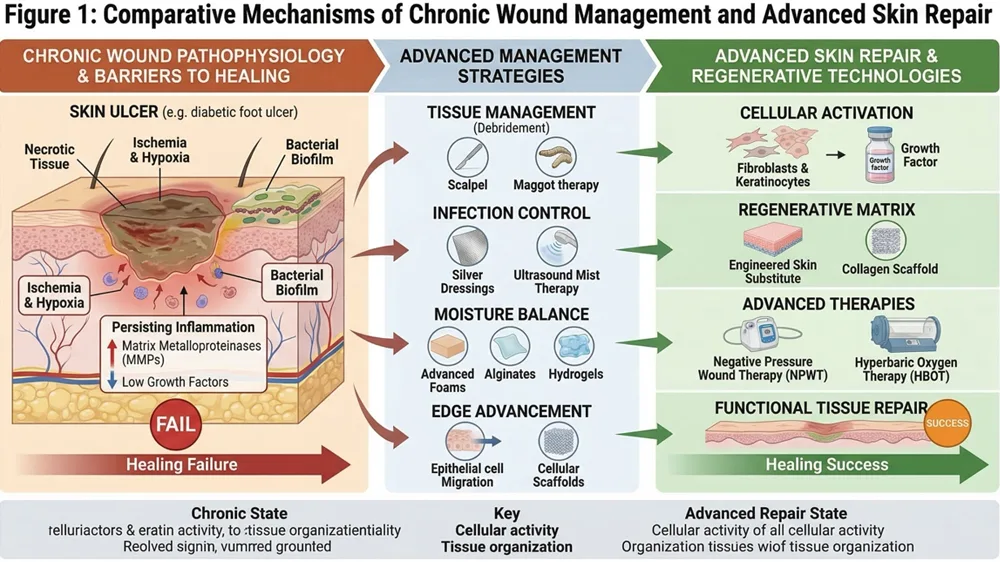
Chronic wounds are wounds that do not move through the normal healing process within an expected period of time. Instead of closing properly, they remain open, inflamed, or unstable for a prolonged period, increasing the risk of infection and other complications.
2. Why Do Some Wounds Heal Slowly?
Slow-healing wounds are often caused by more than just skin damage. Common contributing factors include poor blood circulation, high blood sugar, repeated pressure, infection, chronic inflammation, and reduced tissue-repair activity. These issues can prevent the wound from progressing through the normal stages of healing.
3. Why Is Chronic Wound Management Important?
Chronic wound management is not only about covering the wound. It involves improving the overall wound environment to reduce inflammation, control infection, protect surrounding tissue, and support long-term healing more effectively.
4. What Is Advanced Skin Repair?
Advanced skin repair refers to a deeper and more structured approach to wound care. It focuses on tissue quality, moisture balance, circulation, wound-bed condition, and support for the skin’s natural repair process. The goal is to help the tissue heal in a stronger and more organized way.
5. The Role of VEGF in Wound Healing
VEGF, or Vascular Endothelial Growth Factor, is an important factor involved in the formation of new blood vessels. This process is essential in chronic wound healing because recovering tissue needs oxygen and nutrients to survive and rebuild. When the wound environment supports VEGF-related activity, tissue recovery may improve.
6. The Role of PDGF in Skin Repair
PDGF, or Platelet-Derived Growth Factor, plays a role in attracting repair cells to the wound area and supporting the formation of new tissue. It is an important part of advanced skin repair because it helps guide tissue rebuilding and supports the repair of damaged skin structure.
7. Chronic Wound Care Involves More Than Dressing Changes
Effective chronic wound management usually includes several components working together, such as wound assessment, removal of non-viable tissue, infection control, appropriate dressing selection, pressure reduction, and management of underlying conditions such as diabetes or poor circulation.
8. Why Is the Wound Environment So Important?
Even with regular wound care, healing may remain slow when the wound environment is not favorable. Improving the balance of moisture, circulation, inflammation, and tissue support can help biological repair processes work more effectively, including those associated with VEGF and PDGF.
9. Why Identifying the Cause of the Wound Matters
Not all chronic wounds are the same. Some are related to diabetes, some to pressure, some to vascular disease, and some involve multiple causes. For this reason, treatment should be based on the underlying cause of the wound, not only its appearance.
10. The Goal of Modern Wound Care
The goal of modern wound care is not only to close the wound, but also to help new tissue become stronger, reduce the risk of infection, lower the chance of recurrence, and improve the patient’s quality of life over time.
Summary
Chronic wound management and advanced skin repair are essential parts of modern wound care. They focus on wound control, tissue recovery, and support for the body’s natural repair system. Mechanisms related to VEGF and PDGF help explain why a comprehensive wound-care approach is important for better healing outcomes.