

SERVICES
Scar & Tissue Remodeling
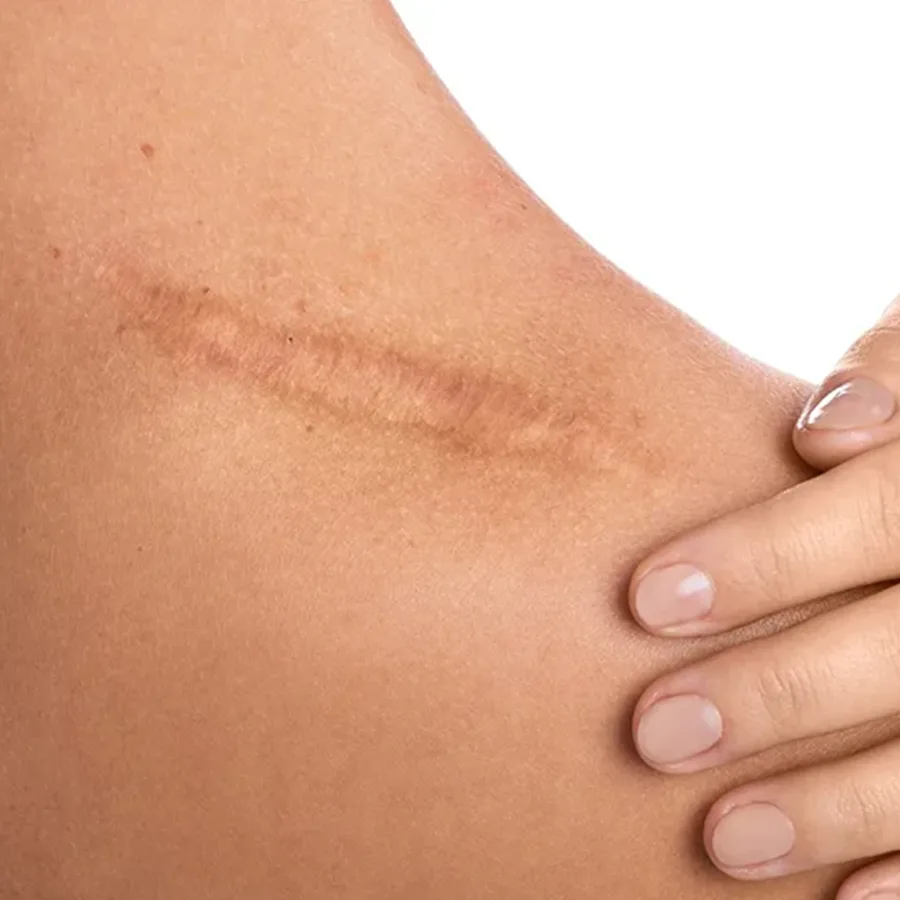
Scars are a normal part of healing, but the way a scar forms and how it feels and functions can vary widely from person to person. After wounds, surgery, burns, acne, or inflammation, the body repairs damaged skin by rebuilding the collagen framework. In many cases, scars gradually soften, flatten, and fade. But sometimes the repair response becomes overly strong or prolonged, leading to raised scars, tightness, fibrotic thickening, or restricted movement, especially when healing is slow, inflammation persists, or the area is under constant tension.
A modern scar program is not only focused on appearance. The most meaningful outcomes often involve tissue quality: flexibility, comfort, strength, and function. That’s why our approach emphasizes tissue assessment, staged intervention, and conservative support, with additional advanced options when appropriate. The goal is to improve how the scar behaves over time helping the skin move better, feel better, and remain healthier long-term.
What Is Tissue Remodeling?
Tissue remodeling is the phase of healing where the body reorganizes collagen fibers and strengthens the repaired area. This process can continue for months (and sometimes longer). During remodeling, scars often change in:
- Color (pink/red → lighter tone or darker pigmentation depending on skin type)
- Thickness (raised → flatter over time, or remain elevated if collagen stays overactive)
- Texture (firm → softer, or stiff if fibrosis develops)
- Sensitivity (itchy/tender → calmer, though some scars remain sensitive)
Remodeling is not “one moment” in time, it’s a window where the scar is still biologically active. Intervening too aggressively can irritate healing tissue; intervening too late can allow stiffness and fibrotic change to become harder to reverse. A staged strategy aims to use the right intensity at the right time.
Why Scars Become Thick, Tight, or Persistent
- Skin tension and movement Areas like the chest, shoulders, jawline, and upper back are prone to thicker scarring because the skin is frequently stretched and pulled.
- Prolonged inflammation Inflammation from infection, delayed closure, repeated irritation, or chronic skin conditions can keep the scar “activated,” promoting excess collagen production.
- Genetics and scar tendency Some people form hypertrophic scars or keloids more easily, and darker skin types can be more prone to pigment changes.
- Wound depth and healing time Deeper wounds and wounds that take longer to close tend to scar more noticeably.
- Sun exposure and friction UV exposure in early healing can worsen discoloration. Friction, scratching, and repeated trauma can drive thickening.
Types of Scars and Fibrotic Skin Changes
- Flat scars Often mainly a color or texture issue. Goals: improve smoothness, tone blending, and elasticity.
- Hypertrophic scars Raised, thick scars that stay within the original wound border. Goals: reduce thickness, redness, itch, and stiffness.
- Keloid scars Scars that grow beyond the original wound edge and may keep enlarging. Goals: reduce size/activity and lower recurrence risk.
- Contracture scars Scars that tighten and restrict movement (common after burns or large wounds). Goals: restore function and range of motion.
- Fibrotic skin changes Hard, thickened tissue that forms after repeated inflammation, surgery, chronic swelling, radiation, or long-standing wounds. Goals: soften tissue, improve flexibility, and restore healthier skin behavior.
Our Clinical Approach: Assessment → Staging → Conservative Support
Scar care works best when it follows a clear pathway:
- Tissue quality assessment
- Staged intervention plan tailored to scar type and scar “age”
- Conservative support to protect progress and improve long-term skin health
- Objective monitoring of symptoms, texture, thickness, and function over time
This structure keeps care consistent, avoids unnecessary irritation, and focuses on measurable improvements.
Step 1: Tissue Quality Assessment (What We Evaluate)
- Scar age: early (weeks–months) vs mature (months–years)
- Thickness and firmness: soft vs fibrotic
- Color and activity: redness and warmth can indicate ongoing remodeling
- Symptoms: itch, pain, sensitivity, tightness
- Mobility: how well skin glides over underlying tissue
- Functional impact: any movement restriction near joints or facial expressions
- Border behavior: does it stay within the wound (hypertrophic) or extend beyond (keloid pattern)
- Skin barrier health: dryness, irritation, recurrent inflammation
Step 2: Staged Intervention (What Treatments May Include)
Stage A: Early-Phase Support (new scars)
The early phase focuses on calming the environment and preventing thickening.
Common supportive tools:
- Silicone gel or silicone sheets (when appropriate)
- Sun protection to reduce long-term discoloration
- Hydration and barrier support to reduce dryness and itching
- Gentle massage guidance after the wound is fully closed and stable
- Tension reduction strategies (taping/support in high-movement areas)
In this phase, the priority is consistency and protection. Many scars improve significantly with proper early support alone.
Stage B: Active Remodeling (raised, red, itchy, firm, or tight scars)
If a scar remains active or becomes raised and stiff, treatment may be escalated.
Options may include (case-dependent):
- Clinician-directed therapies for thickened scars (including injections when indicated)
- Energy-based approaches to improve redness, texture, and stiffness
- Controlled collagen remodeling techniques (such as microneedling in suitable scars)
- Pressure-based strategies in selected raised scars
- Mobility and rehabilitation support for function, especially near joints
The aim is to reduce excessive collagen buildup, improve collagen organization, and restore pliability, without over-irritating the tissue.
Stage C: Mature Scar Optimization (older scars)
Even older scars can often improve, though changes may be slower.
Goals often include:
- Softening fibrotic areas and improving glide
- Refining texture and unevenness
- Addressing persistent discoloration safely
- Supporting function and comfort long-term
- Planning revision strategies only when truly necessary (for distortion or significant restriction)
Conservative Support: The Foundation of Long-Term Results
- Silicone + consistent wear time When indicated, silicone can help flatten raised scars over time. Consistency matters more than intensity.
- Sun protection UV exposure is a major driver of stubborn pigmentation. Sun protection is one of the highest-value scar strategies, especially in the first year.
- Barrier repair and hydration Dry, irritated scar tissue is more likely to itch, and itch leads to friction. A stable barrier supports calmer remodeling.
- Massage and mobility Proper scar mobilization can improve pliability and comfort. The key is correct timing and technique, too early or too aggressive can worsen irritation.
- Tension and friction reduction Simple steps like support taping, clothing choices, and friction reduction can prevent repeated micro-trauma that drives thickening.
Supportive Regenerative Strategies
In selected cases, some clinics consider cell-based regenerative support as an adjunct to standard scar management. These approaches are designed to support the local tissue environment by helping modulate inflammatory signals and encouraging healthier remodeling behavior.
Important points to communicate clearly:
- These strategies are supportive, not a guaranteed cure
- They do not replace proven fundamentals (silicone, sun protection, tension control, staged remodeling care)
- Outcomes vary by scar type, scar age, skin type, and underlying inflammation
- The best use is often within a structured plan, with objective monitoring
When positioned responsibly, regenerative support is about improving the tissue “soil”—not promising instant scar removal.
How Scar and Tissue Remodeling Treatment Can Help
A well-built program aims for practical, measurable improvements:
- Improved flexibility and pliability (so skin moves more naturally)
- Reduced tightness and pulling
- Reduced thickness and firmness in raised scars
- Less itch and discomfort
- Smoother texture
- Better long-term tissue resilience (especially after wounds or repeated inflammation)
- Improved function near joints (range of motion and comfort)
Some people care most about appearance; others care about how the scar feels or whether it limits movement. A staged plan can target both without pushing overly aggressive procedures too early.
Expected Timeline: When Do You See Changes?
Scar improvement is usually gradual:
- Early scars can change noticeably over 8–12 weeks with consistent support
- Many scars keep remodeling for 6–12 months
- Mature scars can still improve, but may require longer and more targeted strategies
The key is not just “time passing,” but what is done during that time—especially reducing irritation, tension, and chronic inflammation.
Who Benefits Most From a Scar Remodeling Program?
You may benefit from assessment and staged care if you have:
- Post-surgical scars that are raised, red, thick, or itchy
- Tight scars that limit movement or feel restrictive
- A history of hypertrophic or keloid scarring
- Fibrotic skin after repeated inflammation, injury, or slow wound healing
- Scars that remain tender, sensitive, or cosmetically distressing after months
Early guidance can prevent long-term stiffness and reduce the chance of persistent thickening.
Practical Home Support (Safe, General Guidance)
Home care is individualized, but general principles often include:
- Protecting scars from sun exposure
- Keeping the skin barrier healthy and hydrated
- Avoiding friction, picking, or harsh scrubbing
- Following clinician guidance for silicone use and massage timing
- Staying consistent—small daily habits often beat occasional intense treatments
If a scar becomes increasingly raised, expands beyond the original wound border, or becomes progressively painful or restrictive, it’s best to seek clinical review.
FAQ (SEO-Friendly)
| Q: What’s the difference between hypertrophic scars and keloids? |
|---|
| A: Hypertrophic scars stay within the original wound border. Keloids can grow beyond the border and are more likely to recur. |
| Q: Can older scars still improve? |
|---|
| A: Yes, Many older scars can improve in softness, flexibility, and texture with staged strategies—although results tend to be slower than early intervention. |
| Q: Is scar treatment only cosmetic? |
|---|
| A: Not always, Many patients seek treatment for tightness, itch, pain, or movement restriction. Function is a major goal in tissue remodeling. |
| Q: Why does my scar itch so much? |
|---|
| A: Itch can be part of active remodeling and barrier irritation. Keeping the area hydrated, protected, and calm often helps, along with clinician-guided interventions when needed. |
| Q: Can “cell-based regenerative support” remove scars completely? |
|---|
| A: No treatment can guarantee complete scar removal. Supportive regenerative approaches may help tissue quality in selected cases, but results vary and should be positioned conservatively. |